
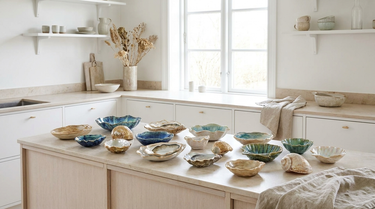
Keramikskåle
Keramikskåle håndmalet i hånden — østers, citron, hvidløg og blomster formet i selve skålen.
Læs mereVis mindre
Skåle i keramik fra Caja Company, &Klevering og Bloomingville. Nogle er formet som det, de skal indeholde — østersskåle, hvidløgsskåle, citronskåle — andre er enkle med håndmalede mønstre.


All reviews
Ceramic bowls are one of the easiest ways to bring colour and character to the table. At Dims Studio you'll find a wide range of figurative ceramic bowls, shaped like everything from oysters, lemons and strawberries to crabs, chips and popcorn, mainly from the Spanish brand Caja Company as well as &Klevering, Bloomingville, Rice and Anna + Nina. Here's a guide to types, sizes, use and care, so you can find the right ceramic bowl for dip, tapas, sweets or decoration at home.
Ceramic bowl: what defines it?
A ceramic bowl is moulded and fired, which makes it heavier than a comparable bowl in porcelain and better at holding temperature, whether it's a cold dip or warm nuts. This makes ceramic bowls well suited for serving, where the contents need to stay cool or warm a little longer at the table, without you having to move it to a new bowl partway through the meal. The range at Dims Studio stands out because most of the bowls are shaped as figures or motifs, including fruit, vegetables, seafood and snacks, so the bowl works as decoration in its own right, even when empty.
Types of ceramic bowls
The range is built around motifs that recur across several brands. Below you'll find the types that make up the bulk of the collection.
Seafood bowls: oysters, mussels and crabs
The largest group in the range is bowls shaped like seafood, including oyster bowls in several sizes from Caja Company and &Klevering, a mussel bowl from &Klevering, as well as deep crab bowls and fish-shaped canapé bowls in blue, lime and red from Caja Company. The oyster bowl comes in up to four sizes, from a small 8 cm bowl to a large one at 25 cm in diameter, making it flexible for both a single dip and a larger spread.
Fruit and vegetable bowls
From Caja Company you'll find a series of bowls shaped like lemons, strawberries, garlic, onions and olives, plus a bowl shaped like a vine leaf. The bowls are hand-painted and work well as small serving bowls for, say, lemon slices, nuts or dip on a tapas table. Rice contributes a smaller, flower-shaped bowl that also suits that style of serving well.
Snack bowls: chips and popcorn
Bloomingville is behind two bowls shaped like a bag of chips and a popcorn bowl respectively, both with a playful, graphic look. The bowls are perfect for cosy nights in front of the TV or as a fun touch on a table of snacks for guests.
Other figurative bowls
Beyond the types mentioned, the range includes standalone models such as the Nini bowl from Bloomingville and the Lille Moules bowl from Anna + Nina, both adding an extra touch of personality to the collection.
The types compared
| Type | Motif | Used for | Examples in the range |
|---|---|---|---|
| Seafood bowls | Oyster, mussel, crab, fish | Dip, tapas, serving | Oyster bowl (4 sizes), mussel bowl, crab bowl, canapé bowls |
| Fruit and vegetable bowls | Lemon, strawberry, garlic, onion, olive | Small servings, dip | Lemon bowl, strawberry bowl, garlic bowl, onion bowl, olive bowl, vine leaf bowl |
| Snack bowls | Chips, popcorn | Cosy nights, snacks | Chips bowl, popcorn bowl (Bloomingville) |
| Other figurative bowls | Flowers, mussels | Decoration, smaller servings | Nini bowl, Lille Moules bowl, small flower bowl |
Colours and motifs: how to match the bowls to your kitchen
Because the bowls in the range are colourful and figurative, it's worth thinking about how they'll work with the rest of your kitchen or dining table before choosing. If your kitchen is in light, neutral colours, a single colourful bowl, like a yellow lemon bowl or a red crab bowl, can act as a natural eye-catcher without competing with other colours. If your kitchen is already full of colour and pattern, it can help to choose bowls in a single, consistent colour, for example several white oyster bowls, so the table still feels calm.
You can also let the motif guide your choice rather than the colour. A collection of seafood bowls creates a consistent theme that works well for a summer lunch or a tapas evening, while a mix of fruit and vegetable motifs suits a more relaxed everyday table.
Ceramic, stoneware or porcelain: what's the difference?
Ceramic, stoneware and porcelain are all ceramic materials, but they differ in how they're fired and what they're used for. Ceramic is often fired at a lower temperature than stoneware, making the material more porous and well suited to hand-painted, colourful details, like those that characterise the figurative bowls in the range. Porcelain is fired at an even higher temperature and is typically thinner and lighter than ceramic, but less suited to the thick, moulded figures that these bowls are made from.
Because ceramic is porous, the colours on the bowls are often painted by hand and then glazed, giving each bowl a slightly individual look, even within the same model. This is also why ceramic bowls should typically be hand-washed rather than put in the dishwasher, where heat and scrubbing can wear on the glaze over time.
How to care for your ceramic bowl
- Hand-wash the bowl in warm water with a mild washing-up liquid, especially if it has hand-painted details.
- Avoid sudden temperature changes, such as pouring boiling liquid into a cold bowl, as this can cause the glaze to crack.
- Wipe the bowl dry with a soft cloth and store it somewhere it won't knock against other crockery.
- Use the bowl for cold or lukewarm food rather than putting it directly in the oven, unless stated otherwise on the product.
Sizes: from a small serving bowl to a large serving dish
The size of the bowls in the range varies from small bowls around 8 to 14 cm in diameter, suited to a single dip or a handful of nuts, to larger bowls around 20 to 25 cm, which can be used as the main bowl on a tapas table or for a bigger portion of snacks. The oyster bowl is a good example of how the same model comes in several sizes, making it possible to build a full arrangement of bowls in descending sizes on the table.
Small bowls for dip and seasonings
The smallest bowls, like most of the lemon, garlic and olive bowls, suit dip, salt, oil or other accompaniments that only need a little space on the table. They also work well as a small dish for jewellery or keys on a hallway table or dressing table.
Large bowls for serving
The larger bowls, such as the large 25 cm oyster bowl and the crab bowls, are best suited as the main bowl when serving tapas, salad or chips for several people. They can also be used alone as a decorative feature on a dining table or sideboard.
How to use ceramic bowls at home
Ceramic bowls from the range are versatile and can be used for much more than the original figure suggests. A lemon bowl works just as well for salt or butter as for lemon slices, and a chips bowl can easily be used for nuts or sweets instead of chips. Group several bowls together on a tapas table for a playful, colourful look, or use a single bowl as an eye-catcher on an otherwise simply set table.
The bowls also work really well as storage outside the kitchen, for example for keys, jewellery or other small items on a dresser or side table. Because the motifs are so clear, like an oyster or a crab, the bowl also becomes a little conversation piece when guests notice it. If you have several bowls in the same motif but different sizes, they can also be used to build a simple storage solution in the kitchen, where the smallest bowl holds spices and the largest holds onions or garlic.
Ceramic bowl as a gift idea
A ceramic bowl is an easy gift to give, because it's both decorative and practical, whether the recipient uses it for serving or simply displays it as decoration. A figurative bowl in a motif the recipient already loves, for example a strawberry or lemon bowl for someone who loves baking, or a crab bowl for someone who loves seafood, makes the gift more personal without requiring a big budget. The bowls also work well as a small addition to a bigger gift, for example alongside a bottle of wine or a set of chopsticks, if the bowl can also be used to serve some of what the gift contains. That way the gift feels more complete, without you needing to spend much extra time or budget putting it together.
A housewarming gift is another obvious occasion, where one or more bowls can help give the new home character from day one, without the gift taking up too much space on an already busy moving day. Combining several bowls in different sizes and motifs gives the recipient a set that can be used for everything from everyday snacks to slightly finer servings when guests come over.
How to style ceramic bowls together on the table
The bowls' different motifs and sizes make them well suited to styling together in groups. A good rule of thumb is to gather bowls that share a colour palette or theme, for example several seafood motifs or a group of fruit and vegetable bowls, so the table feels like a cohesive whole rather than a random selection. Place the largest bowl centrally and build the smaller bowls around it in a slightly asymmetrical arrangement, so the table doesn't feel too stiffly arranged.
If you want to use the bowls every day, a single bowl can be kept out on the kitchen counter or dining table as a permanent part of the decor, filled with, say, fruit, nuts or onions, so it's both decorative and practically useful. That way the bowl becomes part of the home's everyday look, instead of only coming out when guests visit.
Brands behind the ceramic bowls
The range brings together several brands, each contributing their own look.
Caja Company
Caja Company is the brand behind the majority of the bowls in the range, including most of the seafood, fruit and vegetable motifs. The brand is known for hand-painted ceramic bowls with clear, colourful figures and a light, naive brushstroke.
Bloomingville
Bloomingville contributes the more graphic snack bowls, chips and popcorn, as well as the Nini bowl. What Bloomingville's bowls have in common is a simple, contemporary look that differs somewhat from the more figurative bowls from Caja Company.
&Klevering, Rice and Anna + Nina
&Klevering supplies seafood motifs such as the oyster and mussel bowls, while Rice contributes a smaller, flower-shaped bowl, and Anna + Nina is behind the Lille Moules bowl. These brands round out the range with a few well-chosen models rather than a full series.
Which ceramic bowl should you choose?
| Situation | Our recommendation |
|---|---|
| Dip or salt for the table | A small lemon or garlic bowl from Caja Company |
| Tapas table with several dishes | A large oyster bowl or crab bowl as the main bowl |
| Cosy night in with snacks | The chips or popcorn bowl from Bloomingville |
| Gift with personality | A figurative bowl in a motif the recipient will recognise, e.g. a strawberry or lemon bowl |
| Storage in the hallway | A small bowl like Nini or Lille Moules |
Also see our selection of lemon bowls and dishes, serving bowls, sweet bowls, platters and bowls and ceramic dishes.
Frequently asked questions about ceramic bowls
What is a ceramic bowl made of?
A ceramic bowl is made from ceramic, fired at a relatively low temperature, which makes the material well suited to colourful, hand-painted details. The bowls in the range are often shaped as figures, such as fruit, vegetables or seafood.
Are ceramic bowls dishwasher safe?
Most of the bowls should be hand-washed to protect the hand-painted details and glaze. Always check the care instructions for the individual product if you're unsure.
What can you use a ceramic bowl for?
Ceramic bowls can be used for dip, tapas, snacks, seasonings and decoration on the table, but also work as storage for, say, keys or jewellery on a dresser or hallway table.
How big is an oyster bowl?
The oyster bowl in the range comes in several sizes, from a small bowl at around 8 cm to a large one at 25 cm in diameter, so you can choose the size depending on whether the bowl will be used alone or as the main bowl on a tapas table.
Can a ceramic bowl handle hot food?
Ceramic generally holds temperature well and can be used for lukewarm food, but avoid sudden temperature changes, such as pouring boiling liquid directly into a cold bowl, as this can cause the glaze to crack.
Are ceramic bowls the same as porcelain bowls?
No. Ceramic is fired at a lower temperature than porcelain and is typically thicker and better suited to moulded figures, while porcelain is often thinner and lighter.
How do you clean a hand-painted ceramic bowl?
Hand-wash the bowl in warm water with a mild washing-up liquid, and avoid harsh cleaning agents or scouring pads, which can wear on the hand-painted glaze.
Which bowl suits a tapas table?
The larger bowls, such as the crab bowl or the large oyster bowl, work well as main bowls, while the smaller lemon and garlic bowls are good for dip and seasonings alongside.
Can you use a chips bowl for something other than chips?
Yes, the bowls can easily be used for other contents than the motif suggests. A chips bowl works just as well for nuts or sweets, and a lemon bowl can be used for salt or butter.
Can a ceramic bowl be used as a gift?
Yes, a figurative bowl is an obvious gift, because it's both decorative and practical. Choose a motif that matches the recipient's interests, for example a crab bowl for someone who loves seafood, or a lemon bowl for someone who loves baking and cooking.
Can you stack ceramic bowls?
It depends on the shape of the bowl. Flat, wide bowls can often be stacked carefully, while bowls with figures or protruding details should be stored side by side to avoid the details knocking against each other and breaking.
Where can you buy ceramic bowls online?
You can find a wide range of ceramic bowls at Dims Studio, including figurative bowls from Caja Company as well as models from &Klevering, Bloomingville, Rice and Anna + Nina.