
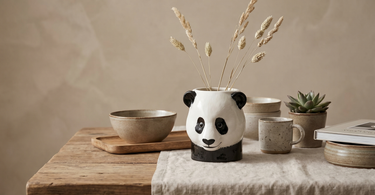
Stoneware is high-fired ceramic – typically around 1200°C or more – which makes the material dense, non-porous and very strong. It often withstands the dishwasher, microwave and oven (always check the label) and has a natural, earthy look. It's more robust than low-fired, porous earthenware and more everyday-friendly than fine porcelain.
Contents
Stoneware is one of the most popular materials for plates, cups and vases alike – and for good reason. It's beautiful, has a natural look and is built to last. But what is stoneware really, and why is it so durable? We take a closer look here.
What is stoneware?
Stoneware is a type of ceramic fired at a high temperature – typically around 1200°C or higher. During the high firing, the clay minerals partially fuse together and become dense and glass-like. The result is a material that's hard, dense and almost non-porous, and which therefore absorbs very little liquid.
Why is stoneware so durable?
The durability is directly linked to the high firing temperature. The higher the firing, the denser and stronger the material becomes. This means:
- It's strong and resistant to knocks and everyday wear.
- It's dense and absorbs almost no liquid, so it's less prone to staining or cracking.
- It handles temperature changes better than many low-fired materials.
Tip: Always check the manufacturer's label before putting stoneware in the microwave or oven. Even though stoneware is generally robust, glaze, decoration or shape can make an individual piece less suited to this.
Everyday use
Precisely because stoneware is so dense and strong, it's well suited to daily use. Many stoneware products can go in the dishwasher, microwave and oven – but this varies from product to product, so always follow the label. That makes stoneware an obvious choice for plates, bowls and cups you use every day.
Look and finish
Stoneware often has a natural, earthy look with matte or semi-glossy glazes and warm, muted colours. This gives it a handmade, rustic character that suits a calm, Scandinavian interior – and often makes each piece a little bit unique.
Stoneware vs. earthenware and porcelain
Ceramics cover several materials that differ in firing, durability and look. Here's a simple comparison:
| Material | Firing | Durability | Look |
|---|---|---|---|
| Stoneware | High-fired (~1200°C+) | Very strong, dense and non-porous | Natural, earthy, often matte |
| Earthenware | Low-fired | Softer and porous – more vulnerable | Often colourful and decorated |
| Porcelain | High-fired from fine clay | Strong and dense, but thin and finer | Fine, white and often semi-translucent |
In short: earthenware is low-fired and porous and therefore more vulnerable, while porcelain is high-fired from a fine, white clay and looks more elegant. Stoneware sits as the robust everyday material with a natural look.
Care and advice
- Always follow the manufacturer's instructions regarding dishwasher, microwave and oven use.
- Avoid sudden temperature shocks, for example taking stoneware straight from the oven into cold water.
- Use soft sponges rather than abrasive scourers, which can wear down the glaze.
Frequently asked questions
What is stoneware?
Stoneware is a type of ceramic that's fired at a high temperature – typically around 1200°C or more. The high firing makes the material dense, hard and almost non-porous.
Why is stoneware so durable?
The high firing temperature makes the clay dense and glass-like. This makes stoneware strong, resistant to wear and less prone to absorbing liquid, staining or cracking.
Is stoneware dishwasher and microwave safe?
Often yes, but it depends on the individual product. Glaze, decoration and shape can make a difference, so always follow the manufacturer's labelling.
What's the difference between stoneware and earthenware?
Stoneware is fired at a high temperature, making it dense and strong, while earthenware is fired at a low temperature and is porous, making it more vulnerable. Earthenware, on the other hand, is often more colourfully decorated.
Is stoneware the same as porcelain?
No. Both are fired at high temperatures, but porcelain is made from a fine, white clay and is thin and elegant, while stoneware has a heavier, more earthy and rustic character.
Summary
Stoneware is high-fired ceramic, fired at around 1200°C or more. This makes the material dense, strong and non-porous – and therefore durable and well suited to everyday use. Compared with low-fired, porous earthenware and fine porcelain, stoneware is the sturdy choice with a natural, earthy look. Always check the labelling for dishwasher, microwave and oven use.