
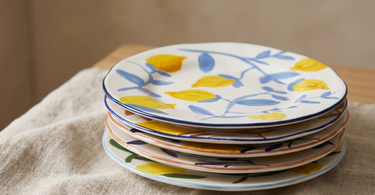
Faience is low-fired, porous earthenware with a covering glaze. It's fired at a lower temperature than stoneware and porcelain and is therefore softer and more porous, but on the other hand lighter and often cheaper. The glaze makes it well suited to colourful, decorative tableware.
Faience is one of the most widely used materials for tableware and decoration, but it's often confused with stoneware and porcelain. The difference lies mainly in the clay and the firing temperature. Here's a short, clear explanation of what faience is and how it differs from the other types of ceramics.
What is faience?
Faience is a type of earthenware – that is, ceramics made from clay fired at a relatively low temperature. The result is a material that remains porous, and which therefore always needs a glaze so it can hold liquid. The glaze is often white or coloured and provides a lovely surface for decoration and hand-painting.
Firing explained
What matters most with ceramics is how hot it's fired. The higher the temperature, the denser and harder the material becomes. Faience sits at the low end, which makes it softer and more porous than both stoneware and porcelain.
- Faience: fired at low temperature, remains porous and requires glaze.
- Stoneware: fired higher, becomes dense and sturdy.
- Porcelain: fired highest, becomes dense, hard and often translucent.
Tip: Want to recognise faience? An unglazed chipped spot will typically look dull and slightly greyish or reddish, whereas porcelain is white and dense.
Faience, stoneware and porcelain
The three materials are used for many of the same things, but they each have their own strengths. Faience is light and decorative, stoneware is sturdy and suited to everyday use, and porcelain is fine and elegant.
| Property | Faience | Stoneware | Porcelain |
|---|---|---|---|
| Firing temperature | Low | High | Highest |
| Density | Porous | Dense | Very dense |
| Weight | Light | Heavier | Light to medium |
| Durability | More fragile | Robust | Hard, but can chip |
| Typical use | Decorative tableware | Everyday tableware | Fine tableware |
Durability and use
Because faience is fired at a lower temperature, it's slightly more fragile and sensitive to knocks and thermal shock than stoneware and porcelain. Over time, the glaze can develop fine cracks (crazing). This doesn't make faience inferior though – it's precisely the light, decorative look that makes the material popular for plates, bowls and ornaments.
How to care for faience
- Avoid strong temperature shocks, such as pouring boiling water into a cold piece.
- Hand washing is often gentlest, especially for hand-painted or decorated faience.
- Store plates with a piece of felt or paper between them, so the glaze doesn't get scratched.
Frequently asked questions
Is faience the same as ceramics?
Faience is a type of ceramic. Ceramics is the umbrella term for fired clay, and faience, stoneware and porcelain are all ceramic materials.
What's the difference between faience and stoneware?
Faience is fired at a lower temperature and is porous and softer, while stoneware is fired at a higher temperature and becomes dense and more robust.
Can faience go in the dishwasher?
It depends on the individual piece. Many can go in the dishwasher, but hand-painted or decorated faience is often best cared for by hand washing. Follow the manufacturer's instructions.
Why does faience get fine cracks in the glaze?
Small cracks in the glaze, called crazing, occur naturally over time due to the movements of the material. This is normal and doesn't make the tableware unusable.
Is faience more fragile than porcelain?
Yes, faience is typically more porous and slightly more fragile to knocks, because it's fired at a lower temperature than porcelain.
Summary
Faience is a low-fired, porous earthenware with a covering glaze that makes it well-suited to decorative tableware. It's lighter and more fragile than both stoneware and porcelain, which are fired at higher temperatures and become denser and more robust. The difference lies in the clay and the firing – and therefore in both look and durability.