
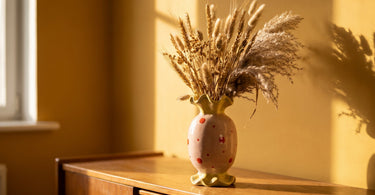
The short answer: ochre is a natural earth pigment in yellow, brownish and red shades, formed by an iron compound in sedimentary deposits. As an interior colour, ochre is a deep, warm yellow, which has been used as a dye since the time of cave paintings.
Contents
Ochre is one of the oldest dyes we know. The word covers a group of natural earths found in yellow, brown and red shades, which have coloured everything from cave paintings to furniture and textiles throughout history. In this guide, we take a closer look at exactly what ochre is as a pigment, why the colour can vary from yellow to red, and how you can use the warm, earthy tone in your own home.
The short answer
Ochre is originally the collective term for naturally occurring yellow, brownish and red earths found as sedimentary deposits. It's a naturally occurring iron compound, and the pigment is considered completely non-toxic. As an interior colour, we know ochre as a deep, warm yellow that goes well with brown, green and blue tones as well as brass.
What ochre is as a pigment
Ochre is a naturally occurring iron compound, where the iron minerals typically make up only a small part of the earth itself. The pigment has been used as a red, brown or yellow dye since the time of cave paintings, making it one of the oldest dyes ever used by people.
The word ochre comes from the Ancient Greek word ochrós, meaning pale yellow or sallow, which makes good sense when you think about the colour's earthy, muted expression. The pigment is also considered completely non-toxic, which is part of the reason it has been used for so long without any issues.
Yellow and red ochre: why it can be both
Ochre is found in yellow, brown and red shades, and the two extremes, yellow and red, are actually connected. Red ochre can bind water and turn yellow, while yellow ochre, conversely, can turn red if heated. So it's the same basic iron compound appearing in different colour shades depending on water content and temperature.
Among the well-known, named ochre pigments are Terra di Siena and Løvskal ochre. In Denmark, ochre was mined at Løvskal near Randers right up until the mid-1900s, showing that ochre isn't just something you associate with faraway places, but also has roots in Danish soil.
Tip: Think of ochre as a colour that can move between yellow and red depending on light and material, just as the pigment itself does with water and heat.
Ochre in interior design
As an interior colour, ochre is a deep, warm yellow. It differs from clear, cool yellow tones by having an earthy, muted expression, which makes it easy to work with in a home. Precisely because ochre is fundamentally a natural pigment, the colour behaves well alongside other natural and earthy shades.
Ochre goes with brown, green and blue tones as well as brass, making it well suited if you want a room with warmth and depth, without it becoming too sharp or overpowering.
Find more warm, yellow shades for the home in the collection of yellow vases.
See yellow vasesWhat goes with ochre
Ochre works well alongside colours that themselves have a calm and earthy expression. Here are some of the tones ochre naturally pairs with:
- Cream, which gives air and lightness around the deep yellow colour.
- Terracotta, which enhances the warm, earthy expression.
- Olive green, which creates a natural and subdued contrast.
- Navy blue, which gives depth and a touch of coolness against the warm yellow.
- Brass, which enhances the warm, golden atmosphere in the room.
If you want to know more about how colours work together generally in the home, you can read Which colours go together in the home? or take a closer look at combinations with brown tones in Which colours go with brown in interior design?
Tips for using ochre at home
Ochre works best as a warm accent rather than as the sole, bold main colour in a room. That's in the nature of the pigment: it's an earth colour, created to blend with other natural shades, not to stand alone and bold.
- Use ochre in textiles such as throws, where the colour can soften a room without dominating it.
- Let ochre meet stoneware and ceramics, where the earthy tone naturally suits the material's expression.
- Pair ochre with brass, which enhances the colour's warm and golden character.
- Choose a muted, warm yellow rather than a clear, cool yellow if you want to capture ochre's true expression.
Frequently asked questions
What is ochre?
Ochre was originally the term for naturally occurring yellow, brownish and red earths found as sedimentary deposits. It's a naturally occurring iron compound that has been used as a pigment since the days of cave paintings.
What colour is ochre?
Ochre comes in yellow, brownish and red shades. As an interior colour, ochre is typically thought of as a deep, warm yellow.
What goes with ochre?
Ochre pairs well with cream, terracotta, olive green, navy blue and brass, as these tones all have a calm and earthy expression.
Is ochre toxic?
No, ochre is considered a completely non-toxic pigment.
What's the difference between yellow and red ochre?
It's the same type of iron compound, but red ochre can bind water and turn yellow, while yellow ochre can turn red if heated.
How do you use ochre in interior design?
Use ochre as a warm accent in, for example, textiles and ceramics, and let the colour meet brown, green or blue tones as well as brass for an earthy, warm expression.
Summary
Ochre is a natural earth pigment, formed from an iron compound, and has been used as a pigment since the days of cave paintings in yellow, brown and red shades. As an interior colour, ochre is a deep, warm yellow that pairs beautifully with brown, green and blue tones as well as brass, and works best as a warm accent in textiles and ceramics at home.
Read also
- Which colours go together in the home?
- Which colours go with brown in interior design?
- Colour guide for the home: How to choose the right palette
- Brass in interior design: Timeless and elegant
Create a warm and earthy home with ochre
Dinna has handpicked throws, ceramics and brass details that go well with ochre's deep, warm yellow tones.
Explore stoneware