
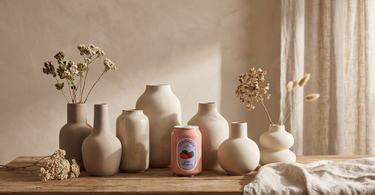
Group vases beautifully by using an odd number (3-5), varying heights and shapes and keeping them in a shared colour or material tone. Place them close together, mix empty vases with vases holding flowers, and play with slight asymmetry – so they appear as one harmonious whole rather than random individual pieces.
Contents
A single beautiful vase is nice – but several vases grouped together can create a whole little work of art on the table, shelf or windowsill. The secret isn't in having many, but in putting them together the right way. Here are the simple styling tricks that make a group of vases look thought-through and harmonious.
Use an odd number
One of the most well-known styling principles is the rule of three: odd numbers appear more dynamic and natural to the eye than even numbers. Three or five vases form a group that feels balanced without looking too staged.
- Start with three vases as a safe basic composition.
- Grow to five if you have the space and fancy more.
- Even numbers can easily end up looking too symmetrical and stiff.
Vary height and shape
Variation creates life. When the vases have different heights and shapes, a rhythm emerges that the eye finds pleasing. Identical vases in a row, on the other hand, quickly look monotonous.
- Choose one tall, one medium and one low vase as a starting point.
- Mix shapes: a slender one, a rounded one and an angular one.
- Let the tallest stand slightly behind and the low ones in front.
Tip: Missing a height difference? Place the smallest vase on a small stack of books or a tray. That way you create a level difference without having to buy new vases.
Shared colour or material tone
For the group to hang together, there needs to be a common thread. It doesn't have to be the same colour – a shared tone, a shared material or a consistent mood ties it all together.
- Stay within the same colour family, e.g. earthy tones or off-white.
- Or collect by material: all in ceramic, glass or stoneware.
- Feel free to borrow an accent colour from the rest of the room.
Group closely together
Vases that are scattered look random. Bring them close together so they read as one unified composition. Let them overlap slightly within the field of view.
- Place the vases close, almost touching each other.
- Arrange them in a loose triangle rather than a straight line.
- Gather the group on a tray or a board to "frame" it.
Mix empty and filled vases
Not all vases need flowers. A mix of empty vases that function as sculptures, and a few with greenery or flowers, gives both calm and life.
- Let one or two vases stand empty as pure shapes.
- Put a few branches, a bouquet or some greenery in the others.
- Play with slight asymmetry – perfect balance isn't necessary.
Do and don't
Here are the most important do's and don'ts when grouping vases:
| Do this | Avoid this |
|---|---|
| Odd number (3 or 5) | Even, symmetrical arrangements |
| Vary height and shape | Matching vases in a row |
| Shared colour or material tone | Wildly different styles mixed together |
| Place the vases close together | Spread them out across the whole surface |
Frequently asked questions
How many vases should I group together?
Three is a good starting point, and five works well too if you've got the space. Odd numbers look more natural to the eye than even numbers, which can quickly start to look stiff.
Should the vases be matching?
No, quite the opposite. Variation in height and shape creates life. The important thing is that they share a common thread – for example the same colour family or material – so they hang together as a whole.
Do all the vases need flowers in them?
No. A mix of empty vases that work as sculptural shapes, and a few with flowers or greenery, gives the arrangement both calm and life.
How do I get height variation without buying new vases?
Lift the smallest vase up on a stack of books, a board or a small platform. That way you create a difference in levels and depth without any extra purchases.
Where's the best place to put a group of vases?
Classic spots are the dining table, coffee table, a console, a shelving unit or a wide windowsill. Group them on a tray so they come across as one unified composition.
Summary
Beautiful vase groupings come down to a few simple principles: odd numbers, varying heights and shapes, a shared colour or material tone, and placing the vases close together. Mix empty and filled vases, and don't be afraid of a little asymmetry. That way, you'll turn a handful of loose vases into a considered, harmonious whole.
Read also
Find your next favourites among our vases and small vases.