
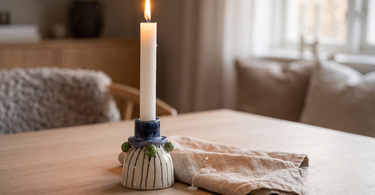
Let the wax harden completely before you touch it, break the lump off, and use kitchen roll and a lukewarm iron to draw out the rest. Afterwards there's often a grease stain left behind, which needs treating separately. Coloured wax needs extra care, and wool and silk shouldn't be ironed at all.
Contents
If you've just spilt wax on your clothes, there's good reason to take a deep breath. The method is simple, but the order matters.
Let the wax harden first
The most important step comes before you even touch the stain. Wax is soft and pliable right after the accident, and if you fiddle with it now, you'll just smear it further into the textile fibres. Wait instead.
Cold makes the wax brittle, so it snaps off instead of smearing. Put the garment in a freezer bag and place it in the freezer, or hold an ice cube against the lump on the outside of a piece of fabric if you want to get it over with quickly. Once the wax is hard and cold, you're ready for the actual removal.
The method step by step
Once the wax is cold and hard, the rest follows a fixed order.
- Cool the wax down completely, preferably in the freezer or with ice.
- Break and scrape off most of the lump with a blunt edge, for example a spoon or a credit card.
- Place kitchen roll or baking paper over and under the stain.
- Iron gently over the paper on a low heat, so the rest of the wax melts and is drawn up into the paper.
- Change the paper as you go, until no more wax comes out.
- Wash the garment as normal afterwards.
Take your time changing the paper several times rather than pressing too hard or too hot too quickly. It's the paper that should do the work.
The grease stain left behind
Even when the lump is gone and the fabric looks clean, the job often isn't finished. Wax is, well, wax, and it leaves a greasy shadow in the textile that won't disappear on its own with a normal wash.
Treat the shadow like an ordinary grease stain before the garment goes in the machine. Washing-up liquid or bile soap rubbed into the stain works well, and it's a good idea to let it sit for a while before washing. Then let the garment air-dry instead of putting it straight in the tumble dryer, as the heat from the dryer can set any remaining trace of the stain permanently if it isn't completely gone. Air-drying gives you the chance to see if it needs another round.
Coloured wax
Coloured wax has an extra trap built in. You can remove the wax itself the same way as ordinary wax, but the dye in it can leave its own stain, even after the lump is gone.
Here the order is crucial: never iron coloured wax before the lump has been fully scraped off. The heat from the iron can cause the colour to set permanently in the fibres, instead of being drawn out into the paper along with the wax. So scrape thoroughly first, and only afterwards treat any colour stain as you would any other colour stain.
Wool, silk and delicate fabrics
Wool and silk can't be ironed, and that also applies when there's candle wax involved. Here you'll have to make do with cold and careful scraping, the same principle as with ordinary clothes, but without the iron-and-paper step afterwards.
If you're left with a grease or colour shadow on wool or silk after scraping, it's often wisest to leave the rest to a dry cleaner, rather than rubbing and treating a delicate fabric yourself. Want to know more about how wool should generally be treated, you can read how to wash wool.
How to avoid it next time
The easiest wax stain to deal with is the one that never happens. A few habits at the candlestick make quite a difference.
- Use candlesticks with a wide base, so they stand stably and don't tip over.
- Place the candlesticks away from the edge of the table, where a sleeve or a cushion can easily knock into them.
- Put out candles that burn unevenly or smoke, instead of hoping they'll sort themselves out.
- Never let a candle burn all the way down into the holder, where the last bit of wax has the easiest time running over the edge.
See candlesticks with a wide base, or find candles in the size that fits your candlesticks. Want to know more about why candles smoke and drip in the first place, you can read why do candles smoke and drip.
Frequently asked questions
How do you get wax off clothes?
Cool the wax down so it becomes brittle and can be broken off, then place kitchen paper over and under the stain and iron gently on a low heat, so the rest is drawn up into the paper.
Can you iron wax out of clothes?
Yes, but only once most of the lump has been broken and scraped off while cold, otherwise the iron will just smear the wax further into the fabric.
Why is there a grease mark left after the wax?
Wax is, well, wax, and wax leaves a greasy shadow in the fabric even after the lump itself has been removed, so the stain needs to be treated with washing-up liquid or gall soap before washing.
What do you do about coloured wax on clothes?
Scrape the lump off completely before ironing, as the heat can set the dye permanently, and then treat any colour stain as an ordinary colour stain.
Can you remove wax from wool yourself?
Partly, cold and careful scraping you can manage yourself, but wool and silk can't be ironed, so the rest is often a job for the dry cleaner.
Summary
The most important rule is to let the wax harden before touching it, so it can be broken off rather than smeared out. After that, a fixed method follows with scraping, kitchen paper and low heat from the iron. Even once the lump is gone, a grease shadow can remain, which needs its own treatment, and coloured wax must be scraped off completely before ironing. On wool and silk, the effort stops at cold and careful scraping, the rest belongs to the dry cleaner. With a little thought at the candlestick, you can often avoid the whole situation next time.
Read also
- How do you remove wax from a tablecloth, candlestick and table?
- How do you get wax off a tablecloth?
- Why do candles smoke and drip?
- Candle guide: types, sizes and burn time
- Table decorations: how to build the centre of your table
- Christmas table setting: how to set the Christmas table
Discover candles and candlesticks at Dims Studio — candles and candlesticks.