
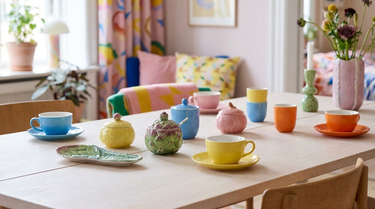
Sugar bowls
Sugar bowls and small serving bowls—perfect for sugar, salt, spices, dips, nuts, or jewelry. Hand-painted ceramics and stoneware from Quail, Bloomingville, and Italian artisans.
The small bowls can also be used as soy sauce bowls, condiment bowls, or simply as decorative accents on the table.


All reviews
A sugar bowl doesn't have to be boring. At Dims Studio you'll find hand-painted sugar bowls and small bowls in ceramic and stoneware, shaped like everything from lemons and strawberries to oysters and a single jellyfish, plus practical spoon rests shaped like fruit and shellfish. The bowls are small enough for sugar, salt, dip or jewellery, yet big enough to be an eye-catcher on the table. Here's a guide to types, materials and uses, so you can find the bowl that suits your kitchen.
Types of sugar bowls and small bowls
The range of sugar bowls at Dims Studio is built around figurative shapes and small, hand-painted details. Below you'll find the recurring types, so you can quickly find the bowl that suits you.
Fruit and vegetable bowls
The largest group is bowls shaped like fruit and vegetables. From Caja Company you'll find an artichoke bowl, an olive bowl, a strawberry bowl, a lemon bowl and a small lemon bowl, a pomegranate bowl and a yellow pepper spoon rest. This type of bowl is perfect for sugar, salt or a small portion of a side, and the shape also makes them a fun detail on the table.
Shellfish and fish bowls
Another large group takes its theme from the sea. Here you'll find an oyster bowl in both Ø8 and Ø14 cm, a deep crab bowl, a jellyfish bowl and a spoon rest shaped like shellfish and a starfish, all from Caja Company. Bloomingville also has a set of fish plates in stoneware. Bowls with a shellfish motif are perfect for dip, dressing or a small serving on a seafood night.
Spoon rests
Several of the bowls are designed specifically as spoon rests, a small resting place for your cooking spoon by the stove. The apple spoon rest, pomegranate spoon rest, corn spoon rest, the yellow pepper spoon rest and the trout spoon rest from Caja Company belong to this group. They can of course also be used as an ordinary small bowl if you'd rather keep sugar or salt in them.
Round stoneware bowls without a figurative motif
If you prefer a simpler look, we also have round bowls without a figurative motif. The Soline dish and the Nini bowl, available in both stoneware and ceramic, are both from Bloomingville and work well as a classic sugar bowl or snack bowl.
Flower and metal bowls
Rice has a small flower bowl in orange, and Caja Company has a hydrangea bowl in blue and pink. Doing Goods contributes a small brass dish with a pink flower motif, which differs from the other bowls by being metal rather than ceramic.
Types compared
| Type | Look | Great for | Examples in the range |
|---|---|---|---|
| Fruit and vegetables | Colourful and everyday | Sugar, salt, side dishes | Artichoke, olive, strawberry, lemon, pomegranate |
| Shellfish and fish | Playful and thematic | Dip, dressing, seafood night | Oyster, crab, jellyfish, fish plates |
| Spoon rests | Practical and dual-purpose | By the stove, as a small bowl | Apple, pomegranate, corn, pepper, trout |
| Round stoneware bowls | Simple and classic | Everyday sugar bowl or snack bowl | Soline, Nini |
| Flowers and metal | Soft or detailed | Jewellery, small items, decoration | Small flower bowl, hydrangea bowl, brass dish |
Materials: ceramic, stoneware and brass
The material affects both the look and the durability. Most of the bowls in the range are hand-painted, which means colour and pattern vary slightly from bowl to bowl.
Ceramic
By far most of the bowls in the range, including the entire Caja Company series, are made from hand-painted ceramic. Ceramic gives an Italian-inspired look, where each bowl carries its own mark of brushstrokes and small variations.
Stoneware
The Soline dish and Nini bowl from Bloomingville are made from stoneware, a more densely fired and more robust type of ceramic. Stoneware is a good choice if the bowl will be used daily, for instance for sugar or salt by the coffee machine.
Brass
The small flower dish from Doing Goods is made from brass. Brass gives a completely different, shinier look than ceramic and stoneware and suits jewellery or small, dry items rather than food.
How to care for the bowl
- Hand-wash hand-painted ceramic bowls to protect the glaze and preserve the colours.
- Polish the brass dish with a dry, soft cloth to keep the surface shiny.
- Avoid sudden temperature changes with ceramic bowls, for example hot food straight from the oven into a cold bowl.
- Let the bowls dry completely before stacking them, so the glaze isn't scratched.
Materials compared
| Material | Look | Durability | Examples in the range |
|---|---|---|---|
| Ceramic | Hand-painted and varied | Good for daily use | Caja Company |
| Stoneware | Simple and robust | Very robust | Bloomingville |
| Brass | Shiny and detailed | Needs regular polishing | Doing Goods |
Sugar bowls for the coffee table, the stove and the dining table
Where the bowl will be used affects which type suits best.
Sugar and salt with coffee
For the classic sugar bowl on the coffee table, a round stoneware bowl like Soline or Nini is a safe choice. They're simple enough for daily use and fit most cups and mugs.
By the stove
The spoon rests shaped like apple, pomegranate, corn or pepper are made to give the spoon somewhere to rest while you cook, while also adding a colourful touch by the stove.
For spices across your cooking
Beyond sugar and salt, the smaller bowls can also be used for chilli flakes, flaky salt, dried herbs or lemon zest, so the key spices sit ready right by the chopping board instead of hidden away in a cupboard.
Dip and shellfish at the table
Bowls with a shellfish motif, like the oyster or crab bowl, are perfect for dip, lemon wedges or a small portion of sauce when the menu features fish or shellfish. Also see our serving bowls for the rest of the table.
Flower table and decoration
The flower-shaped bowls, such as the hydrangea bowl or the small flower bowl from Rice, can also be used as a small spot for a few short cut flowers or potpourri when they're not being used for food.
Jewellery and small items
The small brass dish or one of the smaller ceramic bowls is a perfect spot for rings, earrings or keys by the front door or on the bedside table.
Create a coffee station
To make morning coffee a bit cosier, you can gather two or three of the small bowls into a fixed station on the kitchen counter or by the coffee machine: one for sugar, one for cocoa and perhaps a third for milk foam or cinnamon. Choosing bowls in the same colour family, for example several with yellow or blue details, gives the station a calm, considered look even though the bowls have different motifs. Feel free to swap the contents by season, so the same bowls hold cinnamon in winter and mint leaves in summer.
Set the table for brunch or lunch
At a brunch or a longer lunch table, the small bowls are great for gathering several small elements, such as jam, honey, nuts and freshly cut fruit, so guests can help themselves to a little of each. Use bowls with different motifs, like the lemon and strawberry bowl, to signal what's in each bowl without having to write it down.
A small still life on the kitchen counter
When the bowls aren't in use, they can easily stay out as decoration. Group two or three together on a tray or straight on the table, ideally in different sizes and with a shared theme, for example several fruit motifs or several shellfish shapes, so they form a small, colourful arrangement.
Sizes: from a small spoon rest to a small bowl with volume
Most of the bowls and spoon rests in the range are small, typically with a diameter of 8 to 15 cm. Measurements are always listed under each individual item.
The smallest bowls
The small oyster bowl in Ø8 cm and most of the spoon rests are among the smallest in the range and suit a single person or a small amount of sugar, salt or dip.
Medium-sized bowls
The oyster bowl in Ø14 cm, the Nini bowl and the hydrangea bowl have a bit more volume and work well as a shared bowl at the table or for slightly larger amounts.
Sizes compared
| Size | Typical use |
|---|---|
| Very small (spoon rests, Ø8 cm) | By the stove, dip for a single person |
| Small to medium (Ø10-15 cm) | Sugar, salt, shared dip or snacks |
How to choose between a spoon rest and an ordinary bowl
If you're unsure whether to choose one of the spoon rests or one of the more classic bowls, it can help to think about where the bowl will mainly sit. If it will be used actively by the stove while you cook, a spoon rest like the apple or corn spoon rest is practical, because the shape is low and wide enough for the spoon to sit stably, while still looking decorative even when not in use. If the bowl will instead sit permanently on a dining table or a coffee tray, one of the deeper bowls, such as Nini or one of the shellfish bowls, is often more practical, because it can hold a bit more and is easier to pick up and put down without tipping. Many choose to have both types, one or two spoon rests by the stove and a couple of deeper bowls for the table, so the kitchen gets both function and a cohesive, colourful look.
Brands behind the sugar bowls
The range brings together several brands, each with its own look, from the hand-painted Italian style of Caja Company to the simple, Scandinavian look of Bloomingville. What the brands have in common is that they work with handmade materials and a figurative or colourful design language, which turns the small bowls into more than just a container for sugar or salt. Here are the names you'll come across among the sugar bowls.
Caja Company
Caja Company is behind by far the largest part of the range, with hand-painted, often Italian-inspired ceramics in figurative shapes such as fruit, vegetables and shellfish. What the bowls have in common is that each one varies slightly in colour and pattern.
Bloomingville
Bloomingville delivers the clean, round stoneware bowls Soline and Nini as well as a set of fish plates, all with a calm, Scandinavian look.
Rice
Rice contributes a small, colourful flower bowl, marked by the brand's typical, cheerful colour choices.
Doing Goods
Doing Goods is behind the small brass flower dish, which stands out from the rest of the range by being metal.
Italian craft traditions
Several of the bowls from Caja Company are described as hand-painted Italian ceramics, which can be seen in the detailed motifs and the soft, painted colour transitions. This type of craftsmanship is time-consuming to produce, which is also part of the explanation for why no two bowls end up completely alike.
Which sugar bowl should you choose? Our recommendations
| Situation | Our recommendation |
|---|---|
| Everyday sugar bowl for coffee | A round stoneware bowl like Soline or Nini from Bloomingville |
| Fun detail by the stove | A spoon rest shaped like fruit or vegetables from Caja Company |
| Seafood night | The oyster or crab bowl for dip and lemon wedges |
| Storing jewellery | The small brass dish from Doing Goods |
| Gift for someone who loves kitchen things | A hand-painted bowl with a clear motif, such as the lemon or strawberry bowl |
Frequently asked questions about sugar bowls
What's the difference between a sugar bowl and a snack bowl?
There's no fixed line. The label mostly depends on what you choose to use the bowl for. Most of the bowls in the range can just as easily be used for sugar, salt, dip or snacks.
Can the bowls be used for anything other than sugar?
Yes. The small bowls also work well for salt, spices, dip, olives, nuts, or for storing jewellery and small items.
What is a spoon rest?
A spoon rest is a small bowl or figure you can rest your cooking spoon on by the stove, so it doesn't sit directly on the worktop. Several of the spoon rests in the range are shaped like fruit or vegetables.
Are all bowls the same when they're hand-painted?
No. Each bowl has small variations in colour and pattern, because it's painted by hand. That's part of the handmade look.
Which brands do you sell sugar bowls from?
We carry hand-painted ceramics and stoneware from, among others, Caja Company, Bloomingville, Rice and Doing Goods.
Can the sugar bowl go in the dishwasher?
Hand-washing is recommended for hand-painted ceramic bowls, to protect the glaze and preserve the colours. The brass dish shouldn't go in the dishwasher and should instead be polished with a dry cloth.
What's the difference between ceramic and stoneware?
Ceramic is a broader term for earthenware, while stoneware is a more densely fired and more robust type of ceramic. Stoneware generally withstands daily use better, while hand-painted ceramic often has a more varied look.
How many bowls do I need if I want to make a small station by the coffee machine?
If you want to gather sugar, milk foam and cocoa in one place, it's a good idea to have two to three small bowls in the same colour family, so they appear as a cohesive arrangement. Also see our ceramic bowls for more colours and shapes.
Do the bowls make a good gift?
Yes, a hand-painted bowl is a great gift, because it's both useful and decorative. Also see our candy bowls and platters and bowls for more ideas.
Why are some bowls shaped like shellfish or fish?
The shape is part of the playful, figurative look that runs through many of Dims Studio's bowls. Bowls with a shellfish motif were originally intended for serving shellfish, but are used just as often for sugar, salt or dip.
Can the bowls be used for storage in the bathroom?
Yes, a small bowl is also handy for cotton swabs, hair ties or jewellery in the bathroom, where it also works as a decorative element.
Where can I buy sugar bowls?
You can buy sugar bowls online at Dims Studio, where you'll find hand-painted bowls in ceramic, stoneware and brass from, among others, Caja Company, Bloomingville, Rice and Doing Goods.
Can I use several different bowls together on the same table?
Yes, many people deliberately mix several motifs, for example a lemon bowl for sugar and an olive bowl for salt, to give the table a more personal look. Keep the colours within the same palette if you want a calm, cohesive look.
How many spoon rests do I need in the kitchen?
It depends on how many pots and pans you typically have going at once. A single spoon rest is enough for most households, while two can be handy if you're making a sauce and a main dish side by side.