
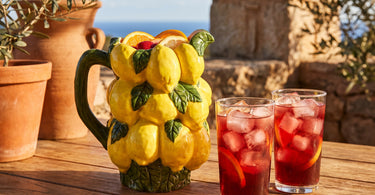
Sangria is red wine with pieces of fruit, a touch of sweetness and often a splash of spirits or fizz. The fruit steeps for a couple of hours in the fridge, while fizz and ice only go in just before serving, and the whole drink is best made no more than two to three hours in advance. Serve it cold, straight from the jug.
Dims Studio's own figures: The shop's jugs, which are often used for serving sangria, are typically made of stoneware and ceramic. Among the jugs sold from November 2025 to October 2026 (more than 300 items sold), 64% were wholly or partly stoneware and 58% ceramic, and customers give them an average of 5.0 out of 5 stars across 20 reviews.
Contents
- Sangria in brief: how the recipe comes together
- What is sangria, and where does the name come from
- The ingredients in sangria, without fixed quantities
- How to make sangria step by step
- Variations of sangria, and the difference from tinto de verano
- Sangria for a crowd
- Serving: jug, ice and glasses
- Frequently asked questions
- Summary
Sangria has become synonymous with summer, barbecues and long afternoons in the garden, but behind the colourful jug lies a simple principle that's easy to get right once you know the order of things. This guide goes through what sangria actually is, which ingredients tend to recur, and how you build the drink up step by step, without having to look up exact quantities every time.
You'll also get an overview of the best-known variations, good tips for making sangria for a crowd, and how to serve it chilled and inviting from a jug on the table.
Sangria in brief: how the recipe comes together
Sangria is built on a fixed principle, even though recipes vary from house to house. The base is always wine, usually red wine, with lemon and orange juice added for acidity, fruit in pieces for freshness and a touch of sugar for sweetness. Many also add a splash of brandy or liqueur.
The most important thing is the order: the fruit and wine are left to steep together for a couple of hours in the fridge, so the flavour of fresh fruit has time to settle into the wine. Only just before serving do the fizz and ice cubes go in, so the fizz doesn't have time to disappear while the drink is sitting out. Since no sources give fixed quantities, the best advice is to taste as you go and adjust acidity, sweetness and fruit to taste.
What is sangria, and where does the name come from
Sangria is an alcoholic drink with roots in Spain and Portugal. The name comes from the Spanish word sangre, meaning blood, and in both Spanish and Portuguese, sangría means bloodletting, a reference to the wine's deep red colour. The drink is basically a mixture of wine, usually red wine, fruit and a sweetener, and it's typically served cold in summer.
The forerunner of sangria was wine lemonade from the kingdom of León in the Middle Ages, where wine was mixed with oranges, lemons, sugar and spices. So the principle has stuck around for a very long time, even though the recipe has become more varied along the way.
Since the EU rules from 2014, only sangria made in Spain or Portugal may be sold under the name sangria within the EU. That doesn't change the fact that you can easily make your own version at home, you just shouldn't sell it under that name if it doesn't come from one of the two countries.
The ingredients in sangria, without fixed quantities
There's no single authoritative recipe for sangria, but some ingredients tend to recur almost everywhere. The most suitable wine is a young, fruity red wine that isn't too heavy or tannic. Then comes the juice of lemon and orange, which gives the fresh acidity, while the rest of the fruit is cut into pieces and added. Best suited are fleshy seasonal fruits such as peach, apricot, pear, apple and banana.
The sweetness traditionally comes from sugar, which is best made into a syrup before being mixed in, so it's distributed evenly without the drink turning sickly sweet at the bottom of the glass. Some recipes add brandy or a liqueur for more character, and right at the end, soda water or fizzy water goes in, so the drink gets its fizz. Cinnamon can also be used, but far from everyone likes that flavour, so it's a matter of taste, not a fixed rule.
- Young, fruity red wine as the base
- Lemon and orange juice for acidity
- Seasonal fruit in pieces, e.g. peach, apricot, pear, apple and banana
- Sugar dissolved as syrup
- Brandy or liqueur, optionally
- Fizzy water or soda at the end
- Cinnamon, if you like it
How to make sangria step by step
The method is simple once the order's in place. Start by cutting the fruit into pieces and squeezing the juice from the lemon and orange. Mix fruit, juice, cold red wine and syrup in a jug or bowl, and stir so the sugar spreads through the wine.
Let the mixture sit for a couple of hours in the fridge, making sure the fruit stays covered by the wine throughout, so it doesn't come into contact with air and turn brown. The sangria shouldn't be made more than two to three hours in advance though, as the wine will start to change character and the fruit may begin to ferment.
Just before serving, add fizzy water or soda and ice cubes, so the fizz is preserved as well as possible. Always taste as you go, checking both sweetness and acidity, and adjust with more lemon, sugar or soda until the balance suits you.
Tip: Always make the syrup before mixing in the rest. That way you avoid sugar crystals at the bottom of the jug, and it's easier to taste your way to the right sweetness.
Variations of sangria, and the difference from tinto de verano
Classic sangria is made with red wine, but there are several well-known variations. Sangria blanca uses white wine instead of red wine and is a lighter, fresher version. Sangria de cava is made with Spanish sparkling wine, giving it more bubbles and finesse. In Asturias in northern Spain, cider is often used instead of wine, giving a completely different, tangier character.
For children or others who don't drink alcohol, there's ponche de sangria, where soda replaces the wine, but the fruit and the principle are otherwise the same.
Sangria is sometimes confused with tinto de verano, another Spanish summer drink, but the two aren't the same. Tinto de verano is red wine and soda, typically lemon soda, mixed in equal parts and served with ice and a slice of lemon or orange. Unlike sangria, tinto de verano contains neither fruit pieces nor cinnamon, and it's far simpler to put together.
Here's an overview of the most well-known variants of sangria and its close relative, tinto de verano.
| Variant | Base | Characteristics |
|---|---|---|
| Sangria (classic) | Red wine | Fruit pieces, syrup and soda |
| Sangria blanca | White wine | Lighter and fresher version |
| Sangria de cava | Sparkling wine (cava) | More bubbles and finesse |
| Asturian version | Cider | Tangier character |
| Ponche de sangria | Soda | Alcohol-free, same fruit and principle |
| Tinto de verano | Red wine and soda | No pieces of fruit or cinnamon |
Sangria for a crowd
If the sangria is to be served at a whole party or a barbecue evening, it's a good idea to make the base itself, meaning wine, juice and syrup, well in advance. The fruit, on the other hand, should only be added two to three hours before the drink is to be served, so it doesn't become overdrawn or start to ferment.
Keep the fruit covered with wine while it's infusing, so it doesn't turn brown and lose its fresh look. It's a good idea to set out several jugs rather than one big one, so guests can pour their own along the way, without a queue forming at a single serving spot.
Serving: jug, ice and glasses
Traditionally, sangria is served in a transparent jug, so you can see the fruit floating between the ice cubes, with a long spoon to stir with without mashing the fruit to pieces. It's poured into ordinary glasses, not stemmed cocktail glasses, and it should always be cold, never lukewarm.
The shop's jugs are made of ceramic and stoneware, many of them shaped like lemons and other fruits, and they therefore don't show the actual fruit in the drink the way a transparent glass jug does. On the other hand, they're an eye-catcher in themselves on the table, for example an Italian lemon jug in ceramic, a Lemon jug in ceramic from &Klevering or a Lemon jug in stoneware from &Klevering. If you want the classic, transparent solution where the fruit is clearly visible, an ordinary glass jug is usually the best choice.
You can read more about different jugs and their uses in Jugs for every occasion: From coffee to cocktails, and if you're looking for inspiration for the rest of the table and the accessories, Tapas ideas: dishes, presentation and drinks for the evening is a good place to look further.
Find a jug that can stay out all evening, whether it's glass or ceramic.
See jugsFrequently asked questions
What is sangria made of?
Sangria is made of red wine, lemon and orange juice, pieces of fruit and sugar dissolved as syrup, often with a splash of brandy or liqueur and fizz at the end.
How do you make sangria?
Cut the fruit, squeeze lemon and orange, mix it with cold red wine and syrup, and let it infuse in the fridge before adding fizz and ice just before serving.
How long should sangria infuse?
The fruit should infuse for a couple of hours in the wine, but the sangria shouldn't be made more than two to three hours in advance, so the wine doesn't change character and the fruit doesn't start to ferment.
Which wine is best for sangria?
A young, fruity red wine is most suitable, as it gives the sangria the fresh, slightly full-bodied character the drink is known for.
Can you make sangria with white wine?
Yes, that variant is called sangria blanca and is made with white wine instead of red wine, while the rest of the principle with fruit, syrup and fizz is the same.
What's the difference between sangria and tinto de verano?
Tinto de verano is red wine mixed with soda water, typically lemon soda, without fruit or cinnamon, while sangria always contains pieces of fruit and often several more ingredients.
Summary
Sangria is basically red wine, citrus, fruit and a bit of sweetness, bound together by a syrup and finished with fizz and ice just before serving. Let the fruit infuse for a couple of hours, but save the actual mixing until a few hours before the guests arrive, and serve the drink cold from a jug with a long spoon to stir with.
Read also
- Jugs for every occasion: From coffee to cocktails
- Tapas ideas: dishes, presentation and drinks for the evening
- Garden party decor: table, lights and garden for the summer party
- Cocktail glasses and drinkware: Make the home bar festive
- Wine temperature: how to serve red wine, white wine and champagne
- Wine tasting at home: how to hold a good wine tasting
- What is prosecco? The difference between champagne, cava and sparkling wine
Find the jug for this summer's sangria
The shop's jugs in ceramic and stoneware, many shaped like lemons and other fruits, are hand-picked by Dinna and ready to take centre stage all evening.
See the range