
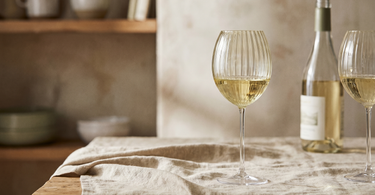
A standard 75 cl bottle of wine typically gives you 6 glasses with a normal pour of 12–12.5 cl. A bottle of champagne or sparkling wine stretches to 6–8 glasses, because the glasses are filled with roughly 10 cl to preserve the bubbles. If you're pouring larger restaurant-style portions (15 cl), you get around 5 glasses. For a dinner, you'd typically reckon on 2–3 glasses per guest – so one bottle covers 2–3 people.
You're hosting a dinner, and now you're standing there with a bottle in hand, wondering: will it actually be enough for everyone? The short answer is that a standard bottle gives you around six glasses of wine – but the exact number depends on how much you pour, what type of drink it is, and which glasses you use. Here are the concrete figures and a handy calculator for the next time you're planning a party.
The standard bottle: 75 cl
A regular bottle of wine, champagne or sparkling wine holds 75 cl (750 ml). That's the size almost everything is based on, and therefore the figure you should calculate from. The number of glasses then depends entirely on how generous a portion you pour – not on the bottle itself.
There are also magnum bottles (150 cl = double the number of glasses) and the smaller piccolo bottles (20 cl, about 2 glasses), but unless stated otherwise, you can count on 75 cl.
Wine: roughly 6 glasses per bottle
With a normal home pour of 12–12.5 cl you get six glasses out of a bottle of wine. That's the portion size most wine glasses are designed for, when filled to the widest part of the bowl – never right to the top.
If you reckon on 2–3 glasses per guest for a dinner, one bottle will stretch to 2–3 people. For a glass of wine before the meal, you can get away with planning just one glass per person.
Champagne: 6–8 glasses per bottle
Champagne and sparkling wine are poured into taller, narrower glasses and filled a little less – typically around 10 cl – so the bubbles last as long as possible. That means you get more glasses out of the bottle: 7–8 glasses for a toast, where everyone gets a small portion.
If the champagne is to be enjoyed throughout the evening rather than just for a toast, you can count on 6 glasses per bottle, as the portions tend to be a bit larger then.
Tip: For a welcome toast, you can safely count on 8 glasses per bottle of champagne. That gives you a bit of leeway in the budget, and most people only drink one glass anyway when it's time to toast.
Pour size is everything
The number of glasses is less about the bottle and more about the hand doing the pouring. Here are the most common portions and what they give you:
| Drink | Portion per glass | Glasses per bottle (75 cl) | Used for |
|---|---|---|---|
| Wine (at home) | 12–12.5 cl | approx. 6 glasses | Dinner and everyday |
| Wine (restaurant) | 15 cl | approx. 5 glasses | More generous pour |
| Wine (tasting) | 7–8 cl | 9–10 glasses | Several wines per guest |
| Champagne (toast) | 10 cl | 7–8 glasses | Welcome and toast |
| Champagne (evening) | 12 cl | approx. 6 glasses | Sipped throughout |
The type and shape of glass
The shape of the glass affects both the taste experience and how much is naturally poured.
The wine glass
A tulip-shaped wine glass gathers the aromas towards the nose. It's filled to the widest part of the bowl – giving room to swirl the wine and release the scent. That's why there's often more air than wine in the glass, even though the portion is "normal".
The champagne glass
The tall, narrow champagne glass (flute) holds onto the bubbles, as the small surface area slows down the escape of the carbonation. A coupe (the wide, low model) is prettier for table settings, but loses its bubbles faster.
Tip: Coloured or ribbed glasses catch the light and lift an otherwise simple table. They're an easy way to make the everyday table festive – without changing the whole dinner service.
Calculate for a party: how many bottles?
If you're planning shopping for a bigger dinner, here's a quick guideline:
- Welcome: 1 bottle of champagne per 7–8 guests (one glass each).
- For the meal: reckon on ½ bottle of wine per adult guest (approx. 3 glasses).
- The whole evening: round up to whole bottles, and it's better to buy one too many than one too few.
Example: a dinner for 8 people ≈ 1 bottle of champagne for the welcome + 4 bottles of wine for the meal.
Frequently asked questions
How many glasses are there in a bottle of wine?
A standard 75 cl bottle gives about 6 glasses at a regular pour of 12–12.5 cl. If you pour larger restaurant portions of 15 cl, you'll get about 5 glasses.
How many glasses are there in a bottle of champagne?
A 75 cl bottle of champagne stretches to about 7–8 glasses, because champagne is poured in smaller portions (about 10 cl) to preserve the bubbles.
How many cl is a glass of wine?
A normal glass of wine is 12–12.5 cl at home. At a restaurant, 15 cl is often poured, and for a wine tasting, smaller portions of 7–8 cl are used.
How much wine should you count on per guest?
For a dinner, you typically count on 2–3 glasses per adult guest, so around half a bottle per person over a whole evening.
Why don't you fill the wine glass all the way up?
The wine glass is only filled to its widest part, so there's room to swirl the wine and release the aromas. This improves the scent and taste – it's not about saving wine.
Summary
A 75 cl bottle gives about 6 glasses of wine (12–12.5 cl per glass) and 7–8 glasses of champagne (about 10 cl per glass). The pour size is the deciding factor – not the bottle. For a dinner, you count on 2–3 glasses of wine per guest and one bottle of champagne per 7–8 guests for the welcome. The shape of the glass affects the experience: tulip-shaped wine glasses gather the aromas, while tall champagne glasses hold onto the bubbles.
Read also
- How should glasses be arranged on the table?
- How do you remove limescale from glasses?
- Cocktail glasses and drinkware: make your home bar festive
Find your favourites among our wine glasses and champagne glasses – and make the table festive.