
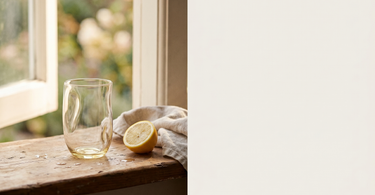
Limescale on glass is easily removed with vinegar or citric acid. Soak the glass in a mixture of vinegar and water for 15–30 minutes, rub with a soft sponge, and rinse thoroughly. Dry with a lint-free cloth for a clear result. If this doesn't help, it might be glass corrosion – an etching that is unfortunately permanent.
Cloudy, greyish glasses take the shine off even the finest table. Luckily, limescale is one of the easiest things to remove – you probably already have what you need in your kitchen cupboard. Here are the methods that work, and how to prevent your glasses from becoming cloudy again.
Why does glass get limescale?
Limescale is minerals – especially calcium – from the water. When water dries on the glass, the minerals are left behind as white marks. The harder the water in your area, the faster limescale forms. It's not harmful, but it makes the glass cloudy and dull.
The vinegar method
The most effective solution against limescale.
- Mix equal parts household vinegar and water.
- Soak the glass in the mixture for 15–30 minutes to loosen the limescale.
- Rub gently with a soft sponge.
- Rinse well, and dry with a lint-free cloth.
For stubborn limescale marks, you can use undiluted vinegar directly on a cloth.
Lemon and citric acid
Half a lemon rubbed on the glass also works – the acid dissolves the limescale and leaves a fresh scent. Citric acid dissolved in warm water is a stronger alternative for heavy deposits. Perfect if you don't like the smell of vinegar.
Tip: Never use a scouring pad or scouring powder on glass – it creates micro-scratches that make the glass permanently cloudy. Acid and a soft sponge are always the way to go.
Overview of methods
| Method | Strength | Best for | Bonus |
|---|---|---|---|
| Vinegar + water | Effective | Ordinary limescale | Cheap |
| Undiluted vinegar | Strong | Stubborn marks | Fast |
| Lemon | Mild | Light marks | Fresh scent |
| Citric acid in water | Strong | Heavy deposits | No smell |
Cloudy glasses: limescale or glass corrosion?
If neither vinegar nor citric acid helps, it's probably not limescale, but glass corrosion – an etching of the glass surface itself, which often occurs after many rounds in the dishwasher at high temperatures. Glass corrosion is unfortunately permanent and cannot be polished away. That's why prevention is important:
- Rinse glasses before washing up, so limescale doesn't burn on.
- Use rinse aid and not too high a temperature.
- Wash thin and valuable glasses by hand.
Frequently asked questions
How do you remove limescale from glass?
Soak the glass in a mixture of vinegar and water for 15–30 minutes, rub afterwards with a soft sponge, and rinse thoroughly. Citric acid works too.
Why does glass turn cloudy in the dishwasher?
It's caused either by limescale (which can be removed with vinegar) or glass corrosion – a permanent etching from high temperatures and frequent washing.
Can glass corrosion be removed?
No. Glass corrosion is an etching of the glass itself and can't be polished away. It can only be prevented.
Can you use a scouring pad on glass?
No – it creates micro-scratches that make the glass cloudy. Always use a soft sponge and acid.
How do I prevent limescale?
Rinse glasses before washing up, use rinse aid, and dry the glasses with a lint-free cloth after washing.
Summary
Limescale on glass is easily loosened with vinegar or citric acid – soak the glass, rub with a soft sponge, and rinse well. Never use abrasives, as they cause permanent scratches. If the acid doesn't help, it's probably glass corrosion, which can't be removed – and then prevention with rinse aid and hand-washing thin glasses is the way to go.
Read also
- Are glass and ceramics microwave and dishwasher safe?
- How do you get labels off glass?
- How many glasses are there in a bottle of wine?
Take a look at our drinking glasses and glasses – ready to shine on the table.