
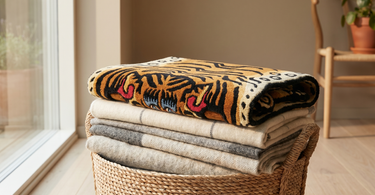
Store your blankets and throws over the summer by washing or airing them thoroughly first, making sure they're completely dry, and putting them in a breathable fabric or cotton bag in a cool, dark and dry place. Feel free to add lavender or cedarwood to keep moths away – avoid plastic and damp lofts.
Contents
When summer arrives, the warm wool blankets and soft throws get put on hold. But how you store them during the warm months determines whether they come out looking fresh and lovely again in autumn – or greet you with moth holes, mould and a musty smell. Fortunately, good long-term storage isn't difficult. Here are the simple steps that keep your textiles beautiful year after year.
Wash or air the blankets first
The most important step happens before the blanket is even put away: cleaning. Moths and other pests aren't actually attracted to the wool itself, but to stains from food, sweat, skin cells and skin oils. A blanket that's been on the sofa all winter always carries traces – even if they're invisible.
- Wash the blanket according to the washing instructions, or air it thoroughly outdoors in the shade on a dry day.
- Gently brush off loose dirt and hair with a soft clothes brush.
- Treat visible stains before putting the blanket away – they set in over time.
Tip: If you're unsure about washing, air the blanket instead for a few hours in fresh air in the shade. Direct sunlight can fade the colours, while shade and wind freshen up the textile without any risk.
Make sure they're completely dry
Moisture is the biggest enemy of long-term storage. Even a bit of residual moisture can develop into mould and a musty smell that's hard to get rid of again. So always let the blanket dry completely before you pack it away.
- Dry the blanket flat or hanging in an airy spot – not in direct sunlight.
- Feel it in several places, especially in folds and seams, to check that the fabric is thoroughly dry.
- Better to wait an extra day than pack away something damp.
Choose breathable storage
Natural materials like wool and cotton need to breathe. If they're wrapped in plastic, moisture gets trapped inside, and the textile can't breathe – creating the perfect conditions for mould and unpleasant smells.
- Use a bag made of cotton or another breathable fabric, a clean pillowcase or a cotton sheet.
- Avoid sealed plastic bags and vacuum bags for natural fibres over longer periods.
- Don't pack too tightly – the textile needs to be able to breathe and keep its shape.
The right place
Find a place that's cool, dark and dry. Light can fade colours over time, and heat and moisture encourage both mould and pests.
- A cupboard shelf in a heated room is often ideal.
- Avoid damp basements and cold, unheated lofts where the temperature fluctuates.
- Keep textiles away from direct sunlight.
Protect against moths
Wool is particularly prone to moths. Besides thorough cleaning, you can use natural remedies that keep moths at bay without a sharp chemical smell.
- Place bags of dried lavender between the blankets.
- Use cedarwood blocks or balls, which many moths dislike.
- Check your textiles once in the middle of summer, and air them again if needed.
Tip: Lavender and cedarwood lose their scent over time. Gently squeeze the lavender bag or lightly sand the cedarwood if the scent has faded – this brings them back to life.
Wool vs. cotton
The material determines how sensitive the textile is. Here are the key differences when it comes to summer storage:
| Conditions | Wool | Cotton |
|---|---|---|
| Moth risk | High – requires moth protection | Low – rarely attracts moths |
| Moisture sensitivity | High – mould and odour occur easily | Moderate |
| Storage | Breathable bag, lavender/cedarwood | Breathable bag, dry place |
| Airing | Recommended mid-season | Rarely necessary |
Frequently asked questions
Should I always wash the blanket before putting it away?
If the blanket can be washed, this is the safest solution, as it removes stains that attract moths. If it can't be washed, air it thoroughly in the shade and brush it off before packing it away.
Can I store wool blankets in plastic?
This isn't recommended for longer-term storage. Plastic traps moisture and prevents wool from breathing, which can lead to mould and odour. Choose a breathable cotton or fabric bag instead.
How do I avoid moths without mothballs?
Natural alternatives like dried lavender and cedarwood keep many moths away without a sharp chemical smell. However, the most important protection is always that the textile is clean and stain-free.
Can I store blankets in the loft?
Only if the loft is dry and temperature-stable. Unheated lofts with fluctuating temperature and moisture are a bad idea, as this encourages both mould and pests. A shelf in a heated room is a better option.
What do I do if the blanket smells musty after storage?
Air the blanket thoroughly outdoors in the shade, and wash it according to the instructions if possible. A musty smell is often caused by residual moisture when packing away – so it's important that the textile is completely dry before it's put away.
Summary
Good summer storage comes down to four things: clean textiles, complete dryness, breathable packaging and a cool, dark place. Protect wool in particular against moths with lavender or cedarwood, and stay away from plastic and damp rooms. If you follow these simple steps, your blankets and throws will come out fresh and beautiful again as soon as autumn arrives.