
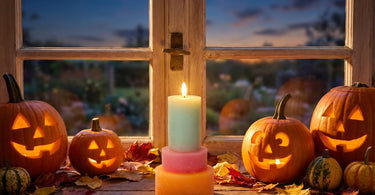
Halloween is always the 31st of October, no matter which day of the week it falls on. The evening is linked to the Catholic Church's All Saints' Day, and today it's mainly celebrated with fancy dress, sweets and carved pumpkins.
Contents
- The short answer: when is Halloween?
- Halloween in the coming years
- What is Halloween?
- Where does Halloween come from?
- The traditions: fancy dress, sweets and pumpkin lanterns
- Halloween in Denmark
- Halloween and All Saints' Day: what's the difference?
- How to celebrate Halloween at home
- Frequently asked questions
- Summary
Every year the question pops up when autumn really sets in: when is Halloween actually this year, and why has it become such a big thing in Denmark? The answer is simpler than many think, but the history behind the date and the traditions goes a long way back in time.
In this guide, you'll find the date for Halloween in the coming years, a brief explanation of what the celebration is actually about, and how it has ended up filling Danish supermarkets and amusement parks.
The short answer: when is Halloween?
Halloween is celebrated in many countries on the 31st of October, the evening before the Western church's All Saints' Day. Halloween actually follows the Catholic Church's dates, so the event stretches from the evening of the 31st of October to the 1st of November.
This means that the date never moves, no matter which day of the week it falls on. On the other hand, the day of the week changes from year to year, which is why many people look up whether Halloween falls on a weekend or in the middle of a weekday.
Halloween in the coming years
Halloween 2026 was a Saturday, specifically the 31st of October 2026. The coming years look like this:
| Year | Date | Day of the week |
|---|---|---|
| 2027 | 31st of October | Sunday |
| 2028 | 31st of October | Tuesday |
Many amusement parks, including Tivoli, use the Halloween theme during the autumn half-term holiday, so the festivities often stretch over several days around the actual date.
What is Halloween?
The word Halloween comes from the Scottish form of All Hallows' Eve, meaning the evening before All Hallows' Day, and translates to saints' evening. The name thus points directly back to the Christian All Saints' Day, which Halloween was originally linked to.
In popular culture, Halloween has today become first and foremost a celebration of thrills and the supernatural. Fancy dress, spooky stories and sweets take up far more space in most people's minds than the religious background, and it's this version of Halloween that most people encounter in shops and at events.
Where does Halloween come from?
More than 2000 years ago, the Celts in Scotland and Ireland marked the end of the light half of the year around the 31st of October. During these days, they believed that the gates to the realm of the dead stood open, and that the dead could move freely among the living.
Some Celts dressed up in spooky costumes so that the dead would mistake them for other dead, and some put glowing pieces of coal inside hollowed-out root vegetables to scare evil spirits away. This is the origin of both the fancy dress and the lantern we know today, just with pumpkins instead of root vegetables.
The researchers don't agree on the origins, though. One theory suggests that many Halloween customs stem from the Gaelic harvest festival Samhain, while other researchers believe that Halloween began as a Christian holiday, the evening before All Saints' Day. In the Middle Ages, food was put out for poor children on All Saints' Eve, and in return the children would pray for the giver's deceased relatives. This may well be the background for today's trick or treat. Later, in the 1800s, Irish and Scottish emigrants brought the customs with them to North America, where the root vegetables were replaced by pumpkins.
The traditions: fancy dress, sweets and pumpkin lanterns
In the US, children say trick or treat when they knock on doors in their costumes, and the traditional Halloween colours are black and orange.
The pumpkin lantern is called Jack-o'-lantern in English, after an Irish legend about Stingy Jack, who tricked the devil and as punishment had to wander the earth with a piece of coal inside a carved-out root vegetable as a lantern. The story explains why the carved lantern with a face has become the very symbol of Halloween.
Over here, Halloween can be reminiscent of Fastelavn, where children also dress up and knock on neighbours' doors to get sweets. The difference is that Fastelavn belongs to the beginning of winter and is linked to the Christian period of Lent, while Halloween falls in autumn and has its roots in both Celtic and Christian tradition.
Tip: If you'd like the pumpkin lantern lit all evening without having to keep an eye on a real candle, an LED light can be a practical solution. See our range of LED lights.
Halloween in Denmark
American-style Halloween really started gaining popularity over here when Ekstra Bladet took the initiative in 1998 for the first of a series of annual Halloween events in Scala. Around the year 2000, Danish supermarkets introduced Halloween with pumpkins, costumes and sweets, and in 2006 Tivoli began opening for Halloween during the autumn half-term.
Interest has remained strong ever since, and the figures show just how much Halloween has grown in Denmark:
| Year | Event |
|---|---|
| 1998 | Ekstra Bladet's first Halloween event in Scala |
| 2000 (approx.) | Supermarkets introduce Halloween with pumpkins, costumes and sweets |
| 2006 | Tivoli begins opening for Halloween during the autumn half-term |
| 2008 | 264,000 visitors to Tivoli's Halloween event, Danish pumpkin production of 400,000 pumpkins |
| 2015 | Danish pumpkin production reaches 800,000 pumpkins |
Since then, other amusement parks have also embraced the Halloween theme during the autumn half-term.
Halloween and All Saints' Day: what's the difference?
Halloween and All Saints' are closely connected, but they're not the same thing. In the Danish national church, All Saints' Day is the first Sunday in November, and All Saints' Eve is the evening before. So it falls on a slightly different date than Halloween's fixed date of 31 October.
Some churches have embraced Halloween, because both All Saints' and Halloween, in their own ways, deal with death and light in the darkness. At the same time, Protestant countries have, over the years, tried to turn 31 October into Reformation Day, so the date itself carries several layers of meaning depending on where you look.
Get ready for the little visitors at the door with a bowl that can handle many rounds of sweets.
See sweet bowlsHow to celebrate Halloween at home
You don't need a big production to celebrate Halloween at home. Carve a pumpkin with a face, pop a candle inside, and place it by the front door so the costumed children can find their way.
Keep a bowl of sweets ready by the door so you're prepared when there's a knock. An Oyster bowl in ceramic, available in several sizes from Caja Company can easily be used for this purpose, both on the night and for the rest of the year for nuts or keys.
Otherwise, decorate with what you already have at home. Black and orange details, a couple of candles in a nice candlestick or an extra lantern on the windowsill are enough to set the mood, without requiring much effort.
Frequently asked questions
When is Halloween?
Halloween is always on 31 October, the evening before the Western church's All Saints' Day. The date follows the Catholic Church's calendar and therefore never moves.
What is Halloween?
Halloween is the evening before All Saints' Day, and the name means the saints' evening. Today, the celebration has largely become a festival of spooky fun, dressing up and sweets.
When is Halloween 2027?
Halloween 2027 falls on Sunday, 31 October 2027.
Where does Halloween come from?
The customs originate from the Celts of Scotland and Ireland, who more than 2000 years ago marked the end of the light half of the year around 31 October. Some researchers also point to a Christian origin linked to All Saints' Day.
Why do people carve pumpkins for Halloween?
The tradition stems from an Irish legend about Stingy Jack, who had to wander around with a piece of coal in a carved-out root vegetable. When Irish and Scottish emigrants came to North America in the 1800s, the root vegetables were replaced by pumpkins.
When did Halloween come to Denmark?
Halloween started gaining popularity in Denmark when Ekstra Bladet was behind the first Halloween event at Scala in 1998. Around the year 2000, Halloween really took off in the supermarkets, and Tivoli began holding Halloween openings from 2006.
Summary
Halloween always falls on 31 October, whether it lands on a weekend or in the middle of the week. The celebration has roots both with the Celts and in the Christian All Saints' tradition, and in Denmark it has really grown since the Scala event in 1998. If you want to celebrate Halloween at home, a carved pumpkin, a bowl of sweets and a bit of homemade decoration are enough to set the mood.
Read also
- Autumn decorations: Get your home ready for the cosy season
- What is a lantern? And the difference between a lantern and a tealight holder
- St. Martin's Eve: date, history and table setting
- Birthday decorations: ideas for the table and party
- All Saints' Eve: date and why we light candles
Ready to welcome Halloween at home?
Find bowls and candles that can be used for both Halloween and the rest of the season.
See the range