
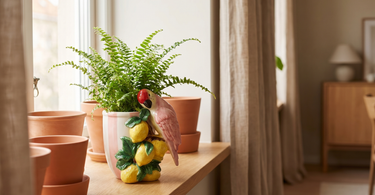
Terracotta is fired, unglazed clay in the characteristic reddish-brown colour. The material is porous and breathes, which makes it ideal for pots and plants, because it draws moisture away from the roots. On the other hand, unglazed terracotta can crack in frost.
Terracotta is one of the oldest and most widely used materials for pots and planters. The name literally means „baked earth“ in Italian, and the warm, reddish-brown colour is its defining feature. Here we look at what terracotta actually is, what it's used for, and why it's so popular for plants.
What is terracotta?
Terracotta is a type of earthenware, made from iron-rich clay and fired at a relatively low temperature. It's often unglazed, which gives it the natural, matte surface and the recognisable reddish-brown hue. Because it isn't glazed, the material remains porous and can absorb and release moisture.
Why is it good for plants?
The porous structure is precisely why terracotta is so loved for plant pots. The material „breathes“ and draws excess moisture away from the soil, so the roots don't sit and drown in water.
- The porosity draws moisture away and reduces the risk of root rot.
- Most terracotta pots have a drainage hole in the bottom for excess water.
- The heavy, stable pot also supports large and top-heavy plants.
Tip: Because terracotta draws moisture away, the soil dries out faster than in a tight plastic pot. Keep a close eye on watering, especially in summer.
Use outdoors and indoors
Terracotta is used both indoors and outdoors – for herb pots, planters, pot covers and decoration. Indoors, it's a warm, natural touch that suits many decor styles. Outdoors, the classic pots add character to terraces, balconies and gardens.
Patina and frost
Over time, terracotta often develops a beautiful patina – light lime deposits and a slightly weathered surface that many appreciate. On the other hand, unglazed terracotta is sensitive to frost: if the material absorbs water that then freezes, it can expand and cause the pot to crack.
- Bring unglazed terracotta pots indoors or under cover in winter if there's a risk of frost.
- Lift pots off the ground with feet or tiles, so they don't draw up water from below.
- Choose frost-resistant or glazed varieties if they're to stay outside all year round.
Pros and cons
| Pros | Cons |
|---|---|
| Breathes and draws moisture away | The soil dries out faster |
| Heavy and stable for large plants | Heavier to move around |
| Natural, timeless expression | Unglazed can crack in frost |
| Develops a lovely patina over time | Can get lime spots, if you want it clean |
Frequently asked questions
What does terracotta mean?
Terracotta means "burnt earth" in Italian and refers to fired, often unglazed clay in the characteristic reddish-brown colour.
Can terracotta stay outside in winter?
Unglazed terracotta can crack in frost, because it absorbs water, which expands when it freezes. Choose frost-resistant varieties, or bring the pots inside for winter.
Why is terracotta good for plants?
The material is porous and breathes, so it draws excess moisture away from the soil and reduces the risk of root rot.
Why does my terracotta pot get white spots?
The white spots are lime and salt deposits from water and soil. It's completely natural and seen by many as part of the pot's patina.
Should I water plants in terracotta more often?
Often yes, because the porous material draws moisture away, so the soil dries out faster than in a tight plastic or glazed pot.
Summary
Terracotta is fired, often unglazed clay with a porous structure that breathes and draws moisture away. This makes the material ideal for pots and plants, but requires a little extra attention to watering and protection from frost. With its warm colour and lovely patina, terracotta is a timeless choice both outdoors and indoors.
Read also
- The difference between a pot, planter cover and flowerpot
- Olive and fig tree in a pot
- How to decorate with plants
Find your next pots and beautiful planter covers for your plants.