
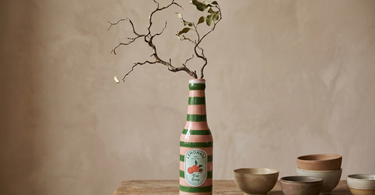
Wabi-sabi is a Japanese philosophy that finds beauty in the simple, imperfect and fleeting. In the home, it means natural materials, handmade things with patina, calm earthy colours and fewer, but more treasured objects. It's not about perfection, but about calm, authenticity and appreciating the traces of time and craftsmanship.
Contents
In a world that worships the new, the shiny and the flawless, wabi-sabi is a refreshing counterbalance. This Japanese aesthetic teaches us to see the beauty in a cracked bowl, a faded colour or a branch that has lost its leaves. It's a style of decorating – but also a way of seeing the world. Here you'll find the philosophy behind it, and how to bring its calm mood into your own home.
What is wabi-sabi?
Wabi-sabi springs from Japanese aesthetics and thinking, and rests on three core ideas: impermanence, simplicity and imperfection. Nothing lasts forever, nothing is ever quite finished, and nothing is perfect – and that's exactly where the beauty lies. "Wabi" points towards the simple and understated, while "sabi" refers to the beauty that arises with time and use.
- Impermanence: appreciating that things age and change.
- Simplicity: removing the superfluous and letting the essential come forward.
- Imperfection: seeing charm in the crooked, the uneven and the handmade.
Natural materials and texture
The wabi-sabi home is built on genuine, natural materials that age beautifully and have a tactile quality. Texture matters more than glossy perfection.
- Ceramics and stoneware with uneven surfaces.
- Wood, linen, cotton, stone and clay.
- Raw and matte surfaces rather than high gloss.
Tip: Start with one handmade ceramic vase or bowl. A single, genuine piece with visible craftsmanship sets the tone more than ten perfect, mass-produced items.
Patina and the handmade
Where many styles hide the traces of time, wabi-sabi celebrates them. A vase with small irregularities in the glaze, a wooden table with scratches, or a fabric that has softened with use – all of it tells a story.
- Choose handmade objects, where no two are quite alike.
- Let things age instead of replacing them.
- See patina as character, not as wear.
Calm earthy colours
The colour palette in wabi-sabi is muted and drawn from nature. It creates calm and lets the texture of the materials come forward.
- Warm earthy colours: clay, sand, terracotta and brown.
- Muted grey, green and off-white tones.
- Avoid sharp, synthetic and high-gloss colours.
Fewer, but more treasured things
Wabi-sabi isn't minimalism for minimalism's sake, but a deliberate selection. Every item should mean something and have room to stand out.
- Keep what you love, and what has a story.
- Give objects room to breathe – avoid filling every surface.
- Let emptiness and stillness be part of the whole.
Tip: A single dry branch or a few small stones in a handmade vase is a classic wabi-sabi still life. It celebrates nature's impermanence and requires neither water nor maintenance.
The difference from perfectionism
Wabi-sabi stands in deliberate contrast to the pursuit of perfection. Here's the difference between wabi-sabi and a more strict, perfectionist minimalism:
| Aspect | Wabi-sabi | Minimalism |
|---|---|---|
| Ideal | The imperfect and lived-in | The clean and perfect |
| Materials | Raw, natural, with patina | Often smooth and uniform |
| Colours | Warm, muted earth tones | Neutral, often cool |
| Mood | Warm, organic calm | Clear, streamlined calm |
Frequently asked questions
Is wabi-sabi the same as minimalism?
No. Both embrace simplicity and fewer things, but wabi-sabi celebrates the imperfect, lived-in and natural with warm earth colours, while minimalism often strives for the clean, uniform and perfect. Wabi-sabi feels warmer and more organic.
Which materials suit wabi-sabi?
Genuine, natural materials such as ceramics, stoneware, wood, linen, cotton, clay and stone. Matte and raw surfaces work better than shiny and high-gloss ones.
How do I get started with wabi-sabi at home?
Start small: a single handmade piece of ceramics, a muted colour palette and a little more breathing room between things. Keep what you love, and let objects age gracefully.
Does everything have to be old or worn?
No. It's not about wear for wear's sake, but about valuing authenticity, craftsmanship and the traces of time. New handmade items with uneven surfaces fit right in.
Does wabi-sabi suit a Nordic home?
Yes, really well. Wabi-sabi and Scandinavian interior design share a fondness for natural materials, calm and simplicity. The combination is often seen in the japandi style, which unites Japanese and Nordic aesthetics.
Summary
Wabi-sabi is an invitation to relax the pursuit of perfection and instead find peace in the simple, authentic and fleeting. With natural materials, handmade ceramics with patina, muted earthy colours and fewer but cherished things, you create a home that feels warm, authentic and calm. It's not about having more – but about valuing what you have.