
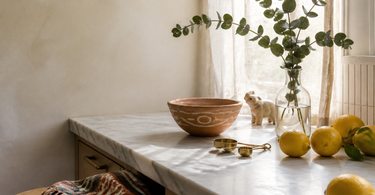
The kitchen is the home's natural gathering point, but the decor often stops at appliances and cupboard space. The quickest and cheapest upgrades are new knobs for the cupboard doors (from 30-60 DKK each), ceramic jars for storage and a wooden chopping board displayed as decoration. Fresh herbs in stylish pot covers and colourful ceramic details tie it all together — without a single wall tile needing to be replaced.
The kitchen is far more than a production room for dinner. It's where the morning coffee is brewed, the children sit with their homework, and friends gather round a glass of wine while the onions are frying. Yet most kitchens end up looking purely functional — neutral cupboard fronts, generic handles and no real personality. Changing that doesn't have to cost a renovation. A handful of well-chosen details make a huge difference, and here we go through exactly which ones give you the most for your effort.
Knobs for kitchen cupboard doors — the quickest makeover
If you only have time for one thing, let it be the knobs. Replacing the standard handles from the original kitchen is one of the cheapest and most visible upgrades you can make. Most kitchens have 15-25 doors and drawers — that's 15-25 places where a neutral metal bar can be replaced with something full of character.
Knobs for kitchen cupboard doors come in ceramic, brass, porcelain and stone. Prices typically start from 30-60 DKK each, and you only need an ordinary screwdriver to fit them — about 10 minutes per knob. You can refresh the entire kitchen for under 1,500 DKK.
What goes with what?
Brass knobs are an obvious choice for white and grey kitchens. Brass develops a patina over time and gets a warmer, more lively look than new metal — in fact, most brass knobs look better after a couple of years than on the day they were fitted. Black knobs create a sharp contrast and suit a graphic, modern kitchen well. Hand-painted ceramic knobs with geometric patterns or botanical motifs are the easy choice when you want something personal and unique.
You can also mix — one type of knob on the wall units and another below — to create visual depth. For example, use brass on top and ceramic below, but stick to one metal to avoid a cluttered look.
Tip: Measure the hole spacing on your existing handles before ordering new knobs. Standard is 32 mm or 96 mm centre-to-centre, but older kitchens can vary. Most single-hole knobs fit universally, while handle-style fittings require precise measuring.
Storage with style: jars and baskets
The kitchen worktop and the open shelves are the most visible surfaces in the kitchen — and the obvious place to show off some personality. Jars in ceramic or stoneware for flour, sugar, tea leaves and snacks look far better than the original packaging they'd otherwise live in, and they keep the contents fresher at the same time.
Group jars in three sizes — low, medium and tall — for a cohesive look without it feeling forced. Three identical ones from the same series give a calm effect; three in the same colour palette but different shapes bring life. Both work well.
Woven baskets for bread, fruit or napkins bring an organic, natural element into a room otherwise dominated by hard surfaces such as stainless steel, granite and glass. A basket weighs almost nothing visually — it's soft and "rests" nicely next to ceramic and metal.
Cups and jugs on open shelves
Open shelves are one of the most debated decisions in kitchen decor. They look great, but they require you to actually put nice things on them. If you have them — or are considering fitting a couple — tableware is the obvious thing to display.
Cups in stoneware or glazed ceramic are too good to hide behind a cupboard door. Stoneware is fired at a higher temperature than earthenware (typically above 1200°C), which gives a denser, more durable body with a slightly rough, matte surface — it's this texture that makes them interesting to look at and nice to hold.
Jugs work double duty: they pour liquid and look good doing it. A jug with a bunch of dried flowers or a few twigs on the kitchen worktop is a simple detail that adds warmth without stealing space from the cooking. Jugs in glazed ceramic with a thick handle and a slightly uneven glaze are especially good for this — they have enough character to stand alone.
Herb pot covers — greenery by the window
Fresh herbs on the kitchen windowsill are the shortest route to a kitchen that smells good and looks vibrant. Basil, parsley, rosemary and thyme thrive in most south-facing kitchen windowsills, and they're functional accessories that actually get used during cooking.
The trouble with most herb pots is that they come in plastic containers that are dull to look at. Pot covers for herbs solve that: choose terracotta for a Mediterranean-inspired look, terracotta is porous and helps regulate the moisture content in the soil, which plants appreciate. White ceramic gives a cleaner, Nordic look. Place three to four pot covers in a row on the windowsill or on a small console shelf near the cooker.
Remember: herbs from the supermarket are typically planted densely to look lush at the point of sale, split them into two or three pots and they'll live considerably longer.
Chopping boards as decoration
A chopping board in olive wood, walnut or acacia is far too nice for the drawer. These types of wood are dense, with a low porosity that resists moisture better than beech, and they develop a patina with use, olive wood gets deeper grain, walnut becomes darker and more radiant with the right oil care.
Lean the chopping board against the wall behind the cooker or along the splashback as a natural part of the decor. It takes up almost no space, but adds a warm, crafted element to a room that can otherwise feel clinical. Two to three boards in different sizes and types of wood combined give a rustic, lively look, and they double as serving boards for cheese and tapas when you have guests over.
Tip: Oil-treat chopping boards made of olive wood and acacia 2 to 4 times a year with food-safe oil, such as coconut oil or linseed oil. This seals the wood, prevents cracks and preserves the natural sheen. Let the oil soak in for 30 minutes and wipe off the excess with a cloth.
Colours and accessories in the kitchen
Most kitchens have a neutral base in white, grey or wood, and that's actually an advantage, because it gives you a blank canvas to work with. Colour comes in via accessories, and even relatively small elements make a surprisingly big difference.
Salt and pepper sets, plates and bowls
Ceramic salt and pepper sets are a good starting point. They're used daily, they sit on the table or worktop, and they come in countless colours and shapes, from fish and citrus fruits to more sleek, geometric versions. Plates and bowls in glazed ceramic serve a similar purpose: they're functional, but they look good displayed on a shelf or in the middle of the table as a permanent "fruit bowl".
Green plants and seasonal colours
Beyond the herbs, larger houseplants, a monstera in the corner, a pothos on a high shelf, can give the kitchen green volume. It's one of the most dynamic sources of colour, because the plants actually grow and change. A vase with seasonal flowers or branches is an alternative that requires a bit more upkeep, but can be swapped out whenever you want something new in return.
Looking for an all-in-one starting point to give your kitchen a lift, you'll find ceramics, jugs, cups and kitchen accessories in our kitchen collection.
| Element | Effect | Price level | Time required |
|---|---|---|---|
| New knobs (15 to 25 pcs) | High, transforms the whole look of the kitchen | 500 to 1,500 DKK | 2 to 4 hours |
| Ceramic jars (3 pcs) | Medium, order + aesthetics | 200-600 DKK | 15 minutes |
| Pot covers with herbs | Medium — green, lively and functional | 150-400 DKK | 30 minutes |
| Chopping board for display | Low-medium — warm, organic detail | 150-500 DKK | 5 minutes |
| Ceramic salt and pepper sets | Low — small but visible detail | 80-250 DKK | 2 minutes |
Frequently asked questions
What does it cost to change knobs throughout the kitchen?
With 15-25 doors and drawers and knobs at 30-60 DKK each, you'll typically land on 500-1,500 DKK for the whole kitchen. It's one of the cheapest renovations you can do, and all you need is a screwdriver. Remember to check the hole diameter and centre-to-centre measurement before you order.
Can you mix materials in kitchen decor?
Yes — and that's actually what gives a kitchen character. Wood, ceramics, brass and glass complement each other, and the contrast between smooth and rough surfaces creates depth. Stick to an overall colour palette — for example warm earth tones or cool blue-grey shades — to avoid it looking messy.
Which knobs suit a white kitchen best?
A white kitchen is a neutral starting point that can go in many directions. Brass knobs add warmth and elegance. Black knobs create graphic contrast. Hand-painted ceramic knobs — for example with blue motifs or terracotta colours — add personality and a handcrafted detail. You can combine two types, such as brass on top and ceramic below.
What's the difference between earthenware, stoneware and porcelain?
Earthenware is fired at the lowest temperature (approx. 900-1100°C) and is porous and light. Stoneware is fired at 1200-1280°C, and is denser and more durable. Porcelain is fired at up to 1400°C and is the hardest and most translucent. For everyday use in the kitchen, stoneware is generally the most practical choice.
How do you keep herbs alive on the kitchen windowsill?
Supermarket herbs are typically planted extra densely to look lush when purchased. Split them into 2-3 separate pots, water them moderately (avoid standing water at the bottom of the pot cover), and make sure they get at least 4 hours of direct light a day. Trim regularly from the top — it encourages new growth.
Are open shelves in the kitchen a good idea?
It depends on whether you're ready to maintain them. Open shelves collect grease and dust faster than closed cupboards and require the things on them to actually look nice. In return, they give a visually lighter kitchen and easy access to the things you use most. Consider starting with just one shelf as a test.
Summary
A kitchen with personality doesn't have to start with a whole new kitchen renovation. The most effective changes happen at the detail level: swap the standard handles for knobs for doors and drawers in brass or ceramic, display the nice cups on the shelf instead of behind a door, and let the chopping board live on the counter rather than in the drawer. Herbs in stylish pot covers and ceramic jars for storage bring order and aesthetics at the same time. What all these steps have in common is that they're reversible, relatively cheap and create a visible difference from day one.
Read also
Explore our range of kitchen decor and kitchen accessories – from knobs and jars to cups and jugs.