
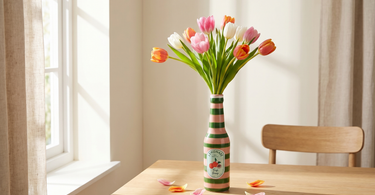
Cut the stems at an angle with a sharp knife, fill the vase with cold, clean water, and remove any leaves below the waterline. Change the water every 1–2 days, and keep the flowers away from heat, draughts and fruit. Tulips prefer just a little water and keep growing and bending towards the light – turn the vase if they lean to one side.
Fresh flowers lift a whole room – but they wilt far too quickly if treated the wrong way. Luckily, it only takes a few simple steps to decide whether your bouquet lasts three days or a week and a half. Here's the method that works for most cut flowers, plus the extra tricks tulips need.
The right start
Most of it comes down to the first few minutes:
- Cut 2–3 cm off the stem at an angle with a sharp knife – so the flower can soak up water as well as possible.
- Remove any leaves that would otherwise sit below the waterline.
- Use a clean vase and fresh, cold water.
- Place the bouquet somewhere cool, away from direct sun, for the first while.
Water and care
Clean water is the most important thing for longevity. Change the water every 1–2 days, rinse the vase, and give the stems a fresh little cut while you're at it. Leaves and debris in the water encourage bacteria to grow, and it's usually them – not the flower itself – that shortens its life.
Tip: The included bag of flower food actually helps – it nourishes the flower and keeps bacteria down. If you don't have one, frequent water changes are the best substitute.
Tulips: the special bit
Tulips behave differently to most flowers. They keep growing in the vase and bend towards the light – this is completely natural and not a sign that they're struggling. Give them just a little water at a time (they drink a lot), and turn the vase a quarter turn daily if you want to keep them fairly straight. They'll last longest somewhere cool.
Avoid these mistakes
- Fruit nearby: ripe fruit gives off a gas that makes flowers wilt faster.
- Heat and draughts: radiators, direct sun and open windows dry out the bouquet.
- Leaves in the water: they rot and feed bacteria.
- Forgotten water: old, cloudy water is the most common culprit.
Overview
| Tip | Cut flowers | Tulips |
|---|---|---|
| Water amount | Vase half to three-quarters full | Only a little water |
| Cut | At an angle, fresh | At an angle, fresh |
| Location | Cool, away from sun | Cool – holds its shape |
| Special tip | Change the water often | Grows and bends towards light |
The right vase
The vase isn't just about looks – it also needs to support the bouquet. Heavy, top-full bouquets sit best in a vase with some weight and a neck that gathers the stems. Tulips and tall flowers thrive in a tall, narrow vase that keeps them upright, while a low, wide vase suits airy wildflower bouquets. Try to match the height: the vase should be roughly two-thirds of the height of the flowers.
Tip: A narrow neck keeps the stems together and the bouquet looking full – so even a few stems look lush in the right vase.
Frequently asked questions
How do you keep cut flowers fresh for longer?
Cut the stems at an angle, use clean cold water, remove leaves below the waterline, and change the water every 1–2 days. Keep them away from heat, draughts and fruit.
How much water do tulips need?
Just a little – tulips drink a lot but prefer a low water level. Top up as needed.
Why do my tulips bend in the vase?
Tulips keep growing and naturally bend towards the light. Turn the vase daily if you want to keep them straight.
Why do flowers wilt quickly?
Usually because of bacteria in old water, or because they're placed somewhere too warm, in a draught or close to ripening fruit.
Should you use flower food?
Yes, it helps. It nourishes the flower and keeps bacteria down. Otherwise, frequent water changes are the best solution.
Summary
An angled cut, clean cold water and leaves kept clear of the waterline are the foundation for a bouquet that lasts. Change the water often, and keep the flowers away from heat, draughts and fruit. Tulips grow and bend towards the light – give them a little water and a cool spot. And choose a vase that matches the bouquet in height and gathers the stems beautifully.
Read also
- How big should the vase be for my bouquet?
- Dried flowers in the vase: how to style them
- Vases for every room: the complete guide
Give your next bouquet the right frame – see our vases and flower vases.