
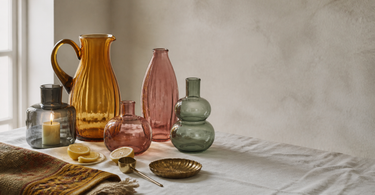
Glass captures light and refracts it in new directions. No other material in the home has the same ability to transform throughout the day—a glass vase that is almost invisible in the morning can become the room’s most eye-catching object when the afternoon sun hits it. That is why glass art and glass objects hold a very special place in interior design.
Hand-blown glass vs. pressed glass
The difference between hand-blown and pressed (machine-made) glass is both visible and noticeable. Hand-blown glass has slight variations in thickness, bubbles, and shape—it is precisely these “imperfections” that make each object unique. Molded glass is uniform and symmetrical, giving it a more austere look. Hand-blown glass from manufacturers like Anna Von Lipa has a warmth and a handcrafted character that is difficult to replicate mechanically. The price is higher, but you get an object with history and soul.
Glass candleholders: Light and reflections
Glass candleholders harness the glass’s ability to reflect and refract the light from candles. A crystal candleholder scatters the light into prisms and sparkles, while a colored glass candleholder casts a warm, tinted glow into the room. Colored candleholders in amber, green, or blue can stand alone as decorative objects—light them, and they transform the corner of a table into something almost magical. Brands like Anna Von Lipa and EJA create candleholders in mouth-blown glass with that slight asymmetry that characterizes true glass art.
Glass Pitchers: Functional Sculpture
A glass pitcher is one of the most underrated pieces in a home. It’s used daily for water, juice, or cocktails, but it can also be displayed as a decoration between meals. Opal glass pitchers have a soft, milky-white surface that creates a calm, Nordic look. Crystal pitchers are more festive and suit occasions where the table needs to shine. A pitcher made of colored glass—such as green or smoky—can tie an entire table setting together color-wise.
Colored glass as decoration
Colored glass has experienced a huge resurgence in recent years. While interior design was long dominated by neutral, clear glass, colored glass vases, bowls, and candleholders are now everywhere. Green, amber, and blue shades are the most popular, but pink, purple, and yellow glass are also making an appearance. The beauty of colored glass is that it changes its appearance with the light—a blue glass vase looks completely different under artificial light than in daylight. Use colored glass to add color without it feeling overwhelming.
What is opal glass?
Opal glass (or opalized glass) is a type of glass with a milky, semi-transparent appearance. It is made by adding substances such as bone ash, fluorspar, or tin oxide during the melting process, which create the tiny particles that give the glass its characteristic hazy look. Opal glass softly diffuses light rather than letting it pass through, creating a warm, subdued glow. It’s used in everything from vases and bowls to lamps and pitchers, and it’s popular in Scandinavian interior design for its calm, understated aesthetic.
Stylish drinking glasses
Glass art isn’t just about decoration—the glasses you drink from are just as important to the experience. A cocktail glass with a beautiful shape makes the drink better (at least psychologically). Wine glasses made of thin crystal let the wine’s color and clarity shine, and a beautiful champagne glass makes any celebration more festive. Hand-blown drinking glasses from Anna Von Lipa have that slight imperfection that sets them apart from industrially produced glassware. Thinking of mixing and matching? Colored glass in Using different shades on the same table is a major trend that brings life and personality to your table setting.
Is mouth-blown glass too expensive? Acrylic glass is a durable alternative for outdoor use, the patio, and summer garden parties—it looks like glass but can withstand a fall without breaking.
Caring for mouth-blown and crystal glass
Mouth-blown glass and crystal glass deserve a little extra care. Here are the most important rules:
- Always wash by hand. The dishwasher is too harsh on thin glass—the heat and chemicals can make the glass dull and brittle over time.
- Use lukewarm water and a soft sponge. Avoid scouring pads and harsh cleaning agents.
- Dry with a soft cloth (microfiber or linen) to avoid water spots.
- Avoid thermal shock. Never pour boiling water into a cold glass or vice versa—the glass may crack.
- Store with space. Glass items should not be crammed together in a cabinet. Give them space so they don’t knock against each other.
Frequently Asked Questions
Is mouth-blown glass dishwasher-safe?
No, mouth-blown glass should always be washed by hand. The heat and chemicals in the dishwasher can damage the glass and make it dull over time.
Can I use colored glass vases as candle holders?
Yes, many glass vases can be used for tea lights or block candles. Just make sure the glass is thick enough to withstand the heat, and never place a candle too close to a thin glass wall.
Where can I find glass art at Dim's Studio?
We have a large selection of glass items —from candle holders and pitchers to vases and drinking glasses. Stop by and find glassware that suits your style.
