
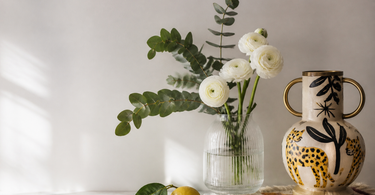
Many people think that a vase is just a vase. But there’s actually a big difference between looking for a vase for fresh bouquets and a decorative vase that serves as a sculptural object in its own right. Once you understand the difference, it becomes much easier to find the right vase for your home—and you’ll avoid ending up with a beautiful vase that can’t hold water, or a boring cylinder that just blends into the background.


What is a flower vase?
A flower vase is designed to hold water and keep fresh flowers upright. Typically, it has a wide opening so stems can stand freely, and a stable base that prevents the vase from tipping over when the bouquet gets heavy. The material is usually glass or glazed ceramic, because the surface must be able to withstand water without absorbing it. Classic flower vases from Anna Von Lipa in mouth-blown glass are a good example—simple, functional, and with a transparency that lets the flowers take center stage.
When choosing a flower vase, consider the size of the bouquet. A tall, slender vase suits long-stemmed roses and tulips, while a short, wide model is better for short wildflowers and anemones. Also remember that the opening shouldn’t be too wide—otherwise the flowers will fall to the sides.
What is a decorative vase?
A decorative vase doesn’t need flowers at all to make an impression. It’s intended as a standalone design object with a focus on shape, color, and texture. Animal vases from Quail are a perfect example: hand-painted ceramic vases shaped like birds and animals that serve as small sculptures on a shelf or side table. They can hold a single flower or a dried branch, but they are primarily made to be seen and enjoyed as decorative elements.
Decorative vases come in all shapes—asymmetrical, organic, angular, abstract. Many are impossible to fill with water because the opening is too small or the shape too irregular. And that is entirely by design.
Glass vases: Classic and versatile
Glass is the most popular material for vases, and for good reason. A glass vase is transparent, so you can see the stems and the water level. Clear glass suits almost every style, from minimalist to romantic. Colored glass—green, amber, blue—creates a more striking look and can serve as decoration on its own. Anna Von Lipa creates mouth-blown glass vases in both clear and colored varieties, featuring the slight imperfection that characterizes high-quality craftsmanship.
Ceramic vases: Sculpture with character
Ceramic vases have a completely different appeal than glass. They are solid, tactile, and often hand-painted with details you discover over time. Ceramics can be shaped in all sorts of ways—from round, soft forms to sharp, geometric lines. Many ceramic vases from Bloomingville have a rustic, Scandinavian aesthetic, while the Quail vases take a more playful, British direction with their animal motifs. Ceramic vases are heavier than glass vases, which makes them extra stable—handy if you have children or cats.
Can you use a decorative vase for flowers?
Yes, in many cases you can easily put flowers in a decorative vase. But keep a few things in mind: Check to see if the vase is watertight on the inside. Unglazed ceramic absorbs water, and this can damage both the vase and the furniture underneath it. If the opening is very small, a single branch or stem works better than a whole bouquet. You can also use a small glass inside the vase as a sort of insert, so you get the best of both worlds—decorative form on the outside, practical function on the inside.
Small vases vs. large floor vases
Small vases are brilliant for bringing life to a desk, a windowsill, or a bathroom shelf. They take up almost no space, but a single flower in a small vase can change the mood of an entire room. Feel free to group several small vases in different colors and heights for a layered look.
Large floor vases, on the other hand, are statement pieces. A large vase in a corner or next to a sofa draws the eye and anchors the room. Large vases work well with dried branches, pampas grass, or completely empty—the shape speaks for itself.
Wall vases: The smart alternative
If you have limited space on tables and shelves, wall vases are an obvious solution. They mount directly on the wall and can hold small bouquets, single flowers, or dried plants. Wall vases add a surprising element to the decor because most guests don’t expect flowers on the wall. They work really well in entryways, bathrooms, and kitchens, where counter space is at a premium.
Lemon vases: The hit of the season
In recent years, the lemon vase has become one of the most sought-after decor pieces. With its cheerful, yellow color and sculptural lemon shape, it brings a Southern European vibe into the living room. Lemon vases are typically decorative vases—they aren’t made for large bouquets, but a single green branch or a few sprigs of lavender look fantastic in them. They’re popular from brands like Bloomingville and pair well with other colorful vases.
Frequently Asked Questions
Which vase is best for tulips?
Tulips continue to grow in the vase, so choose a taller vase with a narrower opening that supports the stems. A glass vase is ideal because you can see when the water needs changing.
Can I mix flower vases and decorative vases in the same room?
Absolutely. The mix adds depth and variety. Place a decorative vase as an eye-catcher on a shelf and set a simple glass vase with fresh flowers on the dining table—the contrasts complement each other.
Where can I find vases at Dim's Studio?
We have a wide selection of vases in all styles —from glass and ceramic vases to animal-shaped and lemon-shaped vases. Stop by and find the one that’s perfect for your home.
