
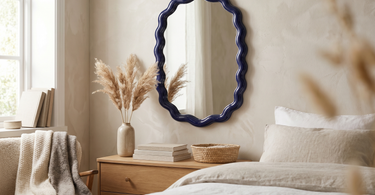
Feng shui in the bedroom is about creating calm, balance and good energy, so you sleep better. Place the bed in the command position with a solid headboard and a view of the door, choose soft lighting and calming earthy colours, make sure bedside tables come in pairs – and place mirrors thoughtfully, so they don't reflect the bed.
Contents
Feng shui is an ancient Chinese practice about how furnishing and placement affect the energy – and thereby our wellbeing – in a room. In the bedroom, the goal is simple: to create a calm, safe and harmonious space that invites rest. Here are the key principles you can use straight away.
The bed's placement: command position
The bed's placement is the most important thing in feng shui. The idea of the "command position" means that from the bed you can see the door into the room – without the bed being directly in line with the door. This gives a feeling of safety and control, so the body can relax more easily.
- Place the bed so you have a clear view of the door.
- Avoid having the foot of the bed pointing directly at the door.
- Preferably place the bed with the headboard against a solid wall – not under a window.
A solid headboard provides support
A firm, solid headboard symbolises support and stability in feng shui. It gives both a physical and a mental sense of having something at your back. Choose a full headboard rather than one with open slats or loose bars, if you want to follow the principles closely.
Balance and symmetry
Symmetry creates calm for the eye. In feng shui, it's recommended to furnish the bedroom in pairs – this also supports a feeling of balance and togetherness.
- Place a bedside table on each side of the bed.
- Preferably use identical or matching lamps on both sides.
- Make sure there's room to get into bed from both sides.
Tip: A pair of matching candlesticks on the bedside tables creates both symmetry and a soft, cosy light in the evening – perfect for signalling to the body that it's time to settle down.
Soft lighting and calming colours
Harsh ceiling light has no place in a calm bedroom. Instead, go for several light sources you can dim – table lamps, a dimmable pendant light or candles. Warm, soft light helps the body produce sleep hormone.
In terms of colour, feng shui recommends calm, earthy tones: soft sandy colours, muted terracotta, warm beige, grey tones and subdued green. Avoid lots of sharp, energetic colours, which have an activating effect.
| Do this | Avoid this |
|---|---|
| Bed in command position with a view of the door | Bed directly in line with the door |
| Solid headboard against a wall | Headboard under a window |
| Bedside tables and lamps in pairs | Asymmetry and clutter on just one side |
| Soft, warm lighting and calming earthy colours | Harsh ceiling light and lots of loud colours |
| Mirror placed so it doesn't reflect the bed | Mirror that reflects the bed directly |
Mirrors with thought
Mirrors are beautiful and practical, but in feng shui it's recommended that a mirror shouldn't reflect the bed directly. The idea is that a mirror reflecting the sleeper can feel unsettling and disturb your night's sleep. You can still easily have a mirror in the bedroom – just place it so it reflects daylight or a lovely detail rather than the bed itself.
- Hang the mirror on a wall beside the bed rather than opposite it.
- Use the mirror to spread natural light around the room.
- An oval mirror with soft edges suits a calm bedroom well.
Tidy up – under the bed too
Clutter on the floor and under the bed disrupts the free flow of energy (chi) and, with it, the calm of the room. Try to keep the area under the bed clear, and avoid storing too much there. A tidy, airy bedroom makes it easier for the mind to settle.
- Keep the floor and the space under the bed as clear as possible.
- Avoid work, screens and clutter on the bedside tables.
- Close wardrobe doors so everything feels finished and calm.
Frequently asked questions
Where should the bed be placed according to feng shui?
The bed should be in the commanding position, where you can see the door from the bed without the bed being directly in line with the door. The headboard should be placed against a solid wall – not under a window.
Can you have a mirror in the bedroom?
Yes. Feng shui simply advises against the mirror reflecting the bed directly. Instead, place it on a side wall so it reflects daylight or a lovely detail rather than the sleeper.
Which colours are best in the bedroom?
Calm, earthy tones such as sandy shades, muted terracotta, warm beige, greys and soft green are recommended, as they have a soothing effect. Lots of bright colours can feel stimulating.
Why are bedside tables recommended in pairs?
Pairs and symmetry create visual calm and balance and support a sense of togetherness. A bedside table and a lamp on each side of the bed is a classic feng shui trick.
Does feng shui help with sleep?
Feng shui is a design philosophy, not a guarantee of better sleep. But many of its principles – calm, order, soft lighting and a secure bed placement – generally support a good sleep environment.
Summary
Feng shui in the bedroom is about security, balance and calm. Place the bed in the commanding position with a solid headboard, create symmetry with bedside tables in pairs, choose soft lighting and calm earthy colours, place mirrors thoughtfully, and keep the room tidy. Together, this creates a harmonious bedroom that invites rest.
Read also
Find the perfect piece for your bedroom at Dims Studio – explore our mirrors and candlesticks.