
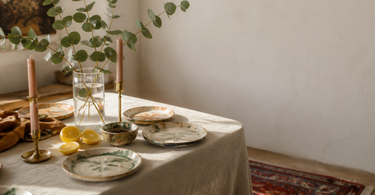
Dining Room Decor – The Heart of Your Home
The dining room is where everyday meals become shared experiences and where festive dinners come to life. Good dining room decor isn’t just about furniture—it’s the small details on the table, on the wall, and underfoot that make the room special. With the right tableware, the right candlesticks, and a well-thought-out table setting, even a Tuesday night can feel like a special occasion.


Here, we dive into the elements that transform your dining room from functional to fantastic.
Plates and tableware—mix and match with personality
The days when all tableware matched in color and pattern are over. Today, it’s all about mixing it up—combine plates in different colors, sizes, and textures for a table with character. A solid-colored plate as a base, a patterned dinner plate on top, and a small bowl beside it create a layered and visually exciting place setting.
Complement with cups, saucers, and bowls in the same color family to maintain a certain flow, even if the styles vary. Stoneware and glazed ceramics are excellent materials that withstand everyday use while still looking festive.
Candlesticks as the centerpiece of the table
Candlesticks are perhaps the most important decorative element on the dining table. They set the mood, they visually bring the table together, and they signal that the meal is something you’ve taken the time to prepare. Group three to five candlesticks of varying heights in the center
of
the table for an informal and inviting effect.
Brass, ceramic, and glass are all excellent materials for dining room candlesticks. Feel free to mix materials—a brass candlestick next to one in colored glass creates contrast and depth. Remember that candles in natural colors (white, cream, honey) suit most table settings.
Pitchers and glassware – form meets function
A beautiful pitcher for water or wine instantly elevates the table. Choose a ceramic pitcher for everyday use and one in clear or colored glass for festive occasions. Drinking glasses and wine glasses made of mouth-blown glass offer an organic, unique quality that makes each glass one of a kind.
Consider mixing glass types—a pop of color in the form of a reddish or greenish glass among neutrals can work wonders for the table’s overall look.
Salt and pepper sets with humor and character
The small details matter, and a salt and pepper set with personality can spark conversation at the table. From classic designs in marble and wood to fun figures and unexpected shapes—salt and pepper don’t have to be anonymous. They sit on the table at virtually every meal, so they deserve to be chosen with care.
Table setting – the art of setting a beautiful table
Good table setting is a skill that combines aesthetics with practicality. Start with a tablecloth or placemats as a base, let the tableware and cutlery build on that, and finish with candlesticks and a small Floral arrangements. Linen or cotton cloth napkins add a stylish, sustainable touch that can be reused time and time again.
Think in terms of layers and textures—a coarse linen tablecloth, smooth ceramics, shiny silverware, and flickering candles. It’s the contrasts that make a table interesting.
What should be on a dining table?
For everyday use: candlesticks, salt and pepper, and perhaps a small vase with fresh flowers or dried branches. This keeps the table inviting without being too cluttered. For a party: add a water pitcher, wine glasses, cloth napkins, and perhaps place cards. The principle is that the table should invite you to sit down—not look like a display window.
Rugs under the dining table
A rug under the dining table ties the room together and dampens sound. Choose a rug large enough so that the chairs still stand on it when pulled out—typically, the rug should extend 60–80 cm beyond all sides of the table. Flat-woven rugs and jute rugs are practical choices, as they are easy to clean and withstand crumbs and spills.
Wall decor in the dining room
The walls in the dining room deserve attention. Wall decor such as a large piece of art, a collection of plates on the wall, or a mirror that reflects the table and the light can transform the room. Hang decor at eye level when you’re seated—after all, it’s from a seated position that the room is experienced during meals.
How do you choose the right dining table?
Consider how many people you have on a daily basis plus space for guests. A round table works well for conversation (up to six people), while a rectangular table is more flexible for larger gatherings. Solid wood and oak are durable materials that develop a beautiful patina over the years.
FAQs about dining room decor
Does the tableware have to match?
No, mixing tableware is a strong trend that gives the table personality. Stick to an overall color palette (e.g., blue and white, or earth tones) to avoid a cluttered look.
How many candlesticks should be on the table?
Three to five is a good starting point for a table seating four to six people. An odd number looks more dynamic and natural than an even number.
Get your dining table ready for both everyday meals and special occasions. Explore our collection of plates and candlesticks, and start creating a table setting that turns every meal into an experience.
