
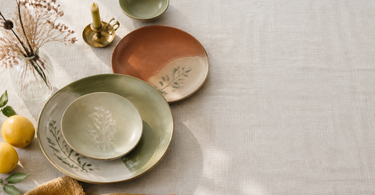
There’s something special about serving even a simple lunch on a beautiful plate. A hand-painted ceramic plate transforms a simple rye bread sandwich into something that feels thoughtfully curated and a little extra special. Ceramics have the quality of bearing the traces of craftsmanship—small variations in glaze, color, and shape—and it is precisely these variations that make everyday life a little more interesting. Explore our plate collection and find the style that suits your table.
What types of ceramic plates are there?
The world of plates is bigger than you might think. Here are the most common types:
- Flat plates (dinner plates): Typically 26–28 cm in diameter. Used for main courses and form the basis of any plate set.
- Deep plates (soup plates): With a higher rim, suitable for soups, pasta, and salads with dressing.
- Lunch and dessert plates: Diameter approx. 20–22 cm. Used for brunch, cake, or as a saucer for bowls.
- Tapas and tasting plates: Small plates for appetizers, sushi, or the cheese board. Popular in stoneware and porcelain with unique glazes.
See also our small dishes and bowls for sides and dips.
Hand-painted plates with personality
Mass-produced plates from large chains all look the same because they are identical. Hand-painted ceramic plates are the opposite: each plate has its own character. Caja Company’s popular lemon plates are hand-painted with fresh citrus motifs that bring a Southern European vibe to the Danish lunch table. Bloomingville offers plates with organic shapes and muted earth-toned glazes, while Rice features colorful melamine plates that are perfect for outdoor dining and picnics.
See our full selection of Bloomingville plates and Klevering plates.
Lemon Plates: The Popular Trend
The citrus motif has taken the Danish interior design world by storm. Inspired by Italian trattorias and French country kitchens, lemons now adorn everything from plates and cups to platters and pitchers. At dims studio, lemon plates from Caja Company are among the bestsellers—and it’s easy to see why. The yellow lemons against the creamy white ceramic evoke an immediate sense of sun and summer. Pair them with orange plates for a fully fruity table, or mix them with solid white stoneware for a more subdued effect.
How big are lunch plates vs. dinner plates?
It’s a question we get asked often. In short: a lunch plate typically measures 20–22 cm in diameter, while a dinner plate is 26–28 cm. The difference may seem small, but it makes a big difference in portion size and table setting. Read our in-depth guide: How big are lunch plates?
Mix and match: How to mix and match plates
The days when all the plates on the table had to be from the same set are long gone. The mix-and-match style is one of the strongest table trends—and it’s easy to master:
- Stick to a color palette: Feel free to mix different patterns and materials, but stick to 2–3 colors to avoid chaos.
- Vary sizes intentionally: A large dinner plate as a base, a smaller lunch plate on top, and a small bowl for dip create a layered, professional look.
- Mix stoneware and porcelain: The rustic surface of stoneware combined with the smooth finish of porcelain creates contrast and depth.
- Add a wild card: A single plate with a fish motif or a citrus print among solid-colored ceramics brings the table to life.
Pair with beautiful cutlery for the full dining experience.
Plates as wall decor
Plates don’t just belong on the table. In many cultures—from Portugal to China—decorative plates have adorned walls for centuries. You can create a beautiful wall arrangement with plates in various sizes and patterns. Use plate hangers (available at most hardware stores) and arrange them in an asymmetrical group. Hand-painted ceramic plates with lemon or floral motifs are perfect for the kitchen wall or dining room.
Caring for ceramic plates
Ceramic is a durable material, but it deserves a little care:
- Washing: Most glazed ceramic plates are dishwasher-safe, but hand-painted plates are best washed by hand in lukewarm water.
- Stacking: Place a piece of paper towel or a felt pad between the plates to prevent scratches in the glaze.
- Microwave: Glazed stoneware and porcelain are generally microwave-safe. Avoid plates with metal decorations.
- Thermal shock: Do not take a cold ceramic plate directly from the refrigerator into a hot oven—let it come to room temperature first.
Frequently Asked Questions
What is the difference between stoneware and porcelain?
Stoneware is fired at a lower temperature and has a more rustic, porous surface. Porcelain is fired at a higher temperature, is thinner, and has a smooth, white finish. Both are durable, but porcelain is more formal, while stoneware feels casual and warm.
Are hand-painted plates dishwasher-safe?
It depends on the glaze. Many hand-painted plates from Caja Company and Bloomingville are dishwasher-safe, but we recommend hand-washing to preserve the intensity of the paint over time.
How many plates should you have?
A rule of thumb is 6–8 dinner plates and an equal number of soup plates for a household. Add 6–8 lunch plates to that. If you often have guests, consider 10–12 of each. Explore our entire selection of plates.
