
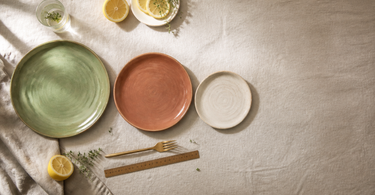
A lunch plate typically has a diameter of 19–23 cm — well below the dinner plate (26–28 cm), but larger than dessert and cake plates. The size is suited for light servings such as open sandwiches, salads, and cold cuts, and is a standard part of most Danish tableware sets. The material also matters: porcelain and stoneware are the most common, but the choice depends on use and aesthetics.
The lunch plate is one of the most underrated parts of a complete tableware set. It is neither the largest nor the smallest, but it is perhaps the most used — for open sandwiches on a weekday, tapas on a Saturday, and dessert when dinner guests arrive. The question is: how big is it really, and when does size matter? Here is the practical answer, with dimensions and materials covered.
Standard dimensions for lunch plates
The classic lunch plate falls in the range of 19–23 cm in diameter. This is a wide range, and it genuinely reflects that there is no single absolute standard — production varies from manufacturer to manufacturer and from style to style.
For comparison: a dinner plate is typically 26–28 cm, while dessert and cake plates fall below the lower limit of the lunch plate. The table below gives a quick overview:
| Type | Typical diameter |
|---|---|
| Lunch plate | 19–23 cm |
| Dinner plate | 26–28 cm |
| Dessert plate | 17–19 cm |
| Cake plate | 15–18 cm |
Note that the upper limit of the dessert plate (19 cm) overlaps with the lower limit of the lunch plate. In practice, the two categories are often distinguished by depth and rim profile rather than diameter alone. A lunch plate typically has a wider flat surface, providing room for a whole slice of rye bread.
Handmade plates — for example stoneware from European ceramic producers — may deviate from these figures by up to a couple of centimetres, precisely because they are shaped by hand rather than cast by machine. This is part of the charm, but worth keeping in mind if you are supplementing an existing set.
Tip: If you are buying individual plates to supplement an existing set, measure your current lunch plate before ordering. A difference of just 2 cm in diameter can look quite noticeable on a laid table.
What do you use a lunch plate for?
The name suggests lunch — and that is indeed the starting point. But in practice, the lunch plate is far more versatile than that. A diameter of 19–23 cm is large enough to hold a serving, yet small enough not to dominate the table at buffets and multi-course meals.
Typical uses
- Open sandwiches and rye bread slices (a standard slice of rye bread is approx. 10 × 13 cm — there is plenty of room)
- Light servings with salad, cold cuts, or cold dishes
- Cake and dessert at larger settings where the dinner plate is already in use
- Tapas, snacks, and sharing servings at informal meals
- Smaller portions at a buffet where guests help themselves in multiple rounds
Especially for tapas and sharing servings, the lunch plate works well as an in-between — larger than a bowl, but not requiring the same table space as a dinner plate. See our selection of platters and bowls that complement plates well in this type of serving.
Materials and shapes
The material determines not only the appearance, but also the weight, durability, and maintenance. Lunch plates are produced in a wide range of materials, and the choice depends on what the plate will be used for.
Porcelain
The most classic choice. Porcelain is fired at very high temperatures (typically 1200–1400 °C), resulting in a dense, non-porous material. It is relatively light, holds its shape well over time, and is dishwasher safe. White porcelain reflects food colours well and provides a neutral canvas for the serving.
Stoneware
Heavier and more rustic than porcelain. Stoneware is fired at slightly lower temperatures and can have a slightly porous surface, giving a more organic look. Many handmade plates from European ceramic workshops are stoneware. They are solid and long-lasting, but may vary in diameter and shape. Explore our selection of plates in these very materials.
Melamine
Light and shatterproof — popular for outdoor use and families with children. Melamine is a plastic material that can mimic the smooth surface of porcelain. It is not microwave safe and unsuitable for oven use, but withstands plenty of handling.
Glass
Transparent and minimalist. Glass plates are often used for serving, particularly when the food itself is the visual element. They are heavier than porcelain and require careful handling.
Bamboo and composite
A more sustainable category, often aimed at children and picnic use. These plates are light and robust, but cannot be used in a dishwasher at high temperatures.
Shapes
The round, flat plate is the norm — but oval, angular, and slightly bowled variants are widespread. Slightly bowled lunch plates (with a low rim) are often used for salads and dishes with sauce, as they reduce spills. Angular variants give a more geometric, modern look on the table.
The lunch plate in Danish table setting
In Denmark, the cold lunch holds a special place in food culture. The open-faced sandwich, the classic cold cuts board, and the more informal lunch with rye bread and leftovers from the previous evening — all of this is formatted to the size of the lunch plate. It is no coincidence that virtually all Danish tableware sets include a lunch plate as a standard component.
At a formally set lunch, the lunch plate is typically placed directly on the table or on a charger plate, and is often combined with matching cutlery and glasses. If you use a complete set, the lunch plate matches in colour, glaze, and rim profile with the dinner plate and any platters and bowls in the same series.
For a more informal brunch or weekend lunch, you can happily mix plates from different producers — for example a colourful ceramic plate in 21 cm alongside a neutral porcelain set. It just requires that the sizes are roughly the same, so the table looks harmonious.
If you want to add colour to your table setting, lemon plates and orange plates in ceramic are popular choices for giving the lunch table a fresh, southern European feel.
How to choose the right size
There is no universal "right" size — it depends on what the plate will primarily be used for, and how it fits into your existing tableware.
Go for 20–21 cm as a starting point
In the middle of the range (approx. 20–21 cm) is the most neutral size. It suits open sandwiches, is large enough for a small dessert, and small enough not to feel overwhelming as a snack plate. It is also the size most manufacturers of complete sets use as standard.
Choose 22–23 cm for more general use
The upper end of the range works well if you want to use the lunch plate as a "small dinner plate" — for example for a light warm dish, a small portion of pasta, or a generous salad. It holds more and is more flexible.
Choose 19–20 cm for more formal table settings
The smaller variant is more subtle on the table and works best in combination with a service plate or charger. It is typically found with producers who focus on the formally aesthetic.
If you want to complement your tableware with table accessories, salt and pepper sets and cups from the same universe can help unify the table's look.
Frequently asked questions
What is the typical diameter of a lunch plate?
Most lunch plates measure 19–23 cm in diameter. In the middle of the range — around 20–21 cm — is the most common size. Deviations of a couple of centimetres occur, particularly with handmade stoneware plates, where the shape naturally varies from piece to piece.
What is the difference between a lunch plate and a dessert plate?
The sizes partly overlap: dessert plates typically range from 17–19 cm, while lunch plates start at 19 cm. In practice, the lunch plate often has a wider flat centre that provides room for a whole slice of bread. The dessert plate's profile is more often slightly bowled to hold sauce or filling.
Can you use a lunch plate as a dessert plate?
Yes, without any problem. A 19–20 cm lunch plate works perfectly for dessert and cake, and in many sets the two categories are used interchangeably. The differences are primarily naming and placement in a formally set table, not function.
What size lunch plate works for open sandwiches?
A standard slice of rye bread measures approximately 10 × 13 cm, so even a 19 cm plate provides good room for bread and toppings. A 21–22 cm plate gives extra space for garnish and makes the presentation more airy. For a classic open sandwich spread, 20–22 cm is a good choice.
Is there a difference between lunch plates in porcelain and stoneware?
Yes, primarily in weight, surface, and precision. Porcelain is lighter, denser, and more uniform in size. Stoneware is heavier, often has a more textured surface, and can vary slightly in size — especially with handmade examples. Both materials are dishwasher safe, but always check the manufacturer's instructions.
How many lunch plates should you have?
A rule of thumb is to have at least six plates per type in a set, so you can cover most dinner parties. If you often host large gatherings, eight to twelve is preferable. The lunch plate is used frequently for everyday purposes, so it pays to have an extra buffer to replace breakage.
Summary
The lunch plate is defined by a diameter of 19–23 cm — a size deliberately suited to light meals, cold servings, and the Danish lunch table. It sits precisely between the more modest dessert plate and the spacious dinner plate. The choice of material — porcelain, stoneware, melamine, or glass — does not change the basic dimensions, but affects weight, appearance, and durability. If you are supplementing an existing set, it is wise to measure up before buying, as handmade plates can vary. If you have free choice, 20–21 cm is the most versatile starting point for everyday Danish use.
Explore our selection of plates — from colourful ceramics to classic porcelain for the lunch table.