
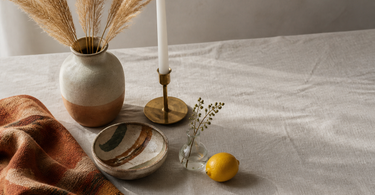
Brass is an alloy of copper and zinc that adds warmth and depth to your home. It works in both modern and classic rooms and combines strongly with dark wood, white walls and ceramics. Over time, a natural patina develops — this is part of the material's character, not a flaw. The easiest entry points are knobs, hooks and mirror frames, which noticeably lift even simple furniture.
Brass has a way of making a room feel warmer without overpowering it. This isn't a new discovery — the metal's combination of copper and zinc has been used in home decor for centuries, from Victorian brass candelabras to mid-century furniture fittings. It's precisely this historical weight combined with relatively simple maintenance that makes brass so versatile. You don't need to replace everything. Often it's the small details — a handle, a hook, a mirror frame — that shift the whole mood of the room.
What exactly is brass?
Brass is a metal alloy consisting mainly of copper (typically 60-90%) and zinc (10-40%). The ratio between the two metals determines the brass's colour and hardness: more zinc gives a lighter, more yellowish tone and increased strength, while a higher copper content pulls the colour towards warmer, more reddish tones. It's the natural copper tone that gives brass its characteristic golden glow — and that sets it apart from, for example, chrome and stainless steel, both of which appear cooler and more neutral.
In interior design, a distinction is usually made between two finishes:
- Bright/polished brass — high reflection, strong golden look. Requires more care to maintain its shine.
- Brushed or matte brass — muted surface with visible brushing marks. Hides fingerprints better and requires minimal maintenance.
Both versions suit modern interiors, but brushed brass feels more relaxed and is easy to work into Scandinavian and Japandi-inspired homes.
Knobs and hooks: the quick upgrade
No single change in a room is easier to carry out than swapping the hardware on drawers and cabinets. A set of brass hooks and knobs costs relatively little and can be fitted with a screwdriver, yet the visual lift is disproportionately large. That's because fittings are the eye's natural resting point — we register them even when we're not consciously looking at them.
Knobs for kitchen doors and drawers
In the kitchen, it's especially effective to pair white or light grey doors with brass handles. This creates a clear hierarchy — neutral base, warm metal detail — that feels thought-through without being overdone. Kitchen door knobs now come in many shapes: round plates, T-bars, geometric profiles. Choose one shape and keep it consistent throughout the room for a cohesive result.
Hooks for the hallway
The hallway is the first room you and your guests see. Yet it's often forgotten when it comes to decor. A single row of hallway hooks in brass on a painted wall — for example in a deep green or blue-grey tone — is a simple and effective solution. The spacing between the hooks should be at least 15-20 cm to avoid coats getting squeezed together.
Tip: If you want to test the look before buying, you can tape paper cut-outs the size of the hooks onto the wall and see them in daylight at different times. Brass's golden tone shifts noticeably from morning to evening light, and it's worth judging both.
Brass mirrors and wall decor
A mirror with a brass frame is one of the most robust and timeless choices in home decor. It appears in classic English manor interiors and in minimalist Scandinavian flats alike — precisely because the golden edge is warm enough to add character, yet understated enough not to compete with anything else.
Size matters a great deal. A small brass mirror above a chest of drawers works as a detail; a large one in the hallway or living room (typically from 80 cm and up) works as a piece of furniture in its own right — it structures the room and draws in light. Take a look at large mirrors and consider what your wall's dimensions can carry.
Round vs. oval shapes
Round brass mirrors are one of the most sought-after shapes at the moment. They counteract the many right angles found in modern architecture and bring a softer feel to a space. Oval shapes work in a similar way, but add a touch more classic gravitas. Both types are available as round mirrors and oval mirrors — and both work brilliantly in the bathroom, hallway and living room.
Patina: the material's own expression
Brass is a living material in the sense that it reacts to its surroundings over time. Oxidation from air and moisture gives the surface a darker, more complex tone — what's known as patina. The process can take months to years, depending on how exposed the piece is.
Patina isn't damage. It's proof that you're actually using the piece. Many people actually prefer the aged look, as it adds a layer of craftsmanship history to the surface. Industrially produced, new brass can even be chemically treated to mimic patina — but you get the real result simply by letting the material live in your home.
Want to keep that shiny gleam?
Polish with a soft cloth and lemon juice (or a weak solution of vinegar and salt). The acid in the citrus removes the layer of oxidation without scratching the surface. Do this no more than a couple of times a year — polishing too often removes the natural protective film that slowly forms. Avoid scouring powder and abrasive sponges.
| Surface type | Care | Patina over time | Suits |
|---|---|---|---|
| Polished brass | Requires regular polishing | Visible — darkens without care | Classic, art deco, maximalist |
| Brushed/matte brass | Minimal — wipe with a damp cloth | Subtle — surface texture conceals it | Scandinavian, Japandi, minimalist |
| Antique brass | None — patina is intentional | Already present | Rustic, classic, eclectic |
Combine brass with other materials
Brass isn't a material that thrives in isolation. It needs a counterpart — and it's precisely in combinations that it really comes into its own.
Brass and dark wood
The contrast between warm gold and the deep tones of oak, walnut or smoked wood is a classic for a reason: both materials are warm, but different enough in texture and light reflection to complement each other rather than blend together. It works in the bedroom (brass knobs on a dark chest of drawers), in the living room (a brass mirror above a wooden side table) and in the kitchen.
Brass and white walls
Against a white or light grey background, the brass stands out clearly without becoming overwhelming. It's the combination most people start with — and there's good reason for that. The light background acts as a neutral canvas that lets the metal's colour speak for itself.
Brass and ceramics
Ceramic's matte, uneven surfaces create an interesting contrast to brass's smooth, reflective finish. A group of ceramic vases or a ceramic candlestick placed next to a brass element balances the gold — and gives the shelf or table a more organic feel than a purely metallic look. It's the combination of the handmade and the industrial that gives it energy.
What brass doesn't combine well with
Avoid mixing brass with silver, chrome and nickel in the same room, if you can help it. The cool metals and the warm gold compete for attention rather than complementing each other. It can be done deliberately to good effect, but it requires a strong idea behind it. As a rule of thumb: stick to one metallic tone per room.
Frequently asked questions
Are brass and gold the same thing in interior design?
No. Gold finish is typically a surface treatment — a thin gold-coloured coating on another metal. Brass is a genuine alloy of copper and zinc. Brass is warmer and more matte in tone than polished gold, which can appear more "bling". Genuine brass develops a patina over time; gold coating can flake off.
Can you use brass in the bathroom?
Yes, but moisture speeds up the patina process significantly. In a bathroom, shiny brass will darken faster. Many people choose this effect deliberately — others prefer brushed brass, which is more resistant to marks and water stains and requires minimal maintenance in humid rooms.
What's the easiest way to introduce brass into a room?
Start with hardware: swap out your drawer and cabinet knobs. This is typically an investment of under 300-500 DKK for an entire kitchen or chest of drawers, requires no tradesperson and gives an immediately visible result. From there, you can build on it with a candlestick or a coat rack.
How do I avoid making the brass look cheap?
Choose solidity over surface: a heavy, solid brass handle looks different from a thin, plated plastic fitting with gold lacquer. Put your finger on the underside — if it feels hollow, it's probably a coating. Genuine brass has a natural weight to it. Also keep the number of brass elements consistent; too many compete with one another.
Which wall colours work best with brass?
Warm, dark shades such as bottle green, deep navy, terracotta and charcoal bring out brass's golden tone best. White and light grey walls act as neutral canvases. Avoid cool blue-grey tones — they can make the brass look orange and out of place.
Can I mix shiny and brushed brass?
Yes, but do it sparingly. One type should dominate; the other can appear as an accent. For example, mix brushed coat hooks with a single polished mirror. Don't place the two finishes directly side by side — a gap of at least the width of a piece of furniture makes the transition feel natural rather than messy.
Summary
Brass is one of the most age-resistant choices in home decor — not because it doesn't change, but because it changes beautifully. It's a material with weight and warmth that can be introduced gradually: a hook here, a drawer handle there, a mirror on the right wall. It doesn't require a total renovation or a new budget. Start with the smallest details — knobs for cabinets and drawers or a single coat rack in the hallway — and build from there. Combine it with ceramics, dark wood and colourful textiles, and you'll have a room with depth and consistency.
Explore our selection of brass hooks and knobs — from classic round knobs to geometric drawer handles.