
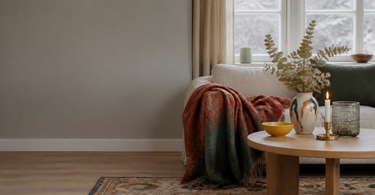
Winter styling is about working with light, textures and rituals — not about buying new things. Warm electric light (2700–3000K), living flames from candles and layer upon layer of tactile materials like wool and knits create the hygge effect that the short Danish winter days call for. Start with the lighting, add heavy textiles and bring personality in through details in ceramics and decoration.
Denmark has one of Northern Europe's shortest day lengths in December — the sun is down already at 3.30pm. That gives around 7 hours of daylight, and it's noticeable. Winter styling is the answer: a deliberate transformation of the home that uses light, materials and rituals to make the dark season bearable — and actually rather good. Here's what works, and why.
Light as the foundation
The most important move in winter styling is the lighting. The ceiling lamp, which works fine during the summer months, is a winter killer — it casts a flat, uniform light that highlights the lack of natural light rather than compensating for it.
Switch instead to layered lighting: table lamps, floor lamps and string lights placed at different heights, so the light lands from the side and below rather than from above. The horizontal light direction mimics the low winter sun angle and feels notably more natural.
Colour temperature matters
Electric light sources are measured in Kelvin (K). For winter hygge, you should stay between 2700K and 3000K — this range gives a yellow-orange tone similar to the warmth of candlelight. 4000K and above lean towards the cool-white spectrum and suit an office better than a sofa. Lamps with warm colour temperature are an investment that pays off in everyday mood from October to March.
If you have a dimmer option, it's a big plus. Morning coffee needs more light than a film night, and the ability to dim gives you control over the room's energy.
Tip: Place a table lamp or floor lamp in dark corners — they're the first thing you notice as heavy or cold. A single point of light in the corner can transform the entire room's proportions.
Textures that warm
Winter is the season's argument for tactile materials. Chunky knits, thick wool and soft velour aren't just visually warm — they actually feel warm to the touch. A chunky knit throw over the back of the sofa, wool cushions on the armchair and a thick rug under the coffee table add layers that make the room physically inviting.
Rugs on the floor
Cold floors are winter's most underrated problem. A warm rug solves it twofold: it actually insulates (wool rugs can reduce heat loss through the floor) and defines a zone that feels like a room within a room. Thickness and material matter here — a short 5mm pile behaves fundamentally differently from 20mm. For winter, more is usually more.
The layering principle
Mix textures deliberately. Combine the smooth with the rough: a shiny brass candlestick next to a knitted tray mat, a ceramic mug against a rough linen napkin. The contrasts create visual interest and counteract the monochrome look that many winter interiors fall into. The rule is simple — if all surfaces have the same finish, it looks dull.
Candles and candlesticks
In a country where the sun can set in the middle of the afternoon, candlelight isn't aesthetics — it's a functional necessity. A flame moves, it pulses gently, and it sends out a warm 1800K light into the room. That's warmer than even the warmest electric bulbs.
Quantity and variety are the key words. Use candlesticks in varying heights — tall taper candles on the dining table, wide pillar candles on a tray in the living room, small tealights scattered on windowsills. Group the candlesticks in odd numbers (3 or 5) on a dish or chopping board; it gives a compositionally cohesive look without seeming staged.
Choice of colour and scent
White and cream-coloured candles give the cleanest, most neutral look and work in any room. If you want more drama, deep burgundy and dark green suit December well. Scented candles can enhance the sensory experience, but stick to one scent per room — two overlapping scent notes is rarely pleasant.
Light candles as a daily ritual, not just for guests. It signals to the brain that the working day is over and the evening is beginning — it's the kind of simple, practical ritual that everyday winter life is built on.
| Light type | Colour temperature | Best for |
|---|---|---|
| Candles (living flame) | approx. 1800K | Cosy atmosphere, dining table, bathroom |
| Bulbs, warm white | 2700–3000K | Living room, bedroom |
| Bulbs, neutral white | 3500–4000K | Kitchen, workspace |
| Daylight / cool white | 5000K+ | Not recommended for winter décor |
Warm drinks and ceramics
Winter cosiness and hot drinks go hand in hand — and the right tableware plays a bigger part in the experience than you might think. A thick ceramic mug that releases warmth into your hands for 10–15 minutes rather than 3–4 (thinner porcelain loses heat faster) is an argument in itself.
Choose mugs with sturdy handles that sit comfortably in a cold hand, and take a look at the material — handmade ceramics with variation in the glaze add character to a ritual that repeats itself two or three times a day. A pot for tea, cocoa or hot cider turns serving into part of the presentation rather than just a practical task.
Colours matter too: deep clay tones, olive green, brick red and warm ochre are materials and shades that work with winter rather than against it.
Winter decoration with personality
Winter décor tends to drift towards the generic — beige, neutral, safe. That's understandable, but it's also dull during the months you spend the most time indoors. Instead, use winter to highlight the things that actually matter to you.
Decorations as anchor points
Ceramic figures, characterful vases, an unusual dish or a collection of things from your travels can act as visual anchor points in the room. They tell a story — and they give the eye somewhere to rest. Details matter more in winter, because we actually notice them; we're home more and spend more time sitting still.
Mirrors and reflection
A mirror placed opposite a light source doubles the amount of light you perceive in the room. It's not a trick — it's physics. A round mirror with a warm frame (brass, rattan, lacquered wood) also adds a shape that suits winter's soft aesthetic.
Wall decoration in the dark months
Empty walls can feel cold and distant in winter. Wall decoration — posters, ceramic hangings, wall hangings — fill the visual field and give rooms a fuller, warmer expression. A wall hanging also absorbs sound and has a real acoustic effect, making the room feel more enveloped.
Frequently asked questions
What's the most important element in winter styling?
Lighting. Warm light from candles and lamps in the 2700–3000K range is the foundation of all winter cosiness. Without the right light, neither rugs nor textiles will help fully. Always start by solving lighting issues before buying new furnishings.
How do you avoid your home feeling dark and heavy in winter?
Use light bases — white or light grey walls and light furniture — and add warmth and dark tones through textiles and decorations, which can easily be swapped out. Mirrors reflect light and create more visual space. Avoid filling every surface with dark colours at once.
When should you switch to winter styling?
When you're already lighting candles in the afternoon, it's time. For most Danes, that's late October or early November. The switch from summer to winter time is a good practical anchor point to use.
Which colours work well for winter styling?
Warm earth tones — terracotta, ochre, brick red, olive green and deep navy — complement the winter light. Neutral beige and white work as a base. Avoid cool blue-grey shades as a primary colour, as they reinforce the winter light rather than counteract it.
Are candles enough for winter cosiness, or is electric light necessary?
Both. Candles create the warmest and most dynamic atmosphere, but are insufficient as the sole light source for practical purposes like cooking or reading. Combine live flames with warm electric light at 2700K for the best result — the two complement each other.
What is chunky knit, and why is it recommended for winter?
Chunky knit is a coarsely knitted textile with large stitches, typically in thick wool or acrylic yarn. The material is tactilely satisfying — it looks warm and feels warm. Wool fibres have natural crimping that traps air and insulates. A chunky knit throw is one of the cheapest and most effective winter styling tricks there is.
Summary
Winter styling isn't one big investment, but a series of conscious choices that together transform your home. Start with the lighting — build layers of warm light from 2700K bulbs and live candles rather than leaving the ceiling light to do it alone. Add tactile textiles in wool, knit and velour that physically insulate and visually warm. Group candlesticks, use ceramic cups that hold onto heat, and place mirrors that reflect the light. And allow yourself to have personality in your decorations — after all, they're what you'll be looking at for 5 dark months.
Explore our range of candlesticks for winter styling — from ceramic and crystal to glass and brass.
