
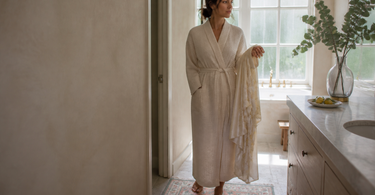
A dressing gown is made from lightweight materials such as cotton, flannel or satin and is primarily intended for comfort and relaxation — in the morning, in the evening or during a cosy moment. A bathrobe, on the other hand, is made from absorbent materials such as terry cloth or microfibre and is designed to dry the body after bathing. Function is therefore the key difference: the bathrobe is practical, the dressing gown is comfort-oriented.
Dressing gown and bathrobe are often used interchangeably in everyday language, but the two types of robe have quite different properties and purposes. Understanding the difference puts you in a much better position to buy the robe that actually suits your needs — whether it is for a slow morning with coffee in hand, for drying off after a shower, or for use as a luxury item in the bedroom.
What is a dressing gown?
A dressing gown is designed for comfort and relaxation. It is the robe you put on before the day really begins — or during the late evening with a book and a candle on the table. The purpose is not to dry, but to keep you warm and comfortable while you carve out time for yourself.
Dressing gowns are typically sewn from lighter fabrics with low absorbency. This makes them soft and pleasant against the skin, but not particularly well suited to drying the body after a bath. They come in a wide range of cuts — from loose kimono-inspired models with a belt to more structured versions with pockets and a collar.
Typical materials in dressing gowns
- Light cotton — breathable and suitable for all seasons
- Satin — smooth and cool against the skin, often used in more elegant models
- Flannel — soft and warming, ideal for cold winter mornings
- Fleece — lightweight insulation, quick-drying but not absorbent
In terms of design, dressing gowns are often more decorative than bathrobes — they may have prints, embroidery or contrasting colours on edges and pockets. This is the type of robe that can easily live in the bedroom as part of the overall aesthetic, ideally complementing other textiles and decorative elements in the home.
What is a bathrobe?
A bathrobe is a functional garment. It is constructed for one primary task: to absorb water from the body after you have bathed, swum or visited the spa. This places clear demands on the material, and most bathrobes are therefore considerably heavier than dressing gowns of the same size.
Classic bathrobes are made from terry cloth — a loop-woven cotton fabric that can absorb up to 27 times its own weight in water. It is the same material used in towels, and that is no coincidence: a bathrobe is essentially a towel you can walk around in. Newer versions use microfibre, which is lighter and faster-drying but still highly absorbent.
Typical materials in bathrobes
- Terry cloth (loop-woven cotton) — classic choice with high absorbency and long durability
- Velour — a variant of terry cloth with cut loops, giving a softer surface
- Microfibre — synthetic alternative, lighter and faster-drying than cotton
- Bamboo-cotton — soft and naturally antistatic, good absorbency
Bathrobes are typically thicker and heavier than dressing gowns and retain warmth well immediately after a bath. They are rarely made for extended wear throughout the day — they become heavy and damp as they absorb water.
Materials: what is the difference?
The choice of material is the most decisive difference between the two types of robe — and this is where you really feel whether a robe lives up to its purpose.
Terry cloth, which dominates the bathrobe segment, is characterised by its loop structure. These textile loops significantly increase the surface area and give the fabric its characteristic absorbent capacity. A bathrobe in 100% cotton terry cloth can weigh from around 300 grams to over 700 grams, depending on thickness (measured in grams per square metre, gsm). A bathrobe at 500+ gsm is described as "hotel quality" and is the heaviest and most absorbent type.
Dressing gown materials are not optimised for water absorption. Light cotton, satin and flannel are chosen for their drape, soft handle and visual expression. These are textiles that fall beautifully and feel pleasant to wear for extended periods without becoming cumbersome.
Tip: If you want one robe that can do both, look for a light terry cloth robe at 300–400 gsm. It absorbs enough to dry the body but is not so heavy that you carry it around for hours.
Dressing gown vs. bathrobe: a direct comparison
| Property | Dressing gown | Bathrobe |
|---|---|---|
| Primary purpose | Comfort and relaxation | Drying the body after bathing |
| Typical material | Light cotton, satin, flannel, fleece | Terry cloth, velour, microfibre, bamboo-cotton |
| Absorbency | Low to none | High — designed to absorb water |
| Weight | Light (typically 200–400 gsm) | Heavy (typically 400–700+ gsm) |
| Design | Often elegant or decorative | More functional and robust |
| Time of use | Morning, evening, relaxation | Directly after bathing, spa, swimming pool |
| Heat insulation | Varies — flannel is warm, satin is cool | Typically warm and insulating |
When do you use which?
The practical rule of thumb is simple: if you go straight from the shower to the robe, you need a bathrobe. If you put on a robe because you want to sit comfortably with a cup of tea or a newspaper, a dressing gown is the right choice.
In many households, however, there is good reason to have both types. The bathrobe is used in the bathroom and hung up again once you are dry. The dressing gown lives in the bedroom and is put on when you want to relax — a kind of soft middle layer between pyjamas and daywear. It hangs nicely over a pretty hook by the bed or on the bathroom door, where it is easily accessible.
In the hotel world, the distinction is consistent: the bathrobe is part of the bathroom service, the dressing gown is an extra comfort in the suite. This is no coincidence — the two types of robe solve fundamentally different tasks, even though they are often confused in everyday language.
How to choose the right robe
When making your decision, it is worth thinking concretely about what you actually use the robe for. Ask yourself these questions:
- Do I need to dry my body, or is it about cosiness and warmth?
- Should the robe hang in the bathroom or in the bedroom?
- Do I prefer a light robe I can wear for a couple of hours, or a thick one that absorbs quickly?
- Is aesthetics and appearance a factor?
If the answer points towards function and the bathroom, a bathrobe is the right choice. Look for terry cloth with a minimum of 400 gsm for good absorption. If the robe is primarily meant to create comfort and atmosphere in the home, a light dressing gown in cotton or flannel is better suited.
If you already have a bathroom with an aesthetic universe — with well-groomed vases, candles and atmospheric details — the robe can easily be part of that whole. Here a print or a particular colour on the dressing gown can support the room's expression in the same way as a rug or a mirror does in the living room.
Washing is also a practical consideration: both types should be washed at a minimum of 40°C to keep them clean and fresh. Terry cloth bathrobes can typically withstand 60°C, which is an advantage from a hygiene perspective. Both types of robe should not be tumble-dried at too high a temperature, as this can damage the fibres and make them stiff over time.
Frequently asked questions
Can I use a dressing gown as a bathrobe?
Technically yes, but it is not ideal. Dressing gowns are made from materials with low absorbency, so they do not dry the body very effectively. You end up with a damp robe that is not designed for it. If you only have one robe and want to use it for both purposes, a light terry cloth robe at 300–400 gsm is the best compromise.
How much does a typical bathrobe weigh?
A bathrobe is measured in grams per square metre (gsm). A light bathrobe starts at around 300 gsm, while hotel quality is typically 500–700 gsm. The higher the gsm, the more absorbent and heavy the robe. For home use, 400–500 gsm is a good balance between absorbency and practical use.
What is terry cloth, and why is it used in bathrobes?
Terry cloth is a loop-woven cotton fabric that provides a large surface area relative to its weight. The large surface area makes it possible to absorb large quantities of water quickly. Terry cloth is the same fabric used in towels and is the standard material in bathrobes worldwide due to its proven absorbent capacity.
Are dressing gowns warmer than bathrobes?
It depends on the material. A dressing gown in flannel or fleece can easily be warmer than a thin bathrobe. Conversely, a thick terry cloth robe at 600 gsm is very insulating and warm. In general, bathrobes are warmer immediately after a bath, while flannel dressing gowns retain heat better over time.
How often should a robe be washed?
A bathrobe used daily after bathing should be washed every 3–4 days — for the same reason as a towel. A dressing gown worn over pyjamas without direct contact with damp skin can be washed once a week. Both types do well at 40–60°C, depending on the brand and the material's care instructions.
What is the difference between velour and terry cloth in bathrobes?
Terry cloth has uncut loops, which give the characteristic fluffy texture and high absorbency. Velour is essentially terry cloth with the loops cut, making the surface smoother and softer. Velour is slightly less absorbent than terry cloth but feels more luxurious against the skin and looks more polished.
Summary
The dressing gown and the bathrobe are two distinct products, each with a clear purpose. The bathrobe is made from absorbent materials — typically terry cloth — and is used directly after bathing to dry the body. The dressing gown is made from lighter fabrics such as cotton, satin or flannel and is designed for comfort, cosiness and relaxation without necessarily coming into contact with water.
It is not a question of which is better — it is about what you actually need. Many homes benefit from both types: the bathrobe in the bathroom and the dressing gown in the bedroom. Knowing the difference enables you to choose the right one for the right purpose — and avoid standing with a damp flannel robe in the morning that neither dries nor retains heat.
Explore our range of home decorations for the bathroom and home and find the details that make everyday life a little more enjoyable.