
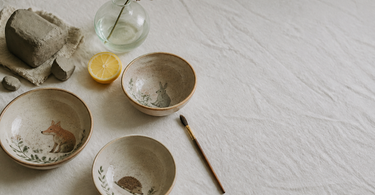
Ceramics are made from fired clay mixed with minerals such as feldspar and quartz, and are typically finished with a glaze that provides colour and protection. There are three main types: stoneware, earthenware and porcelain — each with different density and firing temperature. Care is simple: mild dish soap, no steel wool, caution with sudden temperature changes, and felt pads during storage will significantly extend the lifespan.
Ceramics is one of the oldest crafts we know — and still one of the most versatile. It covers everything from the breakfast set you eat from to the vase on the shelf and the candlestick on the dining table. But what is the material actually made of, and what does it take to keep it intact for years? Below you will find a thorough overview of the raw materials, the most important ceramic types and the practical care routines that make a difference.
What is ceramics made of?
The basic recipe is simple: clay, minerals, glaze and pigments. But it is the combination and the craftsmanship that determines the final result.
- Clay is the core material. It is shaped — by hand, on the wheel or in moulds — and dried slowly before being fired in the kiln. The plastic properties of clay allow the ceramicist to create everything from thin, precise edges to rough, organic forms.
- Minerals such as feldspar and quartz are added to the clay body to increase strength and density. Feldspar also acts as a flux: it partially melts during firing and binds the materials more tightly together.
- Glaze is a glass-like layer applied to the surface before the final firing. It seals the pores, adds colour and protects against moisture and mechanical wear.
- Pigments — natural metal oxides or synthetic dyes — are mixed into the glaze or applied directly to the body to create patterns, colours and textures.
The finished result depends largely on which type of clay is used and at what temperature it is fired. The firing temperature alone can range from approx. 900 °C for simple earthenware to over 1300 °C for porcelain.
The three types of ceramics
Within ceramics, three categories are typically distinguished, differing in density, strength and firing temperature.
Stoneware
Stoneware is fired at high temperatures — usually between 1200 and 1300 °C — and thereby achieves a nearly non-porous, very dense structure. This makes it robust enough for everyday use and resistant to moisture, even without glaze. Most ceramic plates and dishes and bowls for kitchen use are made from stoneware.
Earthenware
Earthenware is fired at lower temperatures, typically 900–1150 °C, and is more porous than stoneware. It requires glaze to be waterproof and has a lighter and softer texture. The material is often used for decorative objects and traditional crafts, and the lower firing opens up a wider colour range in the glaze.
Porcelain
Porcelain is made from a finer, white-firing clay body — typically kaolin — and is fired at up to 1400 °C. This results in an extremely dense and translucent body with a characteristic white core. Porcelain is stronger than earthenware, but more brittle under impact than stoneware due to its low elasticity. You typically find it in fine tableware and porcelain figurines.
| Type | Firing temperature | Density | Typical use |
|---|---|---|---|
| Stoneware | 1200–1300 °C | High | Everyday tableware, vases, jugs |
| Earthenware | 900–1150 °C | Low–medium | Decoration, traditional crafts |
| Porcelain | 1260–1400 °C | Very high | Fine tableware, figurines, delicate decoration |
Firing and glaze — what makes the difference
Firing is the decisive step in ceramic production. During the first firing — the bisque firing — all remaining water is removed from the body, and the clay mineral is chemically transformed into a hard but still porous material. The glaze is then applied, and the piece is fired once more at the final temperature.
During the glaze firing, the glaze melts into a smooth, glass-like surface. This is also where the characteristic colour and texture effects emerge: the metal oxides in the glaze react with heat and kiln atmosphere to create the nuances you see in the finished product. This is precisely why two handmade ceramic pieces never look exactly alike — even if they are made from the same materials on the same day.
Tip: If you are unsure about a ceramic's firing temperature, you can check the texture of the base. Stoneware feels dense and smooth, even unglazed. Earthenware is more rust-red or beige and easily absorbs moisture if the glaze is scratched.
Everyday care
Ceramics are durable, but the right routines are needed to preserve the integrity of the glaze and avoid mechanical wear over time.
Cleaning
Use mild dish soap and a soft sponge or cloth. Hard steel wool and abrasive scouring powder scratch the glaze — even on hard stoneware — and create microscopic cracks where dirt and bacteria can settle. If you have ceramic vases with narrow necks, a soft brush is the best tool for internal cleaning.
Dishwasher
Most stoneware and porcelain products are dishwasher safe, but frequent machine washing wears on the glaze over time — especially at high temperatures and with aggressive dishwasher tablets. Hand washing extends the lifespan, especially for items with hand-painted decoration or metal accents. Always check the manufacturer's instructions, as certain glaze types are sensitive.
Temperature changes
Ceramics react poorly to sudden temperature shifts. Never place cold ceramics directly into a hot oven, and avoid pouring boiling water into a cold jug without warming it gradually. The thermal shock can create internal stresses in the body that in the worst case result in cracks — even in stoneware.
Storage and long-term care
How you store ceramics has a major impact on how it looks in ten years. Here are the key points:
- Felt pads or dish towels between stacked plates and bowls prevent the base of one piece from scratching the glaze of the next. It is a simple measure that makes a real difference over time.
- Avoid direct sunlight for extended periods. UV light can break down certain pigments and alter the colour nuances of glazes with organic dyes.
- Keep ceramics dry during storage. Porous earthenware without a complete glaze surface can absorb moisture and in cold periods freeze, which cracks the body from the inside.
Decorative pieces such as candlesticks and jars generally require minimal maintenance — a dry cloth now and then is usually sufficient.
Ceramics in home décor
Ceramics is one of the few materials that works both functionally and decoratively — and that only gets better with time and use when treated properly. It is made from purely natural raw materials, and production typically takes place in small batches, giving each piece its own character.
From ceramic candlesticks that catch the light in the glaze's irregularities, to hand-formed jugs with characterful shapes — ceramics brings texture and depth into the interior in a way that industrially produced materials rarely match. It is no coincidence that ceramics has moved from being a craft trade to holding a central place in contemporary home aesthetics.
From a sustainability perspective, ceramics is an obvious choice: the raw materials are natural and locally available in many places, production is energy-intensive but long-lasting, and a well-cared-for piece of ceramics never needs to be replaced.
Frequently asked questions
What is the difference between ceramics and porcelain?
Porcelain is a subcategory of ceramics, made from kaolin-rich clay and fired at very high temperatures (up to 1400 °C). This results in a white, translucent body with high density. Other ceramics — such as stoneware and earthenware — are made from coarser clay bodies and fired at lower temperatures, resulting in a more opaque and often more robust object.
Can all types of ceramics be used for food and drink?
Not necessarily. The glaze must be food-safe for the body to be used for food and drink. Older ceramics and certain handmade pieces may contain lead or cadmium in the glaze. Modern European ceramics for kitchen use follows EU regulations and is generally safe — always check the manufacturer's information, especially on older or unknown pieces.
Can ceramics go in the dishwasher?
Stoneware and porcelain are typically dishwasher safe, but frequent washing at high temperatures wears on the glaze over time. Items with hand-painted decoration, metallic glaze or gold/silver accents should always be hand washed. Follow the manufacturer's instructions — and when in doubt, hand washing is always the safest option.
Why do ceramics sometimes crack?
The most common cause is thermal shock: sudden temperature changes create internal stresses in the body that it cannot absorb. Other causes include impacts against hard surfaces, hidden flaws in the body from production, or frost in porous, moist material. Ceramics with visible cracks in the glaze — crazing — is often intentional and decorative, and not a sign of structural weakness.
What is crazing on ceramics?
Crazing is a network pattern of fine cracks in the glaze, formed because the glaze and body contract differently during cooling. It is a classic ceramic technique that is aesthetically sought after and does not affect structural durability, as long as the cracks are only superficial and do not go through the body.
How do I remove limescale from ceramic vases?
Fill the vase with a mixture of white vinegar and lukewarm water (approx. 1:3) and let it work for 30–60 minutes. Rinse thoroughly with clean water. Avoid strong acids such as pure acetic acid or citric acid on prolonged exposure, as they can break down certain glaze types. For light daily maintenance, a dry cloth is sufficient.
Summary
Ceramics is clay, minerals, glaze and pigments — fired into a material that can last for generations if treated correctly. Stoneware is your robust everyday companion, earthenware the craft-oriented and decorative choice, porcelain the finer and denser alternative. For care, three simple principles apply: gentle cleaning without abrasives, caution with temperature changes and use of protective padding during storage. No special products are needed — just a little attention. In return, ceramics rewards you with durability and an aesthetic that only becomes more characterful with age.
Explore our selection of ceramic vases, dishes and bowls and ceramic candlesticks — handmade and ready for your shelf.