
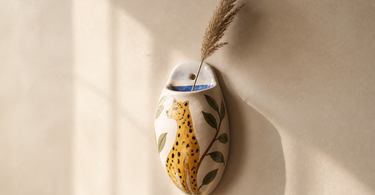
A wall vase is a vase with a flat back and a built-in hanging mechanism, so it can be mounted directly on the wall without taking up any table space. It typically holds a single flower or a small sprig and works as sculptural decoration in its own right. The format originates from 19th-century Europe and is found today in ceramic, glass, metal and porcelain.
A wall vase solves a specific problem: it brings living plants and flowers into the room without requiring a horizontal surface to stand on. This makes the format relevant in small flats, narrow hallways and bathrooms, where shelf and table space is scarce. In this article, you'll get a precise definition, a brief historical context, an overview of materials and concrete styling advice.
What is a wall vase – definition and structure
A wall vase is a container for flowers or branches, constructed to hang on a vertical surface rather than stand on a table or shelf. It differs from a conventional vase in three ways:
- Flat back: The back is cut or shaped flat, so the vase can sit close to the wall without tilting.
- Hanging mechanism: There's either a hole, a hook, a rail or a fitting integrated into the construction, so the vase can be fastened with a single screw or nail.
- Limited volume: The water chamber is usually small – designed for a single flower, one branch or a handful of stems, not a bouquet.
The combination of a flat back and an integrated hanging mechanism is the technical definition that distinguishes the wall vase from, for example, a hanging planter or an ordinary table vase that's subsequently placed on a wall shelf.
What fits in a wall vase?
The format is optimised for simplicity. A tulip, a eucalyptus branch, an anemone or a cutting from a garden rose fits precisely with the scale of the design. You can also use dried flowers or everlasting branches, as the water chamber isn't a requirement, meaning you avoid any care demands.
Explore our selection of wall vases to see which formats and sizes are available in practice.
The history of the wall vase
The wall vase has its roots in the early 1800s, when European ceramics and porcelain flourished as craft and status symbol. In France and England, factories produced crescent-shaped porcelain pockets – called bough pots or pocket vases – intended to hang by the fireplace or on panelled walls in manor houses. They functioned both as flower holders and as decorative plaques.
From craft to industrial production
In the late 1800s and early 1900s, the Art Nouveau movement embraced the format. Designers like Émile Gallé worked with glass wall vases featuring ornamental motifs, integrating flower and vessel into a single visual expression. The Art Deco period simplified the geometry and replaced the ornaments with clean lines and contrasting materials.
From the 1950s onwards, the wall vase became a fixture in Scandinavian home décor, and ceramicists like Axel Salto and Gertrud Vasegaard experimented with organic shapes in stoneware. Today, wall vases are produced industrially across virtually all price segments, but there's still an active market for handmade pieces – including exclusive handmade vases in limited editions.
Materials and finishes
Wall vases are produced in a wide range of materials, each with its own properties in terms of weight, water resistance and aesthetics.
Ceramic and stoneware
Ceramic is the most widespread material. Stoneware is densely fired and watertight after glazing, has a good weight that stabilises the hanging, and takes well to hand-painted decoration. Unglazed stoneware requires an inner water container or is used exclusively for dried materials.
Porcelain
Porcelain is thinner and more translucent than stoneware. This allows for detailed, fine-pored surfaces, but it's more fragile. Classic white porcelain wall vases with relief motifs remain a popular format.
Glass
Glass wall vases make the water and stems visible, which is a deliberate aesthetic effect. Clear glass suits minimalist interiors; coloured or satin glass is used when the vase itself is meant to carry the visual expression. Glass is heavier than it looks, so pay attention to the hanging mechanism's load-bearing capacity.
Metal and terracotta
Zinc, brass and copper are used in rustic and industrial interior concepts. Metal doesn't rust on the inside, but should be protected from direct contact with water over long periods. Terracotta is porous and actively uses evaporation – a property that can be utilised for cacti and succulents, but which requires a glazed interior if you're using water.
Tip:If you're hanging a wall vase in a bathroom with high humidity, choose glazed ceramic or glass rather than untreated terracotta and metal. Moisture accelerates rust and can discolour the wall behind the vase.
How to use a wall vase
A wall vase is simple to mount, but there are a few practical considerations that make the difference between a vase that hangs securely for years and one that falls down after the first watering.
Mounting
- Find out what your wall is made of: Plaster requires a plasterboard anchor; brick or concrete requires a plastic wall plug. Most lightweight ceramic vases (under 500 g) can be held by a single 3M Command strip on a smooth painted wall.
- Calculate the total weight: Vase + water + flowers. 1 dl of water weighs 100 g. An average ceramic wall vase with water is approximately 300-600 g.
- Position the fitting at the right height: Eye level (approximately 150-160 cm from the floor) is the starting point; adjust according to the room.
Water changes
Because the volume is small, water evaporates and loses nutrients faster than in a large table vase. Change the water every 2 days and add half a tablet of flower food to extend the flowers' lifespan.
Want to keep maintenance to a minimum? Small vases for dried flowers require no water changes and keep the decoration stable for months.
Styling and placement on the wall
A single wall vase acts as a focal decorative element. Two or more vases arranged in a pattern create what's known in interior design as a gallery wall effect with a botanical dimension.
Gallery wall with wall vases
A gallery wall of wall vases is best built up on paper before you drive in the first nail. Cut out silhouettes of the vases in paper, tape them to the wall, and adjust the spacing before you drill. A recommended distance between vases is 10-15 cm centre to centre for a cohesive look.
Combine with other formats
The wall vase pairs naturally with frames, mirrors and shelves. Place a vase next to – not in the middle of – a mirror, so the reflection visually activates the flower. Use varying sizes: a larger table vase on a shelf below and a wall vase above creates depth in the composition.
Colour and flower choice
The wall vase's small format draws attention to the individual flower, not the bouquet. Use this actively: a single monochrome tulip in a contrasting-coloured vase is visually stronger than five mixed stems. Dried pampas grass or lunaria stems work well because they don't require water and keep the season's look for months.
Wall vase vs. table vase – when do you choose which?
| Criterion | Wall vase | Table vase |
|---|---|---|
| Requires a horizontal surface | None | Yes – table, shelf or windowsill |
| Capacity | 1-3 stems | 1 stem for a full bouquet |
| Mounting | Nails or adhesive strip | No mounting required |
| Risk of tipping over | Minimal (fixed in place) | Depends on stability and placement |
| Maintenance | Frequent water changes (small volume) | Change the water every 2-3 days (larger volume) |
| Visual effect | Sculptural, integrated into the wall's composition | Standout object on a surface |
| Price level | From DKK 50 to handmade luxury models | From DKK 30 to craftsmanship |
Frequently asked questions
What exactly is a wall vase?
A wall vase is a flower container with a flat back and an integrated hanging mechanism – typically a hole or a hook – that allows it to be mounted directly on a wall. It's designed for a limited number of stems, often just one, creating a sculptural, botanical expression without requiring any tabletop space.
Which flowers work best in a wall vase?
Single flowers with a strong visual profile work best: tulips, anemones, ranunculus, eucalyptus branches and roses. Dried materials such as pampas grass, lunaria and strawflowers are ideal, as they require no water and last for months without any care.
Can I use a wall vase without water?
Yes. Dried flowers, artificial branches or everlasting flowers require no liquid, so you can mount the vase without worrying about leaks. Unglazed ceramic and terracotta are particularly well suited to dried materials, as they were never designed to be watertight indefinitely.
How much weight can a wall vase hanging fixture bear?
A standard 4 mm plasterboard anchor screw can bear 10-25 kg depending on the manufacturer. An average wall vase with water weighs 300-700 g, which is well within capacity. Always check the wall material and use the correct wall plugs for brick and concrete.
What's the difference between a wall vase and a hanging planter?
A hanging planter hangs from a cord or chain from the ceiling and is primarily designed for potted plants. A wall vase is mounted flat against a vertical surface and is intended for cut flowers and water. The two formats have overlapping aesthetics but different construction principles and uses.
Where in the home can I hang a wall vase?
The hallway, living room, kitchen and bathroom are the most common spots. The bathroom is ideal, as flowers thrive in high humidity, and there's rarely room for a table vase there. Avoid direct sunlight for many hours, as it significantly shortens the flowers' lifespan.
Summary
A wall vase is technically defined by three elements: a flat back, an integrated hanging mechanism and a small water chamber for one to three stems. The format has existed since the early 1800s and has since followed the style periods from Art Nouveau to Scandinavian modernism. Today, wall vases are produced in ceramic, porcelain, glass and metal at every price level. You use them mainly where you're short on horizontal space, and they work best when you treat them as a sculptural element rather than a traditional flower holder – ideally with one striking flower or a dried branch that keeps the season's look stable over time.
Explore our range of wall vases – from simple everyday models to handmade stoneware and glass editions.