
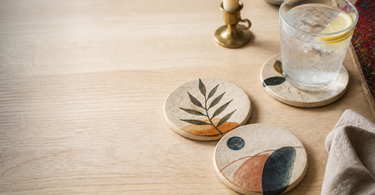
A trivet is made of materials that can withstand heat and protect table surfaces from scratches and burn marks. The most common materials are wood, cork, silicone, metal, stone/marble, fabric, bamboo and ceramic. Each material has its strengths: silicone is non-slip and easy to clean, cork insulates heat well, while stone and ceramic are decorative but heavier choices. The choice depends on whether you prioritise daily practical function or aesthetics at the table setting.
A trivet sounds like a modest thing, but the materials behind it reveal a surprising number of trade-offs. Should it withstand 250 degrees from a cast iron pot, stay looking good after 300 dishwasher runs, or fit into a carefully arranged table setting? The answer depends on what it is made of. Here we go through the eight most commonly used materials, their heat properties, durability and aesthetic suitability — so you can choose with open eyes.
What does the material need to do?
The purpose of a trivet is to interrupt the heat transfer between a hot object and a table surface — and to do so without damaging the table itself. It sounds simple, but the material requirements are actually quite specific.
A good material for trivets should:
- Withstand high heat without melting, deforming or releasing substances
- Have low thermal conductivity, so heat is not conducted directly into the table surface
- Be stable and non-slip, so the pot does not slide
- Not leave marks, scratches or residue on the table
- Be cleanable without being broken down by soap, moisture or grease
Beyond the functional requirements, aesthetics play a role. A trivet used daily in the kitchen does not need to match the porcelain — but one used at the dinner table is part of the overall table setting and should be chosen accordingly. Just as you consider whether you want your plates in one style, the trivet is part of the overall picture.
The most commonly used materials reviewed
Wood
Wood is the classic choice and for good reason. It conducts heat poorly, is natural in appearance and ages beautifully. Solid wood can withstand temperatures up to 150–170°C directly, but the key is that it acts as a buffer and spreads heat slowly. The downside is moisture: standing water or steam can cause the wood to crack or discolour, and it should never be put in the dishwasher.
Silicone
Silicone is the most technically superior material for pure heat protection. It typically withstands up to 230–260°C, is completely non-slip, dishwasher safe and leaves no marks. For everyday, informal use it is hard to beat. On the other hand, it is rarely the most beautiful choice for a set dinner table.
Cork
Cork is a natural material with very low thermal conductivity — in fact lower than most other materials on the list. It is light, relatively inexpensive and compostable. But cork is porous, meaning it absorbs grease and liquids, and it visibly wears over time. Thickness matters: a thin cork sheet of 3 mm insulates significantly worse than a sheet of 8–10 mm.
Metal
Metal conducts heat efficiently — which is precisely the opposite of what a trivet should do. Yet metal is used in trivets because it looks elegant. The solution is rubber feet or an intermediate layer that prevents heat from being conducted directly down. Without this, a metal trivet is effectively useless for hot pots. For cool dishes and as an aesthetic element when serving, it works fine.
Stone and marble
Stone and marble withstand high heat, are very stable and look exclusive. However, they are heavy — a marble trivet of 20×20 cm can weigh 1.5–2 kg — and hard enough to scratch delicate table surfaces if dragged across them. They should have rubber feet and be lifted, not slid, into position.
Fabric and textile
Fabric trivets are primarily decorative and noise-reducing. Heat resistance is limited: most textiles cannot handle more than 80–100°C of direct contact, and a pot straight from the oven is a fire hazard. Fabric trivets are best suited to warm dishes, teapots and as a base for ceramics that are not boiling hot. You can find inspiration for textiles and colours in our range of rugs if you are into colourful textile solutions in general.
Bamboo
Bamboo is marketed as a sustainable alternative to wood, and to some extent it is. It grows quickly and requires minimal cultivation. As a material it is light and attractive, but it is technically a grass compressed with binders — not solid wood. This makes it less durable under repeated exposure to moisture and heat.
Ceramic
Ceramic is the most decorative material and stands out from the others because it is not just a functional surface — it is a design object in itself. Ceramic trivets are typically handmade, heat-resistant up to high temperatures (fired at 1200–1280°C in the kiln, so a pot at 200°C is no challenge) and serve as a natural focal point on the table. They can be heavy and are fragile, but for table settings they are hard to match aesthetically. Our plates and bowls in ceramic give an idea of what handmade ceramics can do in a serving context.
Tip: If you use a trivet made of metal or stone on a lacquered or oiled wooden table, check that the underside has rubber feet or felt — not for heat reasons, but because hard materials can scratch the surface when the trivet is moved. Always check the underside before buying.
Comparison: Materials side by side
| Material | Heat protection | Durability | Aesthetics for table setting | Cleaning |
|---|---|---|---|---|
| Wood | Good (up to ~170°C) | High, if kept dry | High | Hand wash only |
| Silicone | Very good (up to ~260°C) | Very high | Low to medium | Dishwasher safe |
| Cork | Good (depends on thickness) | Medium — wears over time | Medium | Dry wipe only |
| Metal | Poor (conducts heat) | Very high | High | Dishwasher safe |
| Stone/marble | Good | Very high | Very high | Dry wipe only |
| Fabric/textile | Low (max. ~100°C) | Medium | High | Machine wash (typically) |
| Bamboo | Good | Medium | Medium to high | Hand wash |
| Ceramic | Very good | Medium (fragile) | Very high | Hand wash |
How to choose the right material
There is no single answer — it depends on what you do in the kitchen and what your table looks like.
For everyday use
If the trivet needs to handle pots from the hob every day, silicone and cork are the most pragmatic choices. Silicone is virtually indestructible and easy to clean, while cork insulates well and is easy to deal with. If you choose cork, go for a thickness of at least 6 mm for real heat protection.
For the dinner table and serving
Here aesthetics count. Wood, marble and ceramic elevate the table setting and serve as a natural extension of the kitchen's overall expression. A ceramic trivet can match your jars and vases and create visual cohesion on the table.
For hot dishes straight from the oven
Oven dishes can reach 200–220°C, and here you need to choose materials with low thermal conductivity and sufficient thickness. Ceramic, silicone and thick wood are the best choices. Metal is the worst choice here, unless it has a thick insulating base.
For delicate table surfaces
Lacquered, oiled or white-oiled wooden table surfaces are sensitive. Avoid direct contact with stone and metal, and make sure the trivet has soft feet or a neutral base. Silicone and cork are the most gentle materials on the table surface.
Sustainability and Danish design tradition
Trivets in sustainable materials are becoming increasingly prominent in the Danish market. Cork is one of the most environmentally friendly choices — it is harvested from cork oak without felling the tree, and is fully compostable. Bamboo grows at a rate of up to one metre per day and requires no pesticides, but the binders in compressed bamboo can vary in sustainability depending on the producer.
Reclaimed wood and recertified FSC wood are popular in the Danish design tradition, where function and material are treated with equal seriousness. The same applies to handmade ceramics, which are typically produced in small batches by European workshops, and where each piece is unique due to the manual process and firing.
In terms of design, there is a strong tradition in Denmark of integrating the trivet into the overall table setting. It is not just a practical tool — it is part of the overall expression, just as candlesticks and salt and pepper sets are. Buying a ceramic trivet from a European ceramics workshop is an investment in a piece that will last for many years and only grows more beautiful with patina.
Frequently asked questions
Which trivet withstands the most heat?
Silicone is the material with the highest heat tolerance — typically up to 230–260°C. Ceramic is close and easily handles pots from the oven. Both are good choices if you work with very hot pots and dishes directly from the hob or oven. Fabric and textile are the least heat-resistant and should not be used for scalding hot crockery.
Is a cork trivet good enough for hot pots?
Cork actually insulates quite well — but thickness is crucial. A 3 mm cork sheet offers limited protection, while 8–10 mm thickness is significantly better. For very hot pots straight from the hob, you should supplement with a thicker material or choose a multi-layer solution combining cork with silicone.
Can a metal trivet be used for hot pots?
Metal is a poor insulator — it conducts heat directly into the table. A metal trivet is primarily an aesthetic choice and is suited to dishes that are not boiling hot. If it has rubber feet and an intermediate layer of cork or silicone underneath, it works better, but it is not the optimal choice for heavy, hot pots.
Can I wash my trivet in the dishwasher?
It depends on the material. Silicone and most metals are dishwasher safe. Wood, bamboo, cork and ceramic should be hand washed — the dishwasher can cause wood and bamboo to crack and discolour ceramic over time. Always check the manufacturer's instructions, as surface treatments vary.
What is best for a delicate wooden table surface?
Silicone and cork are the most gentle materials for a lacquered or oiled wooden table surface. They leave no scratches and distribute pressure evenly. Avoid metal and stone without soft feet, as these can scratch the surface, particularly if the trivet is dragged across the table instead of being lifted.
Are ceramic trivets durable?
Ceramic is heat-resistant and low-maintenance, but fragile. If you drop a ceramic trivet on a hard floor, it may break. For everyday use, where it is simply moved from the kitchen counter to the dining table, durability is rarely a problem. Many ceramic pieces survive decades of normal use.
Summary
The choice of material for a trivet is about balancing three things: heat protection, durability and aesthetics. Silicone wins on pure function, cork on insulation and low footprint, wood and ceramic on visual expression. Metal is primarily decorative and requires supplementary insulation to function as heat protection. Stone and marble are durable and exclusive, but heavy and hard on delicate surfaces.
If you use the trivet for daily cooking, silicone or cork is the most pragmatic choice. If it is to be part of a dinner with care for the table setting, wood, ceramic or marble are the materials that elevate the overall expression. And with sustainability in mind, cork and FSC-certified wood are the most responsible choices over time.
Explore our range of kitchen accessories and table setting — from ceramics to dishes and much more.