
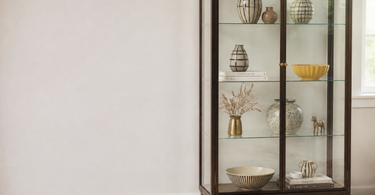
A display cabinet is a cabinet with glass doors or glass panels that allows you to store and showcase items at the same time. The name comes from the French vitrine — "glass pane" or "shop window". The piece of furniture protects its contents from dust and dirt while keeping everything visible and organised. It fits in many rooms: the dining room, living room, kitchen and hallway.
The display cabinet is one of those pieces of furniture that solves two problems at once: storage and presentation. Where an ordinary cabinet hides everything behind closed doors, the display cabinet turns that logic around — the glass makes the contents part of the room's expression. It does, however, also place demands on you: when things are visible, they need to look good. This article goes through what a display cabinet actually is, what you can use it for, and how to get the most out of the piece in your home.
What is a display cabinet?
The word vitrine is borrowed directly from French and means "glass pane" or "shop window". The display cabinet is therefore literally a cabinet built around the principle of showing off — as opposed to the traditional cabinet, which primarily hides things away.
The piece appears in many contexts: in private homes, museums, shops and offices. The basic form is the same: a cabinet with one or more shelves, framed by glass doors or glass panels on the sides. The glass can be clear, frosted or textured — this affects how clearly you can see the contents and what atmosphere the piece gives.
Historically, the display cabinet emerged as a piece of furniture for the wealthy classes in Europe who wanted to show off precious porcelain and curiosities. Today it is an everyday piece of furniture available in price ranges and styles for every taste — from solid oak with glazing bars to simple steel frames with clear glass.
Characteristics and construction
A display cabinet differs from other cabinet types in a few crucial ways:
- Glass doors: The defining feature. The glass lets you see the contents without opening the cabinet, while also protecting against dust, grease and dirt.
- Adjustable shelves: Most models have shelves you can move up and down, so you can adapt the space for tall vases, stacked plates or a collection of candlesticks.
- Materials: The frame is typically made of wood, MDF or metal. The glass is clear or frosted — frosted glass softens the details slightly and gives a calmer expression.
- Size and format: From compact wall-mounted vitrines 30–40 cm wide to floor-standing cabinets over 2 metres tall.
- Style variation: Classic models with glazing bars, farmhouse style with painted wood, modern versions with slim metal frames — the range is wide.
Tip: Consider the light direction before positioning the display cabinet. A cabinet with clear glass facing a window can create reflections that make the contents hard to see. Frosted glass or a position perpendicular to the light source solves the problem.
What is a display cabinet used for?
The display cabinet is versatile — it can fulfil many functions depending on where in the home it stands and what you fill it with.
Tableware and glasses
The classic use is storing tableware: plates, cups, jugs and glasses. In a display cabinet you keep things dust-free and ready for use, while they also serve daily as part of the room's decoration. Champagne glasses and wine glasses, hanging from racks or standing on the shelves, are a good example of items that are decorative enough in their own right to deserve a window.
Ceramics and decorative objects
The display cabinet is ideal for collectibles, heirlooms and decorative ceramics — things you want to look at but don't want standing freely and collecting dust. Ornaments, porcelain figures and characterful ceramics get a natural focus behind the glass.
Books and magazines
In the living room, the display cabinet can function as a closed bookcase. It keeps the spines dust-free and makes it possible to mix books with decorative objects without looking cluttered — because the glass brings the visual expression together.
Kitchen and storage
In the kitchen, the display cabinet replaces or supplements traditional overhead cupboards. Kitchen utensils, spices and selected dishes and bowls can be displayed and easily accessible while being protected from food splashes and cooking grease.
Hallway and office
In the hallway the display cabinet is often used for knick-knacks and accessories — hats, bags and decorative items that otherwise pile up. In an office or shop it presents products and materials in an orderly way.
Advantages of a display cabinet
The display cabinet solves a concrete problem that many people encounter: there are things you want easy access to and want to look at — but you don't want them collecting dust or looking cluttered.
| Feature | Open shelves | Closed cabinet | Display cabinet |
|---|---|---|---|
| Dust protection | None | Full | Full |
| Visibility | Full | None | Full |
| Tidy appearance | Requires care | Automatic | Requires care |
| Decorative potential | High | Low | High |
| Style adaptability | Flexible | Flexible | Flexible |
The glass doors are therefore the decisive element: they give you the visual access of open shelves, combined with the protection of a closed cabinet. In return, visibility places demands — the contents must be arranged thoughtfully.
Placement in the home
The display cabinet is one of the more space-demanding pieces of furniture, so placement matters — both for function and for how it plays together with the rest of the interior.
The dining room
The most classic placement. Here you typically store tableware for guests, glasses and perhaps a bottle of wine. The display cabinet becomes a natural focal point in the room and signals that these are objects of particular significance.
The living room
In the living room the display cabinet serves as a display for books, plants, ceramics and art objects. It can advantageously be placed next to or as an extension of a sofa or TV unit, so it forms part of the room's composition.
The kitchen
Above or next to the kitchen counter, the display cabinet gives access to the most-used equipment while keeping things organised. A cabinet with frosted glass doors fits well here — it softens any visual clutter if the shelves are packed.
The hallway
In a narrow hallway, a tall, slim display cabinet can gather accessories and knick-knacks on a limited floor area. Combine it with hallway hooks so you have both hanging space and storage in one place.
How to style the contents
A display cabinet is only as good as what you put in it. Visibility is an advantage — but it requires you to decide what actually deserves to be on show.
Some principles that work:
- Work in odd numbers: 3 or 5 objects on a shelf looks more balanced than 2 or 4.
- Vary the height: Combine tall vases with low bowls and medium-sized objects to create movement on the shelf.
- Leave some space empty: A shelf with too many objects loses its effect. Air between things gives the eye a resting place.
- Keep a colour thread: You don't need a monochrome palette, but 2–3 recurring colours tie the shelf together visually.
- Use a back wall or background colour: Many display cabinets have a back panel that can be painted or wallpapered to add depth and contrast.
Tip: Use LED strips or a small table lamp close to the cabinet to illuminate the contents from within. Even a simple light source enhances the depth of the glass and highlights the details in the ceramics or glassware.
Frequently asked questions
What is the difference between a display cabinet and an ordinary cabinet?
A display cabinet has glass doors or glass panels that make the contents visible from outside. An ordinary cabinet has closed doors that hide the contents completely. The display cabinet therefore combines the storage function with a presentation function that the closed cabinet does not have.
What can you put in a display cabinet?
Almost anything: tableware, glasses, ceramics, books, plants, heirlooms, collectibles and kitchen equipment. The key is that the items can handle being visible — and that you arrange them thoughtfully, as the glass doesn't hide clutter in the same way a closed cabinet does.
Which glass is best in a display cabinet — clear or frosted?
Clear glass gives full visibility and highlights the details of the contents. Frosted glass softens the expression slightly and is more forgiving if the shelves are packed. In the kitchen, many prefer frosted glass for a calmer overall impression.
Where in the home does a display cabinet fit best?
The display cabinet is most common in the dining room and living room, but also works well in the kitchen and hallway. Placement depends on what you want to store: tableware naturally belongs by the dining table, while ceramics and art often work best in the living room.
Does a display cabinet protect against dust?
Yes — the glass doors keep most dust out, provided the cabinet closes tightly. This is one of the primary advantages compared to open shelves, where items need to be dusted far more frequently. The sealing strips on the cabinet doors are very important for how dust-tight it actually is.
Can you keep plants in a display cabinet?
Yes, but with reservations. Plants need light and air circulation, which the glass limits. Drought-tolerant plants such as cacti and succulents do best. Artificial plants are an alternative if you want the green look without the limitations.
Summary
A display cabinet is essentially a storage piece of furniture that turns visibility to its advantage. The glass doors keep the contents protected from dust and dirt — just like a closed cabinet — but never remove the view of the items you have chosen to display. This makes the piece ideal for tableware, ceramics, glass and collectibles that deserve to be seen. Placement in the home can vary from the dining room and kitchen to the living room and hallway, and style choices range from classic to minimalist. The most important thing is that you make decisions about the contents — because behind glass, there is nowhere to hide.
Explore our range of decorative objects for the display cabinet — from ceramics and vases to candlesticks and dishes and bowls.