
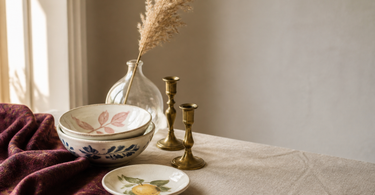
A good wedding present doesn't have to cost a fortune — it just needs to suit the couple. As a rule of thumb, the gift covers the plate price (500–1,000 DKK per person), but close relationships typically call for 1,000–3,000 DKK. Ceramics, candlesticks, vases and dishes are classic choices that get used daily for years. Always check if the couple has a wish list, and always include a personal, handwritten card — that's what they keep.
Choosing a wedding present is one of those situations where you want to get it right — and yet still end up googling it at 11pm the week before the wedding. The challenge is real: you want to give something the couple will actually use, that isn't identical to half the guests' gifts, and that suits both your relationship and your budget. This guide gives you concrete answers on what it costs, what works, and how to choose something they'll remember longer than the best man's speech.
What does a wedding present cost?
The plate price for a Danish wedding typically lies between 500 and 1,000 DKK per guest — and that's the most common starting point for what the present should cost. The logic is simple: your gift covers roughly what you "cost" to bring to the party.
For close friends and family, the range of 1,000–3,000 DKK per gift (or giver) is more usual. It's not a rule set in stone, but it reflects what most Danes give in practice. Colleagues and acquaintances tend to land at the lower end, while siblings and best friends go higher.
The most important factor, though, isn't the amount — it's relevance. A well-matched gift at 800 DKK that the couple uses every day beats a standard gift at 2,000 DKK. Think about what's missing in their home, what they actually do at weekends, and whether they've set up a wish list.
Tip: Many couples set up a wish list through their wedding planner, homeware shops or directly on a webshop. Ask another guest who's close to the couple — you'll save time, and they'll get exactly what they want.
Dinner sets and plates — the classic present that lasts
A complete dinner set is the very definition of a gift the couple uses, quite literally, 365 days a year. Many couples start their life together without a matching set of plates in one design — and that's exactly where you can make a difference.
Choose porcelain or stoneware — two very different materials, each with its own character. Porcelain is thin, semi-transparent and hard (fired at temperatures typically above 1,200°C), while stoneware is dense, thicker and rustic in feel. Both are long-lasting and dishwasher-safe with most manufacturers, but always check the manufacturer's guidance.
Scandinavian design dominates the category: simple shapes, neutral glazes and plate rims that don't overpower the food. If you don't know the couple's exact style, a mid-tone — raw white, sandy grey or dusty terracotta — is a safer choice than bold colours.
Accessories: the jug as a daily companion
A jug in ceramic or porcelain is a natural addition to the dinner set and one of the most frequently used table accessories. Water for dinner, juice for weekend brunch, coffee for lunch gatherings — a jug with good weight balance and a secure lid gets used for years.
Candlesticks and vases — atmosphere and function in one
Candlesticks are one of those wedding presents that rarely miss the mark — because they're used for both everyday and special occasions. A pair of candlesticks for the dinner table sets the scene for countless meals, and most homes can easily fit several sets of different types and sizes.
What should you choose?
Crystal candlesticks have a more formal, classic look and suit the couple who host dinner parties and appreciate a well-set table. Ceramic and brass candlesticks are more versatile and suit cosy evenings on the sofa as well as festive table settings. Brass develops a patina over time and slowly changes in appearance — many think it adds character.
Vases make an obvious wedding gift for a very practical reason: the couple typically receives large amounts of flowers in the days and weeks after the wedding. A large floor vase for a bouquet of 40 stems or a table vase for the loose flowers from a bouquet — both serve a real function in the first months.
Choose your vase material according to style: mouth-blown glass has organic shapes and trapped air bubbles that bring life to the glass. Ceramic vases are heavier and more sculptural. Brass is the most low-maintenance and suits both classic and modern homes.
Dishes and bowls — practical elegance for everyday life
Decorative dishes and bowls are the kind of gift the couple might not necessarily prioritise themselves — but quickly discover they use all the time. A large stoneware dish for dinner, a bowl for bread on the table, a fruit bowl in the kitchen. These are the items that are simply there, day after day.
Material and size matter a great deal. A large dish (30–40 cm in diameter) is flexible as a serving dish and as a centrepiece on the dining table. Bowls of 15–20 cm in diameter are useful for everything from dips to sweets, keys and loose odds and ends — the kind of thing that always needs a fixed spot in a new home.
Earthy tones in stoneware suit most homes and stay stylish for years. If you know the couple well and know they love colour and character, you can easily go for colourful dishes and bowls — they can remain conversation pieces at the table for many years.
Price guide: what do you get for your money?
| Price level | Relationship | What you can typically give |
|---|---|---|
| 500–1,000 DKK | Colleague, acquaintance, part of a joint gift | Brass candlesticks, a ceramic vase, a set of cups, mouth-blown glass |
| 1,000–2,000 DKK | Good friends | Parts of a dinner set, crystal candlesticks, a larger table vase, a dish and bowl set |
| Over 2,000 DKK | Close family, closest friends | Complete dinner set in quality porcelain, large floor vases, exclusive table accessories |
The figures are a guide and reflect what's normal in a Danish context — not what's obligatory. Your personal relationship with the couple matters more than the amount.
How to choose the right present
Check the wish list first. If there isn't one, or you'd like to give something more personal, you can use these questions as a filter:
- What's their home style? Minimalist and simple points towards neutral colours and clean shapes. Colourful and personal points towards ceramics with character, hand-painted glaze or graphic patterns.
- What are they missing? Think about what you've seen (or not seen) in their home. Many couples in their 30s have a half-assembled kitchen with tableware from three different sets.
- Are you giving a gift together? A joint gift from four–five friends raises the price level and gives the couple something no single guest would give.
- Are they into colours? Glasses in mouth-blown colours, colourful glasses for everyday use or graphic tableware can make a noticeable difference in their interior.
Avoid giving something too niche — the thing that's a hit in your taste, but that the couple might never use. Home décor is personal, and a neutral choice is almost always more tactful than an experimental one.
What do you write in a wedding card?
The wedding card isn't just a wrapping accessory — it's something many couples keep. Most throw away gift wrap and packaging within a week. The card can sit in a drawer for twenty years.
Keep it personal and specific. Avoid copying a standard text (the couple already knows those). Mention something specific: a shared experience, something you've noticed about them as a couple, an honest wish for the time ahead. It takes five minutes of thought — and it shows.
Structurally, this format works well: congratulations on the day, a personal observation or memory, and a specific wish or piece of advice for the future. Keep it to three–five sentences. Longer isn't necessarily better.
Frequently asked questions
When should you give the wedding gift?
Traditionally, the gift is handed over on the wedding day itself, but it's entirely acceptable to send it up to two weeks after the celebration. Many choose to send it directly to the couple's address, so they don't have to transport gifts home from the celebration.
Can you give money as a wedding gift?
Yes — and many couples prefer it, especially if they already have a well-established home. Put the amount in a handwritten card with a personal greeting. A gift card to a webshop or shop the couple uses is a good alternative if you want to give them freedom of choice with a specific purpose.
Is it OK to team up on a wedding gift?
Absolutely. It's one of the most practical solutions, especially within a group of friends. A joint gift from four–five people raises the budget to a level that gives the couple something extra meaningful — for example, a complete tableware set instead of four individual plates.
What do you give a couple who already has everything?
Quality over quantity. The couple might have plates — but do they have plates they actually love? A gift in a material or design that's a step up from what they'd buy for themselves is almost always a good choice for those who are already well equipped.
When is it too late to give a wedding gift?
Two–three weeks after the wedding is still within normal etiquette. If you give the gift significantly later, it's still better late than never — accompany it with a personal greeting that acknowledges the delay. Most couples will appreciate the gift regardless.
What's a good wedding gift for a younger couple?
Younger couples are often in the process of furnishing their first shared home and typically lack tableware, candlesticks and table accessories. A well-thought-out set of plates, a pair of sturdy candlesticks or a good-quality vase are gifts that get used straight away and last for many years.
Summary
A wedding gift they remember is rarely the most expensive one — it's the most relevant one. Use the envelope price as a baseline (500–1,000 DKK per person) and your relationship with the couple as a guide for whether to go higher. Timeless categories like plates, candlesticks, vases and dishes and bowls are strong choices, because they're used daily for years. Choose materials and colours that suit the couple's style, and write a card they'll actually want to keep. It's the combination of a well-chosen item and a personal greeting that turns a wedding gift into something more than a checked-off item on a list.
Explore our selection of curated home gift picks — or find inspiration directly in our decorative category.