
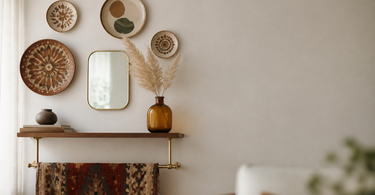
Wall decor ties a room together and gives it personality. The most effective types are mirrors (which reflect light and create depth), hooks (which combine function and aesthetics), tapestries (which soften acoustics and add texture) and ceramic hangings (which bring craftsmanship and character). Position the centre point roughly 150–160 cm from the floor, mix materials with a common thread, and tailor your choice to the size and function of the room.
A bare wall isn't neutral — it's just unfinished. Wall decor is the element that pulls a room together and gives it character, whether you're working with 8 m² or 80 m². The choice isn't just about style; it's about what the room needs to do. Should it feel bigger? Warmer? Calmer? The right pieces on the wall solve all of that — and this guide shows you how to approach it from start to finish.
What types of wall decor are there?
The market for wall decor is broad, and it can be hard to navigate if you don't know what the different categories actually solve. Here's an overview of the most common types and their primary function:
| Type | Primary effect | Suits |
|---|---|---|
| Mirrors | Reflects light, creates depth | Hallway, living room, bedroom |
| Hooks and hangings | Function + aesthetics | Hallway, kitchen, kids' room |
| Masks and figures | Sculptural statement | Living room, office |
| Plates | Texture, classic look | Living room, dining room, kitchen |
| Tapestries | Texture, colour, acoustics | Living room, bedroom, kids' room |
| Posters and prints | Personality, easy to swap | All rooms |
| Shelves with decoration | Layers and depth | Living room, office |
Most rooms benefit from a combination of two or three types rather than a single category. The key is to have a common thread — it could be a material like brass, a colour or an overall style — that ties the elements together.
Mirrors: light and depth in one
A mirror is one of the most effective tools in home decor, because it does two things at once: it reflects light and creates an optical illusion of more space. Place a mirror directly opposite a window, and you effectively double the amount of natural light in the room — an effect you won't get with any other type of decoration.
Large mirrors (from around 80 cm in diameter or height) work best in the living room or as a hallway mirror. A round mirror above a chest of drawers is a classic in Danish home decor and provides a softer contrast to rectangular furniture. Oval mirrors are more asymmetrical and give a more organic look.
The frame isn't a detail, it's half the expression. Brass and gold tones add warmth to cool northern light, while black and white frames emphasise a more minimalist look. Browse the range of mirrors, including oval mirrors, to find the right size and finish for your room.
Tip: In a dark hallway without a window, a large mirror (at least 60 cm wide) does more for the sense of light than an extra lamp. Hang it at eye level, and preferably opposite a light source for maximum effect.
Hooks and hangings as functional art
Hooks are home decor's most underrated element. They solve a practical problem — storing jackets, bags and keys — but they can also stand alone on the wall as sculptural objects. A single hook shaped like a ginkgo leaf or an animal head brings the wall to life, even when nothing is hanging on it.
The choice of material determines the character. Brass gives warmth and develops a beautiful patina over time. Ceramics in glazed tones — for example dusty pink, terracotta or deep blue — give a softer, more handcrafted look. Iron and black metal suit a more raw, industrial look.
Groups and composition
A single hook can work as a standalone statement, but three to five hooks in varying shapes and spacings create a more dynamic composition. Feel free to mix two materials within the same colour palette — for example brass and natural ceramic — rather than sticking to just one. It adds depth without looking cluttered.
Hooks in the hallway should hang 120–140 cm from the floor to be easy to reach. In the children's room, you can hang them lower — 90–110 cm — so children can hang up their own things. Browse hooks and knobs as well as brass hooks for inspiration for every room.
Tapestries and textiles on the wall
Wall hangings have made a strong comeback in home decor — not as nostalgia, but as a functional solution. Textile on the wall dampens the acoustics in the room by absorbing reflected sound waves. In rooms with hard floors and lots of smooth surfaces, it makes a noticeable difference. Materials like cotton, wool and jute all have different absorption properties; wool is the most effective, but cotton and jute give the most earthy visual character.
Modern wall hangings come in everything from minimalist, geometric designs to colourful animal motifs. A wall hanging with a distinct motif — a tiger, a leopard or an abstract pattern — can replace a painting as the room's natural focal point.
Hanging and practicalities
Most wall hangings are hung with a wooden rod or pole through a loop along the top. Choose a rod in a colour that either matches the hanging or is deliberately contrasting. Make sure the hanging rod is wide enough to keep the hanging flat — too short a span results in curled edges. For the children's room, colourful animal motifs, e.g. tiger hangings, are a playful alternative to posters, and they can easily move along as the child grows older.
Ceramics and sculptural hangings
Ceramics on the wall are a growing trend that brings craftsmanship and authenticity into the home. Handmade ceramic hangings in stoneware or glazed ceramic give an organic, irregular surface that industrially produced materials simply can't replicate. No two pieces are alike — that's part of the point.
Ceramic wall hangings work well as standalone statement pieces, but they can also be combined in groups. A collection of three to five ceramic hangings in varying sizes and tones — beige, raw white and dusty green, for example — creates a gallery-wall effect without feeling overcrowded. Take a look at our range of ceramic wall hangings for inspiration.
Masks and figures
Masks in ceramic or papier-mâché are another option for sculptural wall decorations. They work best as solitary objects with space around them — not packed into a gallery wall alongside lots of other elements. A face or mask on the wall naturally draws attention and sparks conversation. See masks to find out what's currently available.
How to choose wall decor for your room
The room's function and size should guide your choice, not just personal taste. Here's a practical room-by-room guide:
- Living room: This is where you can go big. A large mirror (80cm+ in diameter), a wall hanging or a composed gallery wall with mixed elements. Mix mirrors, hooks and ceramics for a layered look — but keep a shared colour or material as the common thread.
- Bedroom: Keep it calm. A single mirror or a couple of soft textiles in muted colours support a relaxing atmosphere. Avoid too many reflective surfaces, as they can feel disruptive at night.
- Hallway: A mirror is pretty much essential — it's functional and brightens up what's typically a small space. Combine with decorative hallway hooks for keys and bags.
- Children's room: Colourful animal rugs, playful masks and fun hangings add character. Choose solutions that can easily be moved as your child's style changes.
- Small living room: A large mirror is the most effective choice. Avoid filling the wall with lots of small elements — instead, choose one or two larger pieces. Candlesticks mounted on the wall are a great solution that doesn't take up floor space.
Tip: A shared height for the midpoint of all elements on a gallery wall — typically 150–160cm from the floor — creates cohesion, even when formats and materials vary. Use painter's tape on the floor to plan the layout before you start drilling.
Frequently asked questions
How do you hang wall decor without drilling?
Adhesive solutions like Command Strips can hold lightweight items — smaller hooks, light frames and small mirrors up to around 2–3kg. Heavier elements like large mirrors or heavy ceramic hangings, however, require screws or nails for safety. Always check the product's maximum load and follow the mounting instructions carefully.
How high should wall decor hang?
The midpoint of the decoration should be placed at eye level — around 150–160cm from the floor. Above a sofa or a piece of furniture, the bottom of the decoration should sit 15–20cm above the top of the furniture. Hooks for hallway use hang best at 120–140cm, so they're easy to reach on a daily basis.
Can you mix different types of wall decor?
Yes, and it usually gives the most interesting result. Combine, for example, a round brass mirror with ceramic hooks and a small wall hanging. Make sure there's a common thread — a colour, a material or a style — that ties the elements together. Without that thread, a mix can quickly feel random rather than cohesive.
Which materials are best for wall decoration?
It depends on your overall look. Brass and copper give warmth and develop a beautiful patina over time. Ceramics and stoneware add craftsmanship and organic texture. Textiles (wool, cotton, jute) give softer surfaces and dampen acoustics. Black iron suits a rawer, more minimalist look. Most rooms benefit from a combination of two materials.
What's the difference between a wall hanging and a floor rug on the wall?
Wall hangings are specifically designed to hang and typically have a loop or rod pocket at the top. A rug is made to lie flat and rarely has any construction for hanging. Wall hangings are also often lighter and have a flat weave that gives a better visual effect on a vertical surface.
How do you create a gallery wall?
Start by photographing all the elements and experimenting with the layout on the floor before mounting anything. Use painter's tape to mark positions on the wall. Keep the midpoint consistent at approx. 150–160 cm from the floor, and ensure even spacing between the elements — 5–10 cm typically works well. A shared frame colour or material helps create cohesion.
Summary
Wall decoration isn't decoration for decoration's sake — it's an active tool for shaping how a room feels. Mirrors bring light and depth, wall hangings dampen acoustics and add texture, ceramic hangings bring in craftsmanship, and hooks solve practical needs with character. The most important principle isn't to choose the most expensive or eye-catching single item, but to think in context: materials and colours that speak to each other, and a setup that suits the room's size and function. Start with one element, build from there, and use painter's tape on the wall to test the layout before the drill comes out.
Explore our range of wall decoration — from mirrors and ceramics to wall hangings and decorative hooks.