
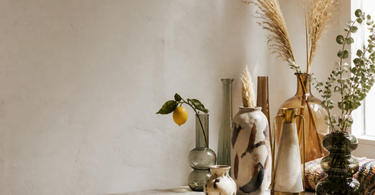
A vase is one of the most underrated home decor items. It can stand alone as a sculpture on a shelf, or it can hold a bouquet of fresh flowers that bring life and fragrance into the room. No matter the style of your home—from sleek Scandinavian minimalism to colorful bohemian—there’s a vase that fits right in.
In this guide, we’ll walk you through the main types of vases, which materials work best in different rooms, and how to style your vases so they become a central part of your decor. We’ll also look at some of the most popular designs from brands like Quail, Caja Company, and Bloomingville.
Which type of vase suits your space?
The room’s function and size should guide your choice of vase. Here are our recommendations room by room.
The
Living
Room The living room is the heart of the home, and here you can go for the largest and most striking vases. A large floor vase by the sofa or in a corner makes a statement. On the coffee table or bookshelf, smaller, decorative vases work well—preferably in a group of two or three.
The Bedroom
In the bedroom, it’s all about calm and muted colors. Choose vases in soft tones like white, cream, light pink, or dusty green. A single vase with a branch or a few dried flowers on the nightstand creates a calm, thoughtful atmosphere.
The Entryway
The entryway is the first thing your guests see. An eye-catching vase on a console table or dresser makes a great first impression. Here, you can choose something more expressive—a colorful vase or a sculptural shape that sparks curiosity.
The Kitchen
In the kitchen, small vases with fresh herbs or wildflowers from the garden work well. Ceramic vases in earth tones fit naturally into the kitchen’s functional aesthetic. A small vase on the windowsill above the sink makes daily chores a little more pleasant.
The Bathroom
Many overlook the bathroom, but a small vase with a single flower or green branch can make a big difference. Choose water-resistant materials like glazed ceramic or glass that can withstand moisture.
Materials: Ceramic, glass, stoneware, and porcelain
The nature of the material significantly influences the vase’s appearance.
Ceramic is the most common material and ranges from rustic, handmade vases with visible fingerprints to smooth, industrially manufactured designs. Ceramic has good weight and stability, and it comes in almost every color and shape.
Glass is ideal when you want to showcase the flower stems. Clear glass creates a minimalist look, while colored glass—amber, green, blue—serves as a decoration in its own right. Glass vases are easy to clean and suit most styles.
Stoneware is fired at higher temperatures than ceramic and has a denser, more durable surface. It offers a natural, matte finish that fits well in a Scandinavian or Japanese-inspired home. Stoneware vases often feature earthy, muted colors.
Porcelain is the finest material, with a smooth, almost translucent quality. Porcelain vases are ideal for festive occasions or as heirlooms. They require a bit more care, but reward you with unmatched elegance.
Bird-shaped vases from Quail

Quail Ceramics is a British company A brand specializing in hand-painted, animal-shaped ceramic vases and pots. Their animal vases depict everything from parrots and leopards to owls and dogs. Each piece is hand-painted, so no two are exactly alike. They serve as collectible art objects and make popular gifts for animal lovers.

Quail vases are typically small to medium-sized and work well on a shelf, a desk, or a windowsill. They can be used with a single flower or stand alone as decoration. The leopard vase and the parrot vase are among the most popular—and they sell out quickly.
Lemon vases from Caja Company
Lemon vases from Caja Company have become one of the hottest interior design trends in recent seasons. The hand-painted lemons on white ceramic create a fresh, Mediterranean vibe reminiscent of a summer lunch in Italy. Caja Company produces the entire series in the lemon motif—vases, cups, plates, and bowls—so you can create a cohesive look.
Large floor vases vs. small table vases
Large floor vases (over 30 cm) are suitable for dried branches, pampas grass, or large bouquets. They should stand on the floor or a low pedestal and work best in rooms with high ceilings. Choose heavy materials like stoneware or thick ceramic so the vase doesn’t tip over.
Small vases (under 15 cm) are perfect for a single rose, a few wildflowers, or a small branch. They can sit on a nightstand, windowsill, or shelf. A collection of 3–5 small vases in different colors and shapes creates a charming, cohesive look.
Where should you place a vase?
A vase works best when it has space around it. Avoid squeezing it in among too many other objects—give it room to stand out. Good placements include:
- In the center of the dining table (a low vase that doesn’t block conversation)
- On a console table in the entryway (a tall, narrow vase with seasonal branches)
- On a windowsill (a glass vase that catches the light)
- On a coffee table (a small, sculptural vase as an eye-catcher)
- On a bookshelf or bookcase (as a break between the books)
Vases with and without flowers
Many people believe that a vase must have flowers in it to work—but that is far from the case. A beautifully designed vase can stand empty and still be an important part of the decor. Sculptural vases in unusual shapes or colors are intended as standalone art objects.
When using flowers, consider the proportions: the bouquet should be about 1.5 times the height of the vase above the rim. For a narrow, tall vase, single branches or long-stemmed flowers work best. For a wide, low vase, a dense, round bouquet works best.
Wall vases: When floor space is limited
Wall vases are a smart solution for small apartments or rooms where there’s no room for more furniture. They mount directly on the wall and can hold a single flower, a dried branch, or simply serve as decoration. Bloomingville makes several beautiful ceramic wall vases that function as a combination of vase and wall art.
Frequently asked questions about vases
How do you clean a vase with a narrow neck?
Fill the vase halfway with warm water, add a tablespoon of baking soda and a little vinegar. Let it fizz and sit for 30 minutes. Rinse thoroughly. For extra effect, you can add a handful of rice and Shake — the rice acts as a scrub brush on the inside.
Can you mix different styles of vases?
Yes, absolutely. The key is to choose a common thread—for example, the same color palette, material, or era. Three vases in the same color but with different shapes work well. Alternatively, you can choose the same shape in three different colors. Just avoid mixing too many styles at once.
How many vases are too many?
There’s no hard-and-fast rule, but make sure each piece has its own space and breathing room. If a shelf starts to look like a store display, it’s time to edit. Put seasonal vases away and rotate them throughout the year—it keeps your decor fresh.
Ready to find new vases for your home? Check out our entire collection of decorative vases —from hand-painted animal vases to elegant glass vases and charming lemon vases that bring life to any room.
