
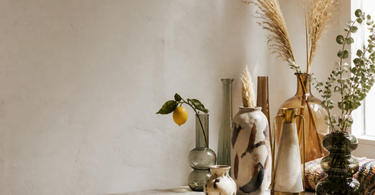
A vase is one of the most flexible decorative objects you can have. The material — ceramic, glass, stoneware or porcelain — determines the look and durability. Size and placement should match the scale of the room: large floor vases (over 30 cm) for the living room, small sculptural vases for the bedside table or windowsill. A vase doesn't need flowers to work — many designs are intended as standalone objects. The proportion rule is simple: the height of the bouquet above the vase's rim should correspond to roughly 1.5 times the height of the vase.
A vase is one of the most underrated objects in home decor. It can stand alone as a small sculpture on a shelf, hold a bouquet of seasonal flowers, or give a room character through colour and shape — entirely without anything in it. Whether you're furnishing a sleek, Nordic living room or a more colourful and eclectic home, there's a vase that makes sense for the space. This guide covers the key factors: material, size, placement and styling.
Room by room: Which vase suits where?
The room's function and scale should guide your choice. A 60 cm ceramic floor vase is far too bold for a bedside table, just as an 8 cm miniature vase gets lost in a large hallway. Here are the key considerations, room by room.
The living room
The living room is the home's most generous room when it comes to vase size. Here you can allow yourself the boldest formats. A tall floor vase next to the sofa or in a corner creates a clear visual anchor point. On the coffee table or bookshelf, smaller, sculptural vases work best — ideally arranged in a group of two to three, ideally in varying heights. Variation in shape is more interesting than uniformity.
The bedroom
Here it's all about calm. Choose vases in soft, muted tones — white, cream, dusty pink or forest green. A single vase with a dried branch or a couple of flowers on the bedside table is enough. Avoid too many and too colourful vases that disturb the calm atmosphere.
The hallway
The hallway is the first room your guests see — and it's often forgotten in home decor. An eye-catching vase on a console table or chest of drawers makes a great first impression. Here you can afford something more expressive: colourful vases or a sculptural shape that sparks curiosity work well in this brief, visual encounter.
The kitchen
Small vases with fresh herbs or wildflowers from the garden are the kitchen's natural match. Ceramic vases in earthy colours — ochre, terracotta, dark green — suit the kitchen's functional aesthetic. A small vase on the windowsill above the sink costs nothing, but makes everyday chores a little nicer.
The bathroom
The bathroom is often overlooked, but it doesn't have to be. A small vase with a single flower or a green branch can lift the room noticeably. Choose glazed materials or glass that can withstand moisture without deteriorating over time.
Tip: Finding it hard to choose a size? Start with the room's most important horizontal surface — coffee table, console table, windowsill — and measure it. A rule of thumb: the vase shouldn't be wider than a third of the surface it stands on, and it shouldn't visually get lost in a bookshelf full of other objects either.
Materials: Ceramic, glass, stoneware and porcelain
The choice of material doesn't just determine durability — it sets the vase's visual tone. Here are the four most common types and what they contribute.
Ceramic
Ceramic is the most widely used vase material and varies enormously in character: from rustic, hand-shaped pieces with visible fingerprints to smooth, industrially manufactured designs. Ceramic has a good natural weight that provides stability, and it comes in almost every colour and shape. Hand-painted ceramic vases — like those from smaller European makers — will typically have tiny variations from piece to piece, precisely because they're shaped and decorated by hand.
Glass
Glass is the obvious choice when you want to show off the flower stems as part of the arrangement. Clear glass gives a minimalist, airy look. Coloured glass — amber, cobalt blue, olive green — works as decoration in its own right, even without any flowers at all. Glass vases are easy to clean and suit most styles.
Stoneware
Stoneware is fired at higher temperatures than ordinary ceramics — typically between 1200 and 1300 degrees — giving it a denser, more durable surface with low porosity. This results in a natural, matte finish that fits particularly well with Scandinavian or Japanese-inspired interiors. Stoneware vases tend to stick to earthy, muted colours: grey, beige, smouldering blue.
Porcelain
Porcelain is the finest material in this category — smooth, almost translucent, with a distinct weight in the hand. Porcelain vases are suited to festive occasions or as proper collector's pieces. They require a bit more care than stoneware and ceramics, but in return deliver a distinctly elegant look.
| Material | Surface | Typical look | Suited for |
|---|---|---|---|
| Ceramic | Varies — matte to glazed | Rustic to modern | Any room |
| Glass | Smooth, transparent | Minimalist or colourful | Kitchen, living room, windowsill |
| Stoneware | Matte, dense | Nordic, Japanese-inspired | Living room, bedroom |
| Porcelain | Smooth, almost translucent | Elegant, refined | Festive tables, collector's pieces |
Size and proportions
Large floor vases over 30 cm are made for dried branches, pampas grass or large bouquets. They need room to breathe — both vertical space to the ceiling and horizontal space so they don't bump into the furniture. Choose heavy materials like stoneware or thick-bodied ceramics; a light vase in a large size topples easily with a branch in it.
Small vases under 15 cm are for a single rose, a few wildflowers or a small olive branch. They work best in groups of three to five with variation in shape and height. Don't line them up in a precise geometric row — a slightly offset, organic grouping looks more natural.
Animal-shaped vases from makers like Quail Ceramics — a British brand specialising in hand-painted ceramic objects — typically fall into the small to medium category and are meant as collector's pieces. Each piece is hand-painted, so no two are ever quite identical. They work on the shelf, the desk or the windowsill, and can be used with a single flower or stand on their own.
Placement and styling
A vase works best when it has space around it. Don't squeeze it in between too many other objects — give it room to stand out visually. The most effective placements are:
- In the middle of the dining table (a low vase that doesn't block conversation across the table)
- On a console table in the hallway (a tall, narrow shape with the season's branches)
- In a windowsill (a glass vase that catches and breaks the light)
- On the coffee table (a small, sculptural vase as an eye-catcher)
- In a bookcase or shelving unit (as a gap and contrast to the books)
Want to work with a citrus motif as a cohesive look? lemon vases in hand-painted white ceramic offer a fresh, southern European feel. The motif can be extended to jugs, plates and bowls for a consistent expression in the kitchen or dining room.
With or without flowers
A common misconception is that a vase needs flowers in it to work. A beautifully designed vase can stand empty and still play an important role in the décor. Sculptural vases in unusual shapes or colours are designed as standalone art objects — they don't need any contents.
When you use flowers, think about the proportions: the bouquet should fill about 1.5 times the vase's height above the rim. For a narrow, tall vase, long-stemmed flowers or single branches work well. For a wide, low vase, a dense, round bouquet works best — for example peonies or ranunculus in season.
Dried flowers and branches — eucalyptus, pampas grass, broom — are a popular alternative, because they last for months without water or maintenance. They're particularly well suited to large floor vases, where fresh flowers quickly become expensive to maintain.
Tip: Want to mix vase styles without it looking messy? Choose one common thread — either material (e.g. ceramic only), colour family (e.g. all earth tones) or shape language (e.g. all organic, asymmetrical shapes). Then you can freely mix sizes and details without losing coherence.
Wall vases for space-limited rooms
Wall vases are a smart solution for small flats or rooms where there simply isn't room for more horizontal surfaces. They're mounted directly on the wall and can hold a single flower, a dried branch, or simply stand as decoration. The effect is a blend of vase and wall art — two functions in one object.
Quail also makes ceramic wall vases with animal motifs that work as a playful alternative to the classic wall picture. They take up no floor space and add both texture and character to an otherwise empty wall.
Frequently asked questions
How do you clean a vase with a narrow neck?
Fill the vase halfway with hot water, add a tablespoon of baking soda and a little vinegar. Let the mixture fizz and work for 30 minutes. Rinse thoroughly afterwards. If there are stubborn deposits, you can add a handful of rice and shake — the rice acts as a soft, mechanical scrubbing brush inside the vase.
Can you mix vases in different styles?
Yes. The key is to choose one common thread — material, colour family or shape language — and stick to it. With a common thread, you can freely mix handmade and industrial designs, tall and low shapes, and it will still look cohesive rather than random.
What's the difference between ceramic and stoneware?
Stoneware is fired at higher temperatures — typically 1200-1300 degrees compared to ceramic's 1000-1150 degrees — giving it a denser, harder and less porous surface. This gives stoneware a natural, matt finish and makes it more durable and moisture-resistant than ordinary ceramic.
Can a vase stand without flowers?
Absolutely. Many vases are designed primarily as sculptural objects, not flower holders. A vase with an unusual shape or bold colour works perfectly well as standalone decoration on a shelf or table — and it's actually the easiest and cheapest form of styling.
What vase size suits dried flowers?
Dried flowers and branches suit medium and large vases best — ideally over 25 cm in height. Pampas grass and long dried branches need a stable, heavy base that won't tip over. Floor vases in stoneware or thick-walled ceramic are ideal, because they have the necessary weight and stability.
How many vases are too many?
It depends on the size of the room and your personal style, but a good rule of thumb is: the bigger and more sculptural the vase, the more space it should have to itself. Groups of three to five small vases look pulled together. A large floor vase typically thrives best on its own or with just one companion piece.
Summary
Vases are one of the most versatile pieces of decor: they can be used in any room, with or without flowers, as standalone pieces or in groups. The choice of material — ceramic, glass, stoneware or porcelain — sets the look and durability, while size and placement should match the scale of the room. The proportion rule is easy to remember: the visible part of the bouquet should be about 1.5 times the height of the vase. And a vase that works as a sculpture with no contents at all is often the lowest-maintenance form of decoration you can invest in.
Explore our range of vases in all sizes and materials — from small sculptural ceramic shapes to large stoneware floor vases.