
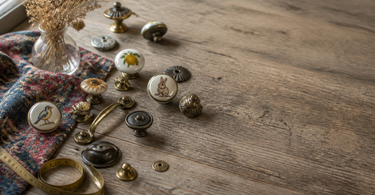
Changing cabinet knobs is one of the most effective — and cheapest — ways to refresh furniture. With a screwdriver and knobs in brass or ceramic, you can turn a standard IKEA chest of drawers into something resembling a designer piece. The process takes about five minutes per knob. The most important thing is to measure the drilling distance correctly before you order, so the new knobs fit the existing holes.
There's furniture renewal, and then there's furniture renewal on a budget. Changing the knobs and handles on your cabinets and drawers transforms the feel of the entire room — without spending a single minute on sanding, painting or fitting new hinges. It's one of the few home upgrades where the effort is minimal and the visibility is maximal. But there are a few things you need to sort out before you order.
Why are knobs the best place to start?
Furniture from big chains is manufactured for a broad taste — and you can see it in the fittings and knobs, which are usually anonymous and generic. That's precisely where your opportunity lies. A chest of drawers, a hallway shelf unit or a kitchen cabinet is basically just a box made of MDF or chipboard. It's the surface treatment and details that tell you which style the piece of furniture belongs to.
Knobs are the details you touch every day. The hand's contact with a solid brass handle or a hand-painted ceramic knob feels completely different in the body than a mass-produced plastic knob. It's not nostalgia — it's the physical properties of the materials that make the difference.
Beyond the aesthetic effect, the price is an argument in itself. A single knob typically costs between 40 and 150 DKK, depending on material and complexity. So changing all the handles on an eight-drawer chest of drawers costs from 320 DKK and upwards — far less than even a simple painting project would cost in time and materials.
Tip: Before you order knobs, you need to measure the drilling distance on your existing handles — i.e. the distance between the two screw holes, if there are two. Standard measurements are 32 mm, 64 mm and 96 mm. Single-screw knobs (rosettes) are universal, but handles with two screws require a precise match. Use a calliper for accurate measuring.
Brass — the classic upgrade
Brass has had a long career within architecture and furniture design — and not without reason. The alloy (typically copper and zinc in a ratio of 70/30) has a natural, warm golden tone that acts as a counterweight to cold, grey or white surfaces. It's the same principle that makes brass details popular in Nordic and Central European interior design.
Patina over time
A key argument for choosing solid brass over gold-plated metal is the patina. Solid brass develops a living surface over time, where use settles as darker patches in recesses and lighter tones on protruding edges. This mechanical patina is hard to replicate — and it gives the knob a character that new gold-plated knobs simply don't have. Gold-plated knobs typically last ten to twelve years, depending on the thickness of the coating (measured in micrometres), after which the underlying alloy starts to show through.
Shapes and expressions
Brass knobs come in everything from simple spherical shapes to disc knobs with milled patterns, geometric prism shapes and figurative motifs like moons, stars and circles. The figurative range has grown significantly in recent years — and this is where you can give an IKEA chest of drawers an expression that's hard to distinguish from designer furniture at triple the price. Check out our range of hooks and knobs in brass, covering everything from simple round knobs to decorative shapes.
Ceramic — character and colour
Ceramic knobs differ from metal knobs in one crucial way: no two are alike. Handmade ceramic knobs have natural variations in glaze, colour and shape, which are a direct result of the firing process. This isn't a flaw — it's exactly what makes them interesting.
Glaze and finish
The surface of ceramic knobs is determined by the glaze and firing temperature. An oxidation firing at 1000-1280 degrees produces clear, transparent colours, while a reduction firing at similar temperatures can create metallic shifting colours and uneven tones. Most knobs in the consumer segment are fired at 1000-1100 degrees and glazed with lead glazes or the lead-free alternative — the latter being the standard in Europe.
Style and use
Ceramic knobs with flowers, animal motifs or geometric patterns fit naturally with eclectic and bohemian interiors, but they can also work as a deliberate contrast in an otherwise minimalist space — one drawer with a different knob as an accent. You'll find handles and knobs in ceramic in a broad palette covering everything from muted earthy tones to bold, saturated colours.
Ceramic is generally harder than everyday use requires — glazed stoneware typically has a hardness of 6-7 on the Mohs scale — but watch out for knocks and drops, as ceramic is brittle under lateral stress.
Knobs for kitchen cabinet doors
The kitchen is the room in the home where knobs are used most intensively. An average household opens and closes kitchen cabinets and drawers between 50 and 100 times a day — that's more than 35,000 times a year. This places demands on material quality and fitting.
Here, a coherent solution across all doors and drawers is important. Mixed designs or sizes create a restless look — and since kitchen surfaces already contain many visual elements (cooker, extractor hood, tiles, taps), it's a good idea to keep your choice of knobs simple and consistent.
| Material | Durability | Maintenance | Best for |
|---|---|---|---|
| Solid brass | Very high — develops a natural patina | Dry wipe, brass polish 1-2 times a year if needed | Classic, industrial, Nordic |
| Gold-plated metal | Medium — coating wears over time | Avoid harsh cleaning agents | Budget upgrade with a golden look |
| Glazed ceramic | High against scratches, low against impact | Wash with mild soapy water | Bohemian, eclectic, colourful |
| Porcelain | High surface hardness, brittle | Wash with mild soapy water | Classic, elegant, minimalist |
For kitchen cabinet knobs, brass and ceramic in neutral colours will usually work best, as they don't compete with dishes and table settings for attention.
How to change knobs step by step
The process is simple — but a little preparation ensures you don't end up with knobs that don't fit the holes.
- Step 1: Measure the drilling distance.Use a pair of callipers or a ruler. Measure from centre point to centre point on the existing screw holes. Note it down precisely — deviations of just 2 mm can mean the handle won't fit correctly.
- Step 2: Choose knobs in the right size. Single-screw knobs are universal. Handles with two screws require you to order the precise hole spacing measurement. Standard: 32, 64 or 96 mm.
- Step 3: Gather your materials. A flathead screwdriver and a Phillips screwdriver are all you need. No drill required, unless you want to move the holes.
- Step 4: Unscrew, screw on. Loosen the old knob from inside the cupboard or drawer. Insert the new knob into the hole and tighten the screw from inside. For thin doors (e.g. 16 mm MDF), you may need to use a shorter screw — most knobs come with a 25 mm screw, but 20 mm is often better for slender doors.
- Step 5: Check horizontal and vertical alignment. Use a small spirit level on a drawer with two handles to make sure the handle sits flush.
Time per knob: about five minutes. A chest of drawers with eight drawers is done in under an hour.
Do you need drawer handles with two mounting points rather than single-screw knobs, the process is identical — it's just important to measure the hole spacing precisely.
Choose the right style for your home
Your choice of knob should be based on the furniture's surface colour and the room's other materials. Here are a few rules of thumb:
- White and light grey furniture: Brass creates contrast and warmth. Coloured ceramic can add a single accent point.
- Dark or black lacquered furniture: Brass handles with a satin finish (not mirror-polished) work classically. White or cream-glazed ceramic gives a sharp contrast.
- Natural-coloured wood: Here, earth-toned ceramic — ochre yellow, brick red, olive — works best, as they play off the wood's warm tones.
- Colourful furniture: Simple, clean-lined knobs in brass or matte white ceramic keep the design cohesive.
Knobs are also a great way into hooks and knobs in general — the same principles about material and finish apply, whether you're mounting them on a cupboard door or a hallway wall. And if you want to take it a step further with your hallway, hallway hooks in the same materials are a natural next step for a cohesive look.
If you'd like to experiment with colour without committing to a whole wall or a new piece of furniture, coloured hooks and knobs are a low-risk way to test a new colour palette in your home.
Frequently asked questions
Can I change knobs without drilling new holes?
Yes, in the vast majority of cases. Single-screw knobs fit any existing hole. Handles with two screws require you to buy the exact drilling distance already in the piece of furniture — standard sizes are 32, 64 and 96 mm. If you want to switch from single-point to two-point mounting, you'll need to drill new holes.
What's the standard screw length for cupboard knobs?
Most knobs come with an M4 screw measuring 25 mm. This fits doors 18-19 mm thick (standard MDF). For thinner doors — e.g. 16 mm — you should use a 20 mm screw. For thicker wooden doors, you might need 30 mm. M4 screws are available at all DIY shops.
Do ceramic knobs hold up in a kitchen?
Yes, glazed ceramic is highly resistant to scratches and moisture. Avoid knocking them against hard edges, as ceramic is brittle across its structure. Clean with a damp cloth and mild soapy water — avoid abrasive products, which can scratch the glaze over time.
Do brass knobs develop a patina over time?
Solid brass naturally develops a patina — an oxidation process that gives the surface a warmer, darker tone over time, especially in recesses. Many people prefer the lived-in patina look. If you want to keep the shiny finish, you can polish with brass polish and follow up with a thin oil protection.
Can IKEA furniture be upgraded with new knobs?
Yes. Most IKEA cupboard and chest of drawers ranges (KALLAX, HEMNES, MALM and more) use standard M4 screws and drilling distances that match the market's standard knobs. Always measure the existing hole before ordering — but in practice, almost all single-screw knobs work without modifications.
How many knobs should I order?
Count the number of doors and drawers and order the exact amount plus one or two extra. Many manufacturers sell in sets or individually. It's better to have a spare knob from the same batch than to have to reorder later — ceramic can vary slightly from batch to batch in colour tone.
Summary
Changing cupboard knobs is furniture renewal at its most effective: minimal investment, maximum visible difference. Brass adds warmth and classic character — and develops a beautiful patina with use. Ceramic adds colour, texture and craft-based variation. For the kitchen, we recommend a consistent design across all doors for a cohesive look. The technical side is simple: measure the drilling distance, choose the right size, unscrew and screw on. The whole process takes under an hour for a standard chest of drawers — and the result can last decades with the right choice of material.
Explore our full range of knobs for doors and drawers — in brass, ceramic and colourful variants for all types of furniture.