
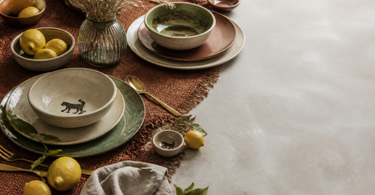
A good table setting doesn't require a matching set. Mix plates, cups and platters from different series, and keep a common thread in colour or material. A jug as a centrepiece, serving bowls for sharing and small details like fun egg cups or a ceramic butter dish lift the table from functional to personal. The best table is the one that's been put together over time.
Table setting isn't about matching everything down to the smallest detail. The tables that really have character are typically the ones put together piece by piece — a cup from here, a bowl from there, a jug bought while travelling. That gives a personality no catalogue-uniform set can replicate. The trick is to tie the elements together through either colour palette or material, and let the rest be organic and a bit random. Here's a practical guide to doing just that.
Start with plates and cups
The foundation of any table setting is plates and cups. You don't need a whole service in the same series — in fact, it can feel livelier to mix two different patterns or colour palettes, as long as they speak the same language. Think of it as coordinating rather than matching: two pieces can look different, as long as they share one trait — a shade, a material, or a simplicity of shape.
White as a base, colour as an accent
A classic starting point is white porcelain as the base service. It's neutral enough to work with almost anything and highlights colourful elements without stealing the attention. On top, you can add hand-painted plates in warmer tones — for example with citrus motifs or geometric patterns. Hand-painted ceramics from Southern European producers typically have a matte, rustic surface that contrasts nicely with smoother industrial porcelain.
Cups with personality
Cups are an obvious place to experiment. They're relatively cheap to swap out, and one unusual cup can cast the whole table in a different light. Try mixing cups in two different colours — but in the same format, for example all with a handle and the same volume — and let the shape create the uniformity the colours don't provide.
Tip: Want to test whether two pieces of ceramic "talk to each other" before you buy? Place them side by side in natural daylight. Artificial light changes colour perception significantly and can give a misleading picture of whether they work as a pair.
The jug as centrepiece
A jug placed centrally on the table acts as an anchor point that visually ties the rest of the setting together. It's a piece that all guests naturally look towards, and it therefore has a big effect — whether it's used for water, juice or just flowers.
The shape is crucial here. A round, bellied jug gives a warm, organic energy, while a more sculptural jug, for example in an animal shape, adds a playful element. Jugs in ceramic and stoneware come in many sizes — a large jug of 1.5–2 litres suits the dinner table well, while a smaller version of 0.5–0.7 litres works better for breakfast or coffee.
Citrus motifs and other themes
Motif jugs shaped like lemons or with fruit patterns give an immediate, Mediterranean feel. It's not subtle, but that's not the point either — they're designed to start a conversation. A lemon-shaped jug can, for example, be carried through the whole setting by pairing it with plates or cups with a matching citrus motif, without it becoming monotonous.
Platters and bowls for sharing
Serving pieces in the middle of the table change the dynamic of the meal. When food is shared from communal platters rather than plated individually, a more relaxed, convivial mood arises. And they sit there, visible throughout the meal — so they need to look good, even when they're half empty.
Colourful platters and bowls work here as the table's visual jewellery. A wide, low bowl in deep blue glaze or an oval platter with a fish motif creates a theme without you having to coordinate everything else on the table.
Size and number
A rule of thumb: use one large platter (30–40 cm) as an anchor and supplement with two to three smaller bowls (12–18 cm) for accompaniments, dips or salads. This creates a natural hierarchy on the table and stops all the pieces competing for attention on the same level.
For summer lunch tables, fish and seafood platters are popular — they set the scene for prawns, oysters and open sandwiches in a way that feels thematically coherent without seeming forced. Similarly, citrus and fruit-themed bowls can bring a fresh, southern European tone to a simple pasta dish or a fruit arrangement.
| Serving piece | Typical size | Best for |
|---|---|---|
| Large serving platter | 30–40 cm | Main course, bread, cheese |
| Medium bowl | 20–25 cm | Salad, pasta, vegetables |
| Small side bowl | 12–18 cm | Dips, olives, butter |
| Deep serving bowl | 22–28 cm | Soup, porridge, rice dishes |
The small details make the difference
Table settings aren't always remembered for the big pieces. It's often the smallest elements that stick in the memory — the fun salt and pepper set, the butter dish that surprised a guest, the egg cups that had everyone laughing on Sunday morning. These are exactly the details that are easy to swap out and experiment with.
- Salt and pepper: A salt and pepper set in ceramic shaped like animals, vegetables or sweets is a small detail with a disproportionately big effect. Most guests notice it.
- Butter dish: A ceramic butter dish keeps butter soft at room temperature for up to a couple of days and looks far better than the wrapping straight from the fridge — especially at a nicely laid table.
- Egg cups: For breakfast, quirky egg cups in ceramic or porcelain can turn an ordinary Sunday into something a little more festive. Animal-shaped varieties are popular with both children and adults.
- Glasses: Think of the glasses as part of the visual. Coloured or cut-glass drinking glasses add texture and light to the table, especially by candlelight.
Mix new and old
The table that tells a story is typically one that hasn't been bought as a set. Heirlooms — an old faience bowl from your grandmother's kitchen, silver cutlery bought at a flea market — give depth and authenticity that new items can't easily replace.
Place them alongside newer handmade pieces. An old blue-and-white plate next to a raw, unglazed stoneware bowl from a contemporary ceramicist creates a dialogue between time and technique. The important thing isn't that everything is coordinated — it's that there's intention behind the combination.
Ceramics have the advantage of ageing beautifully. Glaze chips unevenly, edges get a light patina look, and colours deepen with use. It's part of the material's charm and means old and new pieces can blend together more naturally than, say, glass or metal.
How to keep the common thread
When you mix freely, it helps to keep a few principles in mind that stop the table from becoming chaotic.
Choose one common factor
This could be colour: everything in earthy tones — burnt orange, olive green, rust brown. Or material: everything in hand-painted ceramic, regardless of pattern. Or shape: all round pieces. One common factor is enough to tie it all together.
Limit the number of "star pieces"
If you have a strongly patterned platter, a sculptural jug and an unusual salt-and-pepper set, keep the rest relatively calm. Three striking pieces on the same table are charming. Seven is noise.
Repeat colours or motifs
Repeat at least one colour or one motif two to three times on the table. If you have a jug with a lemon motif, it's an obvious choice to mirror it in a small citrus dish or a cup in a matching tone. It creates rhythm without requiring a matching set.
Tip: Take a photo of your table from above before your guests sit down. The distanced perspective quickly reveals whether the setting is balanced — or whether one piece visually dominates in an unintended way.
Frequently asked questions
Do plates and cups always have to match?
No. The important thing is that they coordinate rather than match. Share one common factor — a colour tone, a material or a shape family — and you can happily mix pieces from completely different ranges. Many of the most personal tables are precisely those assembled piece by piece over time.
What's the easiest way to give your table more personality?
Start with the small details: a different salt-and-pepper set, a ceramic butter dish or egg cups with character. They require minimal investment but have a big visual impact and give guests something concrete to notice and ask about.
How do I choose a jug that suits the rest of the table?
Look at the material and colour in your existing table setting. A hand-painted ceramic jug with a warm, matte glaze works well with rustic porcelain. A more sculptural or motif-based jug requires the rest to be relatively neutral, so it can stand out as the centrepiece without competition.
Can you mix hand-painted ceramics with white porcelain?
Yes, and it's actually one of the most commonly used combinations. The white porcelain acts as a neutral backdrop that lets the hand-painted ceramic stand out more clearly. Make sure the colour tones in the hand-painted piece don't clash with the white — avoid, for example, fluorescent tones against pure, cool white.
How many serving platters are appropriate for a dinner table for 4–6 people?
One to two large platters (30–40 cm) and two to three smaller bowls (12–18 cm) are typically appropriate. This provides enough variation to serve several dishes but avoids the table feeling overcrowded. Leave room for glasses, candles and anything else that naturally belongs on the table.
What makes stoneware different from porcelain for table settings?
Stoneware is fired at a lower temperature than porcelain and is generally thicker and heavier. The surface is more matte and rough, and the glaze can settle unevenly, giving it a handmade look. Porcelain is thinner, semi-transparent and more formal. Both materials are durable for everyday use.
Summary
A personal table setting is about mixing with intention, not perfecting a match. Start with a few solid basics in neutral tones — for example white porcelain — and gradually build on top with hand-painted bowls, a striking jug and a few fun details like a ceramic butter dish or a salt and pepper set with character. Let heirlooms and new finds live side by side. Repeat a colour or motif two to three times on the table to create rhythm. And remember: the table that's been put together over time always tells the best story.
Explore our range of kitchen and tableware, ceramic plates and bowls and jugs for the table.