
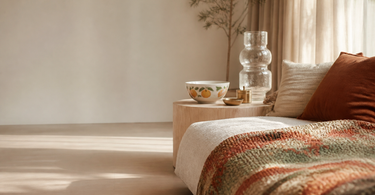
Summer decorating is about creating a natural extension of the season into your home. Remove the heavy stuff, switch to lightweight textiles in cotton or linen, and bring in colour with citrus shades, coral and turquoise. Candlelight extends the evening mood, plants in colourful pot covers add life, and small zones — a drinks corner, a reading nook on the balcony — lift everyday life from ordinary to summer mood.
The Danish summer is compressed and intense — from late June to mid-August you have a window of eight to ten weeks, where the light is long and the energy high. That's exactly the energy your decor can capture. It doesn't require a total home renovation: a few textile swaps, a couple of new colour accents and a deliberate use of light are enough to shift the mood noticeably. Here's a practical guide to what works.
The principles behind summer decorating
The first step is actually to remove something rather than add. Heavy woollen blankets, dark cushions and winter baskets with glossy warm tones can beneficially be packed away from May to September. When you clear up, you free up space for the light — and that's the most important summer element you have access to without spending a penny.
Swap the textiles for cotton or linen. Both materials are breathable, can be washed at 40-60 degrees and look naturally relaxed. Linen has a light, uneven texture that visually signals summer, while cotton weave gives a more delicate and clean finish. Choose light colours — off-white, sandy beige, pale mint — as your base, and add colour through accessories rather than large surfaces.
Your home should feel like an extension of what's happening outside. That means open windows, plants moving out onto the balcony, and a deliberate softening of the boundary between outdoor and indoor spaces. A small rug on the terrace, a set of candlesticks on the steps, a tray of drinks in the garden — these are the details that create continuity.
Tip: Pack your darkest textiles and heavy ornaments in vacuum bags and store them away until September. The space they free up automatically gives the room a lighter, airier feel — without you needing to buy anything new.
The colour palette: citrus, coral and turquoise
Summer colours are warm and lively, but they don't need to fill the entire room. Lemon yellow, orange, coral and turquoise work best as accent colours against a neutral base. Think 80% neutral, 20% colour — so the palette doesn't run wild.
Citrus colours in ceramics
The citrus motif is one of the strongest summer signals in home decor — and that's no coincidence. The clear yellow and orange tones from lemons and oranges are neurologically linked to sun and warmth. In ceramics, this translates into a handmade quality that looks far more sophisticated than cheap summer decorations from discount shops.
A single lemon vase in ceramic on the dining table can shift the room's mood more effectively than a new furniture plan. The same goes for lemon plates at lunch — they give the table setting a southern European touch, whether you're dining outside or inside.
Colourful accents without going overboard
You don't need to paint walls or change furniture. A couple of coral-coloured fabric napkins, a turquoise bowl on the kitchen worktop and a yellow vase on the windowsill are enough to give a room a thoroughly summery feel. Colourful vases in ceramic or glass are one of the most flexible decor elements: they can be moved, swapped and combined freely.
| Colour | Effect in the room | Best for |
|---|---|---|
| Lemon yellow | Warm, energetic, sunny | Vases, plates, pot covers |
| Coral/orange | Lively, warm, balanced | Textiles, candlesticks, bowls |
| Turquoise/mint | Fresh, cool, calming | Glasses, jugs, plant pot covers |
| Off-white/sand beige | Airy, neutral, open | Base for textiles and furniture |
Table setting and outdoor dining
Outdoor dining is one of summer's clearest pleasures — and the table setting has a direct impact on whether the mood succeeds. Ceramic plates are the obvious choice over plastic: they weigh a little more and need to be handled with care, but they look incomparably better and keep their colour for years if washed at low temperatures (most handmade ceramic products recommend a maximum of 40 degrees in the dishwasher).
For drinks, you might want to choose cocktail glasses in clear or coloured glass — they lift a simple lemonade or iced tea into something that feels like an occasion. Combine with a jug for water or lemonade, placed in the middle of the table so guests can pour their own.
A centrepiece without the fuss
Summer's best centrepiece is the informal one. Three candlesticks of varying heights, a handful of wild flowers from the garden or a flower market, and a small bowl of citrus fruits is all you need. It requires no floristry skills — the asymmetric randomness is part of the aesthetic.
Remember the practical side: choose tableware that can withstand a light breeze, and never place candlesticks without protection on a windy terrace. Glass lanterns or deep candle holders keep the flame going.
Candlesticks and candles for summer evenings
The Danish summer has nights that never get completely dark — but candlelight adds a warm, analogue quality to the evening mood that neither LED spots nor fairy lights can replicate. A flickering flame slows the pace and gathers people around the table.
Candlesticks in ceramic, glass and brass all suit the summer aesthetic, but in different ways. Ceramic candlesticks in warm colours give a handmade, organic expression. Glass candlesticks break the light and cast reflections that work best in dimmed background lighting. Brass candlesticks are timeless and age beautifully — they suit everything from rustic garden tables to minimalist dining rooms.
Placement and choice of candles
Place candlesticks in groups rather than scattered randomly. Two to five candlesticks in the same colour family, but of varying heights, create more calm than many single placements. For the table, we recommend unscented candles — scented candles compete with the scents of the food and can feel overpowering outdoors. For the terrace and steps, citronella candles can keep midges and insects at bay, and they smell mild enough to work in a garden setting.
Tip: Use a low, wide bowl with sand or gravel as a base for several thin candles. It looks organic, is stable in the wind, and is harmless if a candle tips over — a cheap and effective solution for outdoor use.
Plants and pot covers
Summer is the season of growth, and no decorative element signals this more clearly than living plants. It's not about having many — it's about placing them correctly and giving them decent containers.
Plant pot covers in fresh colours or with organic shapes give the balcony and living room a lush look. Vary the sizes: one large plant pot cover with a striking plant (such as a monstera or a philodendron) as an anchor plant, and two to three smaller ones around it with compact herbs or flowering species. The contrast in height and volume creates movement.
Herbs in the kitchen
Herbs in pot covers on the kitchen worktop are that rare crossover between decorative and directly useful. Basil, mint, rosemary and thyme smell great, look green and lively, and can be used straight away in cooking. Line them up along the windowsill or gather them on a small tray for an organised look. Remember that most herbs thrive best with at least six hours of direct sunlight — south-facing windows are ideal.
A pot cover with a citrus print for the herbs visually links the plant zone to the rest of the summer colours in the room and gives the kitchen a cohesive line.
Create zones and summer atmosphere
One of the most effective decorating tricks in summer is to divide the home and garden into small, defined zones, each with its own purpose and mood. It's a technique from hospitality design that works just as well in private homes.
The drinks corner
Gather a tray, a couple of cocktail glasses, a jug and perhaps a small bowl for ice or garnish. It only needs to take up 40×50 cm on a chest of drawers or side table — but it gives the spot a function and an identity. Guests find it instinctively and automatically gravitate towards it.
The reading nook on the balcony
A soft cushion in weather-resistant fabric, a small side table for your coffee and a blanket for the cooler evenings is all it takes. Colourful rugs in durable materials can easily be moved between indoors and outdoors in dry weather — they define the zone and give warmth underfoot on cold tiles.
The flower and vase corner
Choose one spot in the home — the windowsill, the dining table, the hallway — for a fixed flower arrangement. Swap the flowers out each week for what's in season: tulips in June, hydrangeas in July, sunflowers in August. It takes under five minutes and marks the passing of the season in the most direct way.
Frequently asked questions
Which materials work best for summer decorating?
Natural materials like linen, cotton, rattan and bamboo give a light, airy feel. Ceramics in fresh colours add a handmade character, while clear glass reflects the light and makes a space feel bigger. Avoid dark velvet and heavy wool fibres — they absorb heat and give a heavy look.
How do you protect furniture and textiles from the sun?
UV rays fade textiles, wood and coloured ceramics over time. Use curtains or blinds during the hours the sun shines directly in — typically 10am–4pm on south-facing surfaces. Move delicate textiles and art prints away from direct sunlight. Dark or strongly coloured textiles are more vulnerable than natural, lighter shades.
Can you do summer decorating in a small flat?
Yes. Summer atmosphere is about chords, not volume. A single vase of sunflowers, a couple of colourful cushions and lit candles can transform even a 30 m² room. The most important trick in small flats is tidiness — every element should serve a function or bring visual joy.
When should you start switching to summer decor?
May is a good time — the first warm days are a natural trigger. You don't need to change everything at once. Start with the textiles and add colour accents gradually towards June. This gives you time to try out combinations and figure out what works in your particular light.
Which plants work well for indoor summer decoration?
Monstera, palm plants and fig trees give a tropical, lush look. For sunny windowsills, lavender, basil and pelargoniums are good choices — they thrive in the heat and smell wonderful. Succulents and cacti need minimal care and match a Scandi-Mediterranean aesthetic nicely.
Are candles safe to use outdoors?
Yes, but with some caveats. Always place them in stable candlesticks or lanterns, and avoid open flames on windy days. Glass lanterns and thick pillar candles are more stable than thin candles in a light breeze. Always blow out candles before heading indoors — even a short absence is a long time for a toppled flame.
Summary
Summer decorating isn't about big investments — it's about conscious choices. Remove the excess, switch to light, breathable textiles, and bring the season's colours in via ceramics, glass and living plants. Colours like lemon yellow, coral and turquoise work best as accent colours against a neutral base. Lit candles noticeably extend the evening mood, and small dedicated zones — a drinks corner, a reading nook, a fixed spot for flowers — give the home structure and identity. Adjust the intensity to suit your flat and your taste, and let the rest come naturally.
Explore our range of summer decor and decorations — from colourful vases and candlesticks to plant pot covers and table settings.