
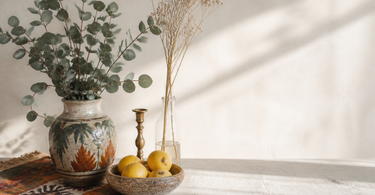
Spring decor doesn't need a complete overhaul. Swap heavy textiles for lighter alternatives, introduce spring's colour palette — pastels, green and yellow — via vases, candlesticks and plant pot covers, and let fresh flowers rotate through the season: tulips in March, ranunculus in April, peonies in May. A few, deliberate swaps on windowsills and shelves are enough to markedly change the mood of the room.
When daylight returns and temperatures start creeping up, most of us react with a longing to air things out — not just the home itself, but the whole way it's decorated. Spring decor is the art of shifting gears from winter's heavy, dark look to something lighter and more energetic, without starting from scratch. It's about adjusting the right things: textiles, colours, plants and flowers. This guide shows you exactly where to start, and what actually makes a difference.
How to get your home ready for spring
The process doesn't need to take a whole weekend. A structured approach, where you work through the home zone by zone, is more effective than swapping everything at once.
Start with the surfaces you see the most: windowsills, coffee tables and shelves. Remove what's been piling up since November — heavy candles in dark colours, thick wool blankets, dark ceramic figures. Replace with fewer, but more deliberately chosen items. A simple potted plant, a small ceramic vase with a single branch and a light-coloured candle are enough to shift the tone of the room.
Windowsills are especially important, as they sit in the transition between outside and inside. A group of plant pot covers with fresh herbs or a flowering hyacinth here sends a clear signal that the seasons are changing — and it smells good too.
Tip: Work in odd numbers. Three vases, five plants, two candlesticks and one large item — odd-numbered groupings look naturally put together and are harder to get wrong than symmetrical arrangements.
Spring's colour palette
Spring colours aren't automatically pastels — but pastels are the easiest way in, because they combine with pretty much all base colours. Soft pink, mint green, lavender blue and warm yellow work beautifully against white, grey and natural wood surfaces without dominating.
Green and yellow deserve special attention, as they create energy without feeling loud. A yellow vase on the chest of drawers or a group of coloured candlesticks in green and ochre on the dining table lifts the room's look in under ten minutes.
Colour through accessories — not walls
Most people don't fancy repainting twice a year. The effective solution is to introduce seasonal colours through swappable accessories: vases, candlesticks, textiles and plant pot covers. This gives you flexibility — you can adjust the intensity as the season progresses and your preferences change.
| Colour | Effect in the room | Easy to introduce via |
|---|---|---|
| Warm yellow | Energy, sunshine association | Vases, candlesticks |
| Mint green | Freshness, calm | Plant pot covers, textiles |
| Soft pink | Soft, inviting | Candles, ornaments |
| Lavender blue | Calm, light | Vases, dishes and bowls |
Flowers and vases as the focal point
Flowers are the quickest and most effective spring tool you have. A single branch from the garden in the right vase can do more for a room's mood than half a day's rearranging. The key is the vases' proportions and the way they're combined.
Use vases in varying heights and sizes — ideally three or five gathered in a cluster on the dining table or chest of drawers. Combining a tall, slender ceramic vase with a low, wide glass vase and a tiny miniature vase with a single tulip creates movement and depth in the arrangement.
Rotate your flower choice through the season
A simple strategy gives you a spring look that evolves naturally without extra planning:
- March: Tulips, daffodils and hyacinths — the first flowers from the shops
- April: Ranunculus and anemones — more voluminous, keep well in a vase
- May: Peonies and lilacs — need a large vase with width at the base
The vases stay the same throughout the season. It's the flowers' changing shape and scent that tell you spring is progressing.
If you don't have access to fresh flowers every week, decorative vases with dried branches, eucalyptus or pampas grass are a lasting alternative that can easily stand for months without losing their look.
Green plants and plant pot covers
Green potted plants are the most low-maintenance way to bring spring into your home. They're there all season, need minimal upkeep, and can be moved around as you find the right spot.
The role of the plant pot cover is underrated: a standard plastic pot in a well-chosen ceramic plant pot cover looks considerably more expensive. Ceramic and terracotta give an organic, earthy look, while glazed versions in mint green or warm yellow point straight into spring's colour palette. See the range of colourful plant pot covers for inspiration on how one simple swap can change a plant's status from background element to proper decoration.
Grouping plants
A single plant easily disappears in a room. Group them instead: three plants with different heights and leaf shapes — for example a tall monstera, a medium-sized pilea and a low succulent — form a living corner that visually anchors the room.
Place the group by a window with indirect light, for the sake of both the plants and the room. Light falling from the side highlights the plants' texture and creates shadows that add depth.
Light textiles and mood lighting
The textile swap is perhaps the single move that most quickly changes the feel of a room. Thick wool throws and dark cushions belonged to winter — now it's time for thinner cotton throws in light shades and light linen textiles on the dining table.
A table runner in natural linen, a set of pastel-coloured napkins and a couple of cushions in light terracotta or dusty green can transform the dining table experience significantly. It's not about buying new every year, but about rotating what you already have — or supplementing with a few versatile pieces.
Light in springtime
Candles aren't just for the winter darkness. In spring, their role changes: light is used for cosiness at the table, not to compensate for a lack of daylight. Choose light or pastel-coloured candles and place them in candlesticks made of brass, glass or ceramic. A group of candlesticks at varying heights — two tall, one low — on the dining table creates a light, informal mood that suits the character of spring.
If you want a more dramatic effect, ceramic candlesticks in spring colours work as decorative sculptures in their own right, even when unlit.
Keep the spring look all season
The most enduring spring décor is built around a few neutral basics — vases, plant pot covers, candlesticks — that can stay in place while the swappable contents vary. This saves time and money and gives you the freedom to respond to what's beautiful and available, rather than following a fixed plan.
Also think about indoor-outdoor continuity. A plant pot cover on the balcony or terrace in the same colour family as those indoors visually ties the spaces together and extends the feeling of spring beyond your home's four walls. For indoor accent décor that lasts the whole season, ceramic ornaments in spring colours are an obvious choice — they need zero maintenance and double up as display pieces.
Finally: let candles and fresh flowers be your seasonal markers. Swap the flowers and change your candle colour from dark to light, and the job is largely done.
Frequently asked questions
When should you start switching to spring décor?
Most people make the switch in February-March, when daylight noticeably returns. There's no fixed date — a good rule of thumb is to start when your décor begins to feel heavy compared with the light outside. The light is the best indicator.
Which colours work best for spring décor?
Pastels — pale pink, mint green, lavender blue, warm yellow — are the classic spring colours and combine easily with white, grey and natural wood surfaces. Pure white and natural earth tones work well as a neutral foundation, on top of which you build your spring colour via accessories.
Can you decorate for spring without spending a lot of money?
Yes. Rearrange what you already have and add a few light touches: new candles in light colours, a single vase of fresh tulips and two to three green plants from a garden centre. The vases and plant pot covers themselves are investments you can reuse season after season.
How do fresh flowers last longest in a vase?
Cut the stems at an angle with a sharp knife — not scissors, which crush them — and change the water every other day. Remove leaves below the waterline. Ceramic and glass vases keep the water cooler than plastic, which extends the flowers' lifespan. Avoid direct sun and nearby fruit (ethylene gas from fruit speeds up wilting).
What's the difference between terracotta and glazed ceramic plant pot covers?
Untreated terracotta is porous and absorbs moisture, giving a natural, organic look, but it needs an inner pot. Glazed ceramic is waterproof, easier to keep clean and comes in every colour — including the spring palette's mint green and yellow. Both work well; the choice is mainly aesthetic.
Can you combine artificial and fresh flowers?
Yes, and it's actually a practical strategy. Use artificial flowers as a fixed background structure in an arrangement and add fresh flowers as a rotating element. High-quality artificial flowers — typically made of fabric or dried natural material — are hard to tell apart from real ones at a distance and last the whole season.
Summary
Spring décor is an exercise in selectivity rather than quantity. Remove the heavy and dark, introduce spring colours via accessories you already know you like, and let flowers and plants do most of the work. Vases, plant pot covers and candlesticks are the three basic elements that keep the structure in place, while the contents — flowers, candles, plants — rotate naturally through the season from March to June. It's a system that's easy to maintain and easy to adjust as the sun climbs higher in the sky.
Explore our range of vases for spring décor — or see all decoration-accessories combined.