
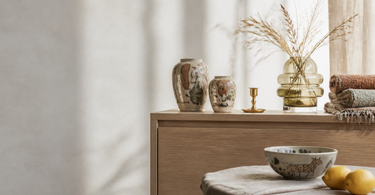
Scandinavian interior design isn't about white walls and empty space — it's about choosing with care. The style is built on natural materials like wood, ceramics, wool and glass, a colour palette inspired by nature, and the idea that every object should serve a purpose or bring joy. Candlelight, craftsmanship and personal touches are what give a Scandinavian home soul and warmth, rather than making it feel cold and sterile.
Scandinavian interior design has spread from the Nordic countries to the rest of the world, and not without reason. The style offers a clear answer to a universal problem: how do you create a home that feels calm and considered, without losing its warmth and personality? The answer lies in a principle that's easier to understand than to execute — remove the superfluous, keep what's meaningful, and choose materials you actually want to touch.
What defines Scandinavian interior design?
The core idea behind Scandinavian interior design stems from the function-oriented design tradition that gained ground in the Nordics in the mid-20th century. The ambition wasn't minimalism for minimalism's sake, but a deep respect for the idea that form and function are inseparable. Every object in a room should have a role — either practical or aesthetic, and ideally both at once.
In practice, this means Scandinavian interiors are rarely empty. A well-designed Scandinavian room is full of objects — they're just chosen thoughtfully. A ceramic bowl used for fruit, a rug that adds warmth underfoot, a candlestick that doubles as a sculpture on the corner of the dining table. None of these things are there by chance.
The style is also closely linked to the concept of cosiness — the Danish and Norwegian tradition of creating intimacy and wellbeing at home, especially during the darker months. Hygge isn't an aesthetic in itself, but a feeling that the right interior can either encourage or dampen.
The colour palette: more than white and grey
One of the most common misconceptions about Scandinavian interior design is that it's reduced to white, grey and beige. The light base exists for a practical reason: in countries with limited daylight for much of the year, light walls and surfaces reflect the available light and give rooms a greater sense of space. But it doesn't stop there.
The colour palette draws its inspiration from nature — the Norwegian coastline, the Swedish forests and the Danish fields. Creamy white and light grey form the base. Earthy tones like warm sandy beige, ochre and moss green add depth and a sense of grounding. And muted accent colours are used with precise dosing: a dusty pink vase, a dark blue ceramic bowl, an ochre-coloured rug.
Tip: Want to introduce colour without breaking the balance? Start with textiles. A colourful rug or cushion can easily be swapped out, letting you test how much colour a room can carry, without having to paint a single wall.
It's the combination of the neutral base and the deliberately chosen accent colours that gives Scandinavian interior design its characteristic calm — not the absence of colour altogether.
Materials with character and history
If the colour palette sets the tone, the materials are what give a Scandinavian room its soul. The choice consistently falls on natural, honest materials with visible texture — materials that age beautifully and tell a story over time.
Ceramics and glass
Ceramics is one of the cornerstones of Scandinavian interior design. Ceramic vases with raw glazes and organic shapes, stoneware bowls with uneven edges, and plates that bear the traces of the hand that shaped them — these are the kinds of objects that give a room texture and life. Stoneware is particularly popular because it's heavy and solid, yet can still be produced in delicate colours and shades.
Mouth-blown glass belongs to the same category. Small air bubbles and irregularities in the glass aren't flaws — they're proof that a human made it. Glass vases in clear or tinted glass bring light and movement into the room and work both with and without flowers.
Wood, wool and cotton
Wood is unavoidable in Scandinavian interior design. Light oak furniture is the classic solution, but the details matter just as much: a walnut chopping board, a birch candlestick holder, a bowl turned on a lathe. Wood adds warmth to rooms dominated by stone, ceramics and glass.
Textiles are what make a room feel lived-in. Wool and cotton in rugs and blankets invite you to sit down and stay a while. A wool blanket thrown over the sofa isn't just decoration — it's an invitation.
Metal as an accent
Brass and black metal are used as details rather than dominant elements. A brass candlestick, a black iron shelf bracket, a brass hook in the hallway — these metal accents add a finishing touch to a room without drowning out the soft materials around them.
Light and hygge: the role of candles
No element is more defining for Scandinavian interiors than candlelight. In the dark winter months — and Denmark has plenty of them — candles aren't just decoration, they're essential. The soft, flickering glow of a candle can't be replicated by any kind of electric lighting, and that's exactly why the tradition has endured.
Candlesticks work as decorative objects all year round, even when unlit. From simple, tall brass candlesticks to sculptural designs in mouth-blown glass or hand-shaped ceramic — the candlestick is one of the objects that most quickly elevates a room aesthetically.
Crystal candlesticks are a particularly good example of how a simple object can serve two functions: as a sculpture in daylight and as a light source in the evening, when the crystal's facets cast light in every direction.
The classic advice is to group candlesticks in odd numbers — three or five candlesticks at different heights create more movement and interest than two matching ones. Place them on the dining table, the windowsill or a side table, and let the light do the rest.
How to add personality
The biggest misconception about Scandinavian style is that it's impersonal — that it's about clearing out until your home looks like a hotel room. That's the opposite of the intention.
Scandinavian interiors are about deliberate choice, not the absence of personality. A handmade ceramic cup you use for your morning coffee every single day says more about you than ten random decorative objects. It's the cup you chose. It's the cup with a mark in the glaze that reminds you of something.
Heirlooms and finds from flea markets belong in a Scandinavian interior because they carry a story. An old candlestick from your grandmother's home or a ceramic bowl bought on a trip are examples of objects that give a home the depth no webshop can sell you directly.
Plants are another layer of personality. Green plants in pot covers — from large monstera specimens in the corners to small succulents on shelves — tie nature and home together and bring movement to otherwise static rooms. Even in a very muted room, a single plant breaks the monotony that too much neutrality can create.
Getting started — concrete starting points
Scandinavian interiors don't need a complete renovation. Some of the most effective changes are small and inexpensive.
| Element | Effect | Complexity |
|---|---|---|
| Candles + candlesticks | Instant mood boost | Low |
| Rug in natural materials | Warmth, acoustics, defines the zones | Low |
| Ceramic vase or bowl | Texture and organic shape | Low |
| Mirror in the hallway or living room | More light, a greater sense of space | Medium |
| Plants in pot covers | Life, freshness, natural colour | Low |
| Changing light sources | Warmer ambient lighting (2700K) | Low |
Start with the lighting. Candles and scented candles make an instant difference to the mood of a room, and it's one of the cheapest experiments you can try. Then add a rug in natural materials and let the rest grow organically, rather than trying to sort out your interior in a single weekend.
Avoid the temptation to buy lots of things all at once. Scandinavian interior design is a style that works best with patience — with pieces chosen over time and with meaning, rather than a complete collection picked up from one place in a single day.
Frequently asked questions
Is Scandinavian interior design just white and grey?
No. The light base serves a functional purpose in countries with limited daylight, but the style also includes warm earthy tones like ochre, sandy beige and moss green, muted pastels, and the natural shades that wood, clay and wool bring with them. Colour is used thoughtfully, but it's definitely part of the palette.
Can you mix Scandinavian style with other styles?
Yes, and many people do. Scandinavian interior design works as a flexible base because it's simple and roomy. It's often mixed with Japanese minimalism (the wabi-sabi aesthetic shares many values with the Nordic one), boho elements or vintage finds. The key is keeping a common thread in your choice of materials.
Which materials matter most in Scandinavian interior design?
Natural materials with visible texture and quality: wood, ceramics, mouth-blown glass, wool and cotton are the cornerstones. What matters is that the materials feel honest — they're allowed to show signs of production and use. Smooth, industrial surfaces and plastic don't fit in well.
What's the easiest way to get started?
Start with lighting — candlesticks and candles make an instant difference to the mood. Then add a rug in natural materials and perhaps a single ceramic vase or bowl. Let your collection grow slowly rather than trying to achieve a complete look all at once.
Does Scandinavian interior design suit small flats?
Yes, in fact it suits them especially well. The approach of prioritising function and removing the superfluous creates more breathing room in small spaces. Light colours and strategically placed mirrors can make a small flat look bigger. The key is to choose furniture and objects that do more than one thing.
Is Scandinavian interior design expensive?
Not necessarily. The style is, by its very nature, a protest against overconsumption — the idea is to buy fewer, better things. A single handmade ceramic bowl costs more than a mass-produced one, but it lasts for decades and improves with use. The second-hand market is also an excellent source of Scandinavian design classics at affordable prices.
Summary
Scandinavian interior design is not a stylistic exercise in emptiness. It's a practice of deliberate choice — of materials that last and feel good, of colours that bring calm, of objects that serve a function or tell a story. Ceramics, wood, wool and glass form the fundamental narrative of materials. Candles, plants and personal items are what give a Scandinavian home soul rather than just style.
The most important principle is patience. Scandinavian interior design isn't achieved in a weekend and can't be copied from a single moodboard. It's the result of slow, deliberate choices — of living with things, learning what you're missing and what's superfluous, and gradually building a home that reflects the person living in it.
Explore our range of decorative pieces in ceramic, glass and natural materials — or find your next candlestick for a Scandinavian atmosphere.