
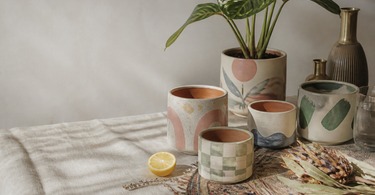
A pot cover should be 1–2 cm larger in diameter than the plant pot itself. Ceramic is the most plant-friendly material, as it's porous and regulates moisture. The colour of the pot cover affects how much the plant stands out — saturated colours like terracotta, yellow and blue work well for green plants. If you group 3–5 plants of varying sizes, you create a natural, lively composition rather than a single isolated pot.
A pot cover solves a specific problem: the black or beige plastic pot the plant lives in is rarely a pretty sight. But choosing a pot cover is about more than looks. Size, material and colour affect both the plant's wellbeing and the overall look of the room. This guide covers the factors you should consider before buying.
Size and proportions
The rule of thumb is simple: the pot cover should have an inner diameter that's 1–2 cm larger than the outer diameter of the plant pot. That gives enough room to place the pot without hassle, but not so much space that visible gaps appear around the edge.
Too big looks sloppy. Too small pinches — and in the worst case, you won't be able to get the pot out again when it's time to water or repot.
Height
The height of the pot cover should ideally match the height of the plant pot or be slightly lower. If the pot cover is noticeably taller than the pot, the plant's lower stem disappears into the "hole", and the composition loses its foundation. A pot cover that's lower than the pot, on the other hand, creates a beautiful layered look where the plastic pot is actually hidden.
Size in the room
A single small pot cover gets lost on a large floor. For floor plants like monstera, strelitzia or olive trees, large pot covers ranging from 20–30 cm in diameter are typically the right choice. For windowsill plants and small pots, stick to under 12–14 cm.
Tip: Measure the plant pot's diameter with a tape measure — not by eye — before you buy. Manufacturers often state the outer diameter of pot covers rather than the inner one, so check the product description carefully.
Colour in relation to the plant
Green plants benefit from contrast. A deep terracotta red, a dusty yellow or a dark navy blue gives the plant's leaves something to play against, making them visually pop. White is neutral and timeless, but risks blending in with light walls and losing its effect.
Complementary colours
Basic colour theory is useful here. Green has red as its complementary colour, which is part of why terracotta works so well. Blue and yellow (which together make green) create an analogous harmony that feels calmer. If you want a more dramatic look, a black or dark brown pot cover can provide deep contrast against light leaves like pothos or monstera deliciosa.
Colourful pot covers
If you already have a bold, colourful interior, colourful pot covers can work as an active design element rather than just a backdrop. Here, it's about tying the colour to another element in the room — a cushion, a rug or an art print — so the colour feels intentional.
| Pot cover colour | Works well with | Watch out for |
|---|---|---|
| Terracotta / reddish | Green plants, tropical species | Reddish walls (disappears) |
| Yellow / ochre | Dark leaves, cacti | Yellow or neutral rooms |
| Blue / navy blue | Light leaves, succulents | Cold, minimalist rooms (can feel cold) |
| White / cream | All plants, Scandinavian décor | Light walls (lacking contrast) |
| Black / anthracite | Dramatic look, architectural plants | Dark rooms (can feel heavy) |
Choice of material and plant needs
The material of your plant pot cover isn't just an aesthetic choice — it also affects how you water, and what happens to moisture and air around the roots.
Ceramic
Fired, unglazed ceramic is porous and allows a small degree of air exchange through the wall. This helps regulate soil moisture and reduces the risk of oxygen-poor roots. Glazed ceramic is denser and works more like glass. Ceramic pot covers come in a wide range of sizes and are generally the most plant-friendly choice for indoor use.
Glass
Glass pot covers are decorative and give a light, airy look. For terrarium-like arrangements or succulents, they can work well, but they're not porous and typically have no drainage hole. This means you need to be precise with watering and avoid standing water at the bottom.
Natural materials: basket, bamboo and jute
Baskets and woven covers are light and flexible, but react to moisture. Always place a saucer inside the basket so it doesn't rot. For plants that are watered rarely — cacti, succulents, air plants — a basket is an obvious solution.
Metal and terracotta
Terracotta pot covers (unglazed) are close to being the most versatile: they're porous, stable in weight and neutral in colour. Metal is durable and works well in modern, industrial-inspired décor, but can become cold and condense moisture on the outside in winter.
Groupings and styling
A single plant in a lovely pot cover is a start. A group of 3–5 plants with varying pot cover sizes is a composition. The principle is the same as with flower arrangements: odd numbers, varying heights and a mix of shapes create movement and a natural feel.
The rule of odd numbers
Groups of 3 or 5 elements are visually perceived as more dynamic than 2 or 4, because the eye doesn't automatically pair them symmetrically. It's not a fixed law, but a useful starting point.
Mixing size and shape
Combine a tall, narrow pot cover with a wide, low one and a medium-sized round one. This creates variation in silhouette. Avoid using three identical shapes — even if they're different colours — as the composition can easily lose its liveliness.
Thematic coherence
If you choose to mix materials and colours, it's easier to keep it cohesive if you work within the same colour temperature (all warm tones or all cool tones). You can easily mix ceramic and basket, if the terracotta ceramic and the light bamboo weave belong to the same warm palette.
For floor arrangements, you can combine a large pot cover with one of the colourful rugs underneath to create a defined "plant corner" in the room.
Pot covers for herbs
The kitchen's herbs come with their own set of requirements. Here, it's handy to use pot covers for herbs, designed to sit on a windowsill with room for 2–4 pots in a row. Narrow, elongated ceramic models are a good choice here.
Because herbs are watered more often than most houseplants, it's important to regularly empty the saucer — or the base of the pot cover — of excess water. Stagnant water attracts gnats and encourages root rot.
Citrus motifs are a classic reference in kitchen decor. A lemon pot cover in ceramic can give the windowsill a fresh, playful look that suits the living plants.
If you're after other ceramics for the kitchen, jars for storing dried herbs, salt or grains are a natural addition to the pot covers on the kitchen worktop.
Frequently asked questions
How much bigger should the pot cover be than the pot?
1–2 cm in internal diameter is the practical range. That's enough for the pot to slide in easily, but not so much that visible gaps appear along the edge. Measure the outer diameter of the plant pot with a tape measure — eyeballing it isn't precise enough.
Should there be a hole in the bottom of the pot cover?
No — pot covers are designed to sit without drainage. The plant pot itself has a drainage hole, and the pot cover acts as a collector. It's important, though, that you empty collected water regularly, as stagnant water at the bottom can encourage root rot and gnats.
Which material is best for pot covers?
Unglazed ceramic is typically the most plant-friendly, as it's porous and allows a degree of air exchange. It's also sturdy and stable. Basket weave and natural materials work well for plants with low watering needs, while glass is decorative but requires precise watering.
Can I put a pot cover outdoors?
It depends on the material. Frost-resistant ceramic and galvanised metal can handle a fair amount of weather, but most ceramic pot covers are intended for indoor use. Always check the product description, as non-frost-resistant ceramic can crack in frost.
What's a good size for a floor plant?
For large floor plants like monstera, strelitzia or fiddle-leaf fig, you'll typically work with pot covers of 22–35 cm in diameter. The plant usually lives in a 19–30 cm plant pot — remember to add 1–2 cm when choosing a pot cover.
How do I style several pot covers together?
Use an odd number (3 or 5), vary the height and shape, and stick within the same colour temperature (all warm or all cool tones). This creates a natural, unplanned feel. Feel free to mix materials like ceramic and basket weave, as long as they share the colour palette.
Summary
Choosing a pot cover comes down to three parameters: size, colour and material. As a rule of thumb, go for a pot cover 1–2 cm larger than the plant pot's outer diameter. Use colour actively — green plants benefit from contrast, not neutrality. Ceramic is the most versatile material for most houseplants, while basket weave and natural materials suit dry plants well.
When you move from a single pot to a group, something else happens: a composition that feels considered without seeming rigid. An odd number, varied heights and a shared colour logic are all you need to make it hang together. From there, it's just a matter of finding the right small pot covers for the windowsill and the large ones for the floor.
Explore our range of pot covers and herb pot coversin ceramic, glass and natural materials.