
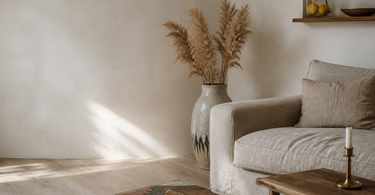


Minimalist interior design is all about creating space. Space for tranquility, space for the things that truly matter, and space to breathe in your own home. In a world full of noise and overconsumption, minimalism has become more than just a design style—it’s a conscious way of life.
What is minimalist interior design?
Minimalist interior design is based on the principle that less is more. This doesn’t mean empty rooms and cold surfaces. It means that every single object in the room has been chosen with care, and that nothing is superfluous. When you remove the unnecessary, what remains gets a chance to shine.
The style is characterized by clean lines, a muted color palette, and a focus on form and function. Furniture is often simple in design but sophisticated in craftsmanship. Decor is sparse but well-chosen—each piece is almost like a small work of art.
How do you choose the right pieces?
In minimalist design, quality matters more than ever. When you have only a few items in a room, every single one is visible—and bad buys are impossible to hide. That’s why it’s important to choose pieces you truly love and that can stand up to being looked at day after day.
Ask yourself: does this item bring me joy? Does it serve a purpose? Is its form beautiful enough to stand on its own? If the answer is yes to at least two of these questions, it has earned its place. Everything else is noise.
Vases as sculptures
In a minimalist home, vases are much more than just containers for flowers. They are sculptural objects that define a room’s character. A large, organically shaped vase on the floor can be the only decorative element in a corner—and that’s enough.
Glass vases with clean lines and transparent elegance fit perfectly into the minimalist aesthetic. They catch the light, change their look with the seasons—empty in winter, filled with a single branch in spring—and prove that simplicity can be incredibly beautiful.
Crystal and glass candleholders
Crystal candleholders are like jewelry for the minimalist home. They refract light into prisms, create reflections, and add a subtle luxury that never feels excessive. A single crystal candleholder on a dining table or a dresser is a statement in itself.
Candleholders in general play an important role in minimalist interior design because they perfectly combine function and aesthetics. The flickering light adds the warmth that minimalist spaces can otherwise lack, and the candlestick itself serves as a decorative element.
Mirrors: Space and Light
Mirrors are a minimalist’s best friend. They double the room’s visual size, reflect light, and serve as decorative elements without adding clutter. A large, round mirror above a console table or an asymmetrical mirror in the entryway can define an entire room.
Choose mirrors with simple frames—or no frame at all—to maintain the clean look. Place them strategically so they reflect something beautiful: a window, a vase, a candlestick.
Can minimalist decor include colors?
Yes. Minimalism is about reduction, not fear of color. A minimalist decor in warm terracotta tones, deep green shades, or soft blues can be just as effective as the Classic white-beige-gray palette.
The key is discipline in your color choices. Choose one or two colors in addition to the neutrals and use them consistently. A turquoise vase and matching candles can be the only colored elements in a room—and that is precisely why they will have such a dramatic effect.
Anna Von Lipa and quality in simplicity
Anna Von Lipa is a brand that understands minimalist elegance. Their mouth-blown glass and crystal candleholders are defined by clean lines, exceptional quality, and a timeless aesthetic that never screams for attention. This is exactly the type of decor that works in a minimalist home—items that become more beautiful the longer you look at them.
Investing in quality is the very foundation of minimalist interior design. When you own fewer things, you can afford to choose the best. And the best lasts—both in quality and in aesthetics.
FAQ on Minimalist Interior Design
Is minimalist interior design boring?
On the contrary. When every object is chosen with care, a sense of calm and beauty emerges that cluttered rooms can never achieve. It’s about quality over quantity—and letting the right things speak for themselves.
How do you keep a minimalist home tidy?
Minimalism makes it easier because you own fewer things. The key is the “one in, one out” rule: for every new item that comes in, something else must go. Smart storage and designated spots for everything help keep surfaces clear.
Can you live minimally with kids?
Yes, but it requires flexibility. Focus the minimalism on the common areas and let the kids’ rooms have their own style. Sturdy vases and solid, high-quality candleholders withstand everyday life better than fragile knick-knacks.
