
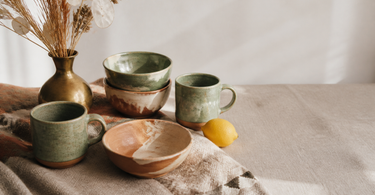
Handmade ceramics differ from mass-produced ones through small variations in shape, colour and glaze — no two cups from the same series are ever identical. Stoneware, fired at 1100-1200°C, is the most widely used material for everyday use: durable, organic in expression and suited to both kitchen and living room. Ceramics can be used as tableware, vases, candlesticks and wall decoration. All it needs is a bit of extra care, particularly when it comes to sudden temperature changes and storage.
Dims Studio's own figures: Customers are happy with their purchases: jugs score an average of 5.0 out of 5 stars across 20 reviews, and ceramic vases achieve the same top rating across 43 reviews.
Ceramic is one of the oldest materials in human history — and one of the most alive. In an age of uniform furniture and identical interior solutions, handmade ceramics give a home an authenticity that's hard to copy. Each piece carries traces of the hands that shaped it, and glazes that reacted uniquely during firing. Below, we go through what actually sets the material types apart, how ceramics work in the different rooms of your home, and how to look after them.
Ceramic, stoneware and porcelain — what's what?
Ceramic is a collective term for fired clay materials and covers everything from terracotta and faience to stoneware and porcelain. The differences are mainly down to firing temperature and the composition of the clay body.
Porcelain
Porcelain is fired at over 1300°C, which gives an extremely dense and hard material. It becomes thin, almost translucent, and is distinctively white. It's the material we associate with fine porcelain and the finest tableware — but that very density also makes it brittle.
Stoneware
Stoneware is typically fired at 1100-1200°C and is thicker and more rustic than porcelain. It's dense enough not to absorb liquid, yet keeps an organic, handmade look. For everyday use in the home, stoneware is the preferred choice: it stands up to daily wear, looks lively and reacts beautifully with coloured glaze.
Terracotta and faience
Terracotta is fired at lower temperatures (800-1000°C) and is porous — it absorbs liquid unless it's glazed. Faience is clay-glazed terracotta, giving a lighter and more even surface. Both material types are mainly used decoratively or for plant pot covers, as they're nowhere near as durable as stoneware for everyday use.
Handmade vs. mass-produced ceramics
The difference is real and noticeable. Handmade ceramics have small variations in shape, colour and glaze — no two cups from the same series are ever quite identical, because the glaze reacts differently in the kiln, and because the hand-shaped body isn't perfectly symmetrical. It's precisely this imperfection that gives each piece character.
Mass-produced ceramics are cast in identical moulds and fired on a production line, which gives uniformity and low production costs. That's not necessarily a bad thing, but it gives a different result: predictable, but without the lively surfaces and random colour variations that occur when glaze melts during firing.
Choosing handmade ceramics is also a choice about the production chain. European ceramics producers who work with traditional techniques — the potter's wheel, hand-shaping, dip-glazing — produce in limited runs and with a level of quality control that's hard to maintain in large-scale production.
Tip: When you buy handmade ceramics, variation is a sign of quality, not a flaw. The differences in the glaze's colour variation and the thickness of the body aren't production errors, but proof that the piece was made by human hands.
Ceramics in the kitchen
The kitchen is the room where ceramics really earn their keep. Here it's not just about looks, but about the tactile experience of using things daily. A stoneware cup with a lively glaze feels different in the hand than a thin, industrial cup — the thickness distributes the heat differently, and the weight gives it substance.
Tableware and everyday use
Cups, plates, bowls and jugs in stoneware stand up to everyday use. Most glazed stoneware products are dishwasher-safe, although hand-washing extends the life of the glaze. Look for tableware with lively colour variation — lemon-coloured and pastel glazes give the kitchen table energy without feeling overwhelming.
Besides cups and plates, ceramic egg cups are an obvious place to introduce handmade ceramics into everyday life — it's a small and relatively inexpensive purchase, but it lifts breakfast significantly. The same logic applies to butter dishesthat keeps the butter fresh and gives the table setting a cohesive look.
Jugs and storage
A ceramic jug for coffee, tea or water is one of the most used pieces of ceramics in the kitchen. Look for a jug with a spout shaped precisely enough not to drip — that's where the craftsmanship really counts. See the range of jugs to find one that suits your kitchen.
Ceramics in the living room
In the living room, ceramics act as three-dimensional anchor points — they add groundedness and organic shape to rooms that might otherwise feel flat. A large ceramic vase on the floor or on a shelf draws the eye down and gives the room weight.
Vases and flowers
A ceramic vase doesn't need flowers in it to make an impact. A beautiful, unglazed stoneware vase with a single dried flower stem gives a minimalist and timeless look. Mix different glazes and sizes for depth: a matte vase next to a glazed one and a raw, unglazed bowl creates variation. Explore ceramic vases in various sizes and glazes — from small single-stem vases to large floor vases.
Candlesticks and bowls
Ceramic candlesticks give off a warmer light than smooth glass holders, because the rough or glazed surface reflects the light differently. A group of three ceramic candlesticks in different heights and colours works as a unified still life. Small ceramic bowls and bowls and dishes on the coffee table are handy storage for remote controls, jewellery or candles, but also look good as purely decorative elements.
Ceramics as wall decoration
Ceramics don't just belong on tables and shelves. Ceramic wall hangings add a three-dimensional and sculptural quality to the wall that posters and prints can't match — there's depth, shadow and texture at play.
A group of three ceramic wall hangings in different sizes works best when hung as a composition rather than in a straight line. Try letting them overlap slightly in depth, so they form a cohesive picture rather than three isolated objects.
Masks and sculptural elements
Masks in ceramic or papier-mâché are popular in boho-inspired homes and add a personal and sculptural touch to the wall that's hard to achieve with two-dimensional decoration. See the range of masks and wall decor for inspiration on how they can be worked into an existing wall.
| Material | Firing temperature | Properties | Typical use |
|---|---|---|---|
| Porcelain | > 1300°C | Thin, hard, translucent, white | Fine stoneware, delicate decoration |
| Stoneware | 1100–1200°C | Dense, durable, organic look | Everyday tableware, vases, candlesticks |
| Earthenware | 950–1100°C | Porous, lighter glaze | Decorative tableware, tiles |
| Terracotta | 800–1000°C | Porous, reddish-brown colour, not waterproof | Plant pot covers, the garden |
Care and maintenance
Handmade ceramics need a little more attention than industrial porcelain, but it's not a hassle — it's mostly about knowing the material's limitations.
- Washing up: Most glazed stoneware can go in the dishwasher, but handwashing extends the life of the glaze. Avoid harsh scouring agents, which wear down the glaze over time.
- Temperature changes: Avoid sudden temperature changes. Don't put a cold ceramic bowl straight into a hot oven — let it reach room temperature first. Cracks in the glaze (crazing) can occur from repeated, severe temperature changes.
- Storage: Stack plates with felt pads or cloth napkins in between to avoid scratching the glaze.
- Unglazed ceramics: Unglazed stoneware is slightly porous and can absorb liquids and fats. For decorative purposes this isn't a problem; for food items, you should treat it with a food-safe sealant or use it for dry purposes only.
- Outdoor use: Glazed stoneware can withstand outdoor use in the warm season, but should be brought indoors before frost — water in the pores expands and can crack the piece. Terracotta is particularly vulnerable to frost.
Frequently asked questions
Is handmade ceramics safe for food and drink?
Yes, as long as the glazes are food-safe — meaning tested and approved not to release lead, cadmium or other harmful substances on contact with food and drink. Serious manufacturers document this. If you're unsure about a specific piece, the safest option is to use unglazed ceramics for decorative purposes and glazed ones for food.
What's the difference between stoneware and porcelain in everyday use?
Stoneware is thicker, more rustic and robust — it's for everyday use and withstands knocks better than the thinner porcelain. Porcelain is harder and more translucent, but also more fragile. For an active household, stoneware will typically last longer and look better over time.
How do you repair a cracked ceramic vase?
Kintsugi — the Japanese technique where cracks are repaired with gold-filled lacquer — is an aesthetic and meaningful way to extend a piece's life. Kintsugi kits are available for home use. Alternatively, epoxy glue is used for purely structural repairs, but the result isn't visually beautiful in the same way as kintsugi.
Can ceramics be used outdoors?
Glazed stoneware works fine outdoors in the warm season — for example as pot covers on a covered terrace. Bring it inside before frost: water that gets into the material expands when it freezes and can crack the ceramic. Terracotta is most vulnerable to frost and should always spend the winter indoors.
What is kintsugi?
Kintsugi is a Japanese repair technique dating back to the 1400s. Cracks and breaks in ceramics are repaired with lacquer mixed with gold, silver or platinum powder, so the cracks are highlighted rather than hidden. The philosophy behind the technique is that breaks and repairs are part of an object's history — not something to be ashamed of.
How do I style ceramics in the shelving unit?
Mix heights, glazes and sizes. A matte, unglazed vase next to a glazed candlestick and a small coloured bowl creates depth and variation. Stick to 3-5 items per shelf, and leave some air between them — ceramics look best when they're not overcrowded.
Summary
Handmade ceramics aren't a matter of nostalgia — they're a matter of material quality, tactile experience and craftsmanship. Stoneware fired at 1100-1200°C is the most versatile material for the home: durable enough for everyday tableware, organic enough to look alive as decoration. The variations in glaze and shape aren't flaws but consequences of a production process where human hands and chemical reactions aren't fully controllable — and that's exactly what gives each piece its character. Look after it sensibly, mix it freely across rooms and functions, and let it work over time.
Read also
Explore our range of ceramic vases, bowls and dishes as well as ceramic candlesticks — all handmade with care.