
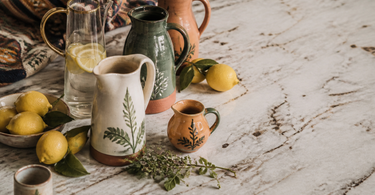
A jug is one of the kitchen's most versatile tools — it goes from morning juice to summer sangria without missing a beat. Size matters a lot: 0.5–1 litre for milk and dressing, 1–1.5 litres for everyday use, 1.5–2+ litres for parties. The material determines the look and maintenance: mouth-blown glass shows off the contents, while ceramic and stoneware keep drinks a little cooler. The most characterful jugs also work as sculptural decorative elements on shelves and tables.
A jug is probably the piece of kitchenware that changes role the most times in a single day. In the morning it holds orange juice, in the afternoon iced water with mint, and at the party it's filled with sangria. It's a tool with broad reach — but not all jugs suit all purposes. Size, material and design make a real difference, both to how it's used and to the impression the jug gives your table. Here's what you need to know before you choose.
What size jug do you need?
Size is the first thing you should consider — and it's about how many people you typically serve and what the jug needs to hold.
Small jugs: 0.5–1 litre
Small jugs from 0.5 to 1 litre are perfect for milk, cream, dressing, syrup or other things served in modest amounts. They're also great for a two-person breakfast table or as a mini vase for wildflowers. Their size makes them easy to handle and easy to set out without dominating the table.
Medium jugs: 1–1.5 litres
This is the everyday jug. 1 to 1.5 litres is enough for juice or water for a family at breakfast, or tea for 4–6 guests. If you've only got room for one jug in the cupboard, 1.5 litres is the most versatile choice — this size covers pretty much all daily needs.
Large jugs: 1.5–2+ litres
Large jugs of 1.5 litres and up are made for parties. A 2-litre jug is enough for 8–10 glasses and is perfect for lemonade, iced tea, cocktails or sangria. At this size, aesthetics matter more than ever — the jug will take centre stage on the table for hours.
Tip: If you're using the jug for drinks with ice cubes, choose a size at least 0.3 litres bigger than your actual need — ice cubes take up surprisingly much space and reduce the real capacity.
Materials: glass, ceramic and stoneware
The choice of material affects three things: appearance, maintenance, and whether the jug suits hot or cold drinks.
Mouth-blown glass
Mouth-blown glass is light and elegant, and shows off the contents — a bonus when you're serving colourful drinks or lemonade with citrus slices. The surface of hand-blown glass is never completely even, giving each piece a subtle individual character. Anna Von Lipa's opal jugs are made from mouth-blown glass with an opalescent shimmer that shifts in appearance depending on the light. The glass is durable, but hand-washing is recommended to preserve the shimmer over time — dishwashers can gradually dull the surface.
You can see the full range from Anna Von Lipa, where the jugs come in several colours and sizes.
Ceramic and stoneware
Ceramic and stoneware are the most common materials for jugs with character. Stoneware is fired at high temperatures — typically 1200–1300°C — and has a dense, strong structure that stands up well to daily use. Ceramic has a slight insulating effect, meaning cold drinks stay chilled a little longer than in glass. The surface is glazed, giving a glossy or lightly satin finish in bold colours.
Glazed ceramic
Glazed ceramic is the go-to for the most figurative jug designs — fish, fruit and animal jugs are almost always made from this material. The glaze layer adds depth to the colours and makes the surface easy to clean. It's also in glazed ceramic that the hand-painted details, which give these jugs their personality, come through best.
| Material | Advantages | Disadvantages | Suitable for |
|---|---|---|---|
| Mouth-blown glass | Light, shows the contents, opalescent sheen | Requires hand washing to preserve the sheen | Cold drinks, parties, serving |
| Stoneware / ceramic | Durable, insulates well, colourful | Heavier than glass | Cold and hot drinks, everyday use |
| Glazed ceramic | Vibrant colours, detailed designs, easy to clean | Decorative versions not always suitable for hot drinks | Cold drinks, decoration |
Jug types with personality
Beyond size and material, there's a third dimension: what the jug depicts or signals. Here are the most characterful categories.
Lemon jugs
Lemon jugs in ceramic are shaped like or decorated with lemons and bring a Mediterranean, fresh feel to the table. They work brilliantly for lemonade and iced water, but are also used as vases or purely decorative pieces in the kitchen. It's one of the most popular categories for summer gifts, likely because they have a concrete, recognisable motif that communicates clearly.
Fish jugs
Fish jugs in glazed ceramic are moulded with detailed scales, fins and open mouths as spouts. They're definitely statement pieces — a fish jug on the table gets conversations started. Use them for water, juice or cocktails, or let them stand as sculptural elements on a kitchen shelf. They also serve as a casual introduction to the playful, figurative aesthetic that characterises much of European ceramics.
Fruit jugs
Fruit and vegetable jugs range from oranges and watermelons to pineapples and exotic motifs. They're typically handmade ceramic with glazed surfaces in clear, saturated colours. Caja Company's range of handmade ceramic jugs is a great example of how the fruit motif can be elevated from decorative kitsch to genuine craftsmanship — here, the details in the glaze layer are precise and the colour choices are consistent.
Jugs with animal motifs
Jugs shaped like or decorated with animals — everything from peacocks to hares — form a category of their own. Quail jugs with animal motifs are popular gift jugs, precisely because they combine practical value with a distinct visual expression. Animal motifs give the jug a dual role: it works as a serving vessel and as a decorative object.
The jug as a decorative element
A jug isn't by definition filled with liquid. Many of the more sculptural designs work best as decorative objects — on the kitchen counter, on a dining room shelf, or as the centrepiece on a festively laid table.
For everyday decoration, smaller jugs work well as vases for wildflowers and bouquets of twigs. A 0.8-litre ceramic jug with an elongated neck holds a couple of stems of anemones at least as well as a traditional vase. For more permanent decoration that's never touched, the sculptural fish jugs and fruit jugs can be used as eye-catchers on shelves and windowsills.
If you combine jugs with other colourful table settings — like colourful platters and bowls or plates with patterns — you get a cohesive look without everything having to match in the strict sense. It's more a colour palette than a series that creates the sense of unity.
Tip: Group jugs in odd numbers (1, 3 or 5) and vary the height — a small jug next to a tall vase and a low dish creates more movement on a shelf than a symmetrical arrangement.
Price overview
Jug prices vary considerably depending on material, size and whether they're handmade. Here's a rough overview:
- Under DKK 200: Small ceramic jugs, simple glass jugs for everyday use.
- DKK 200–400: Medium ceramic jugs, lemon jugs, fruit jugs in glazed ceramic.
- DKK 400–700: Mouth-blown opal glass jugs, large fish jugs in handmade ceramic.
- Over DKK 700: Exclusive large jugs, sets with matching glasses or accessories.
As a general rule, you should expect to pay more for handmade ceramics and mouth-blown glass — not because they're "better" than factory-made alternatives in every context, but because the production process is more time-consuming and each piece is unique. This also means that two jugs from the same series are rarely identical in surface texture or shade.
See the full selection under jugs — here you'll find all shapes and materials gathered together.
Frequently asked questions
Can mouth-blown glass jugs go in the dishwasher?
This is generally not recommended. Mouth-blown glass is sturdy for daily use, but dishwashers use a combination of hot water, harsh detergents and mechanical movement that can dull the opalescent surface over time. Hand washing with a mild washing-up liquid preserves the glass best and keeps the shine intact for many years.
Can ceramic jugs be used for hot drinks?
Most stoneware jugs can handle hot drinks like tea and coffee without any issues — stoneware is fired at high temperatures and is thermally stable. Decorative jugs in glazed ceramic with fine surface details, however, are primarily intended for cold drinks and decoration. Always check the manufacturer's instructions, as this varies from piece to piece.
Which jug makes the best gift?
Lemon jugs and fish jugs are the most popular gift jugs, as they have a distinctive visual look and work as both a useful item and decoration. Quail jugs with animal motifs is a safe choice for animal lovers. A 1–1.5 litre size is practical enough for daily use without being overwhelming.
Can I use a jug as a vase?
Yes — and it's actually one of the most common alternative uses for jugs. Most ceramic jugs with a narrow neck hold stems upright and are watertight. Smaller jugs of 0.5–1 litre are especially well suited, and the sculptural designs — fish and fruit jugs — offer a different alternative to the traditional vase.
What's the difference between ceramic and stoneware?
Stoneware is a type of ceramic fired at higher temperatures (typically 1200–1300°C), giving it a denser and more watertight structure than ordinary earthenware ceramic. The result is a more durable product that holds up better to daily use. Both can be glazed to give colourful surfaces — but stoneware is generally more robust against knocks and temperature changes.
Which jug suits sangria or cocktails?
For sangria and cocktails, a large jug of at least 1.5 litres is most practical — ideally 2 litres if you've got lots of guests. Both glass and stoneware jugs work well. If you choose a glass jug, it beautifully shows off the colourful contents. A large fish jug or fruit jug in ceramic, on the other hand, gives a festive look that matches the occasion itself.
Summary
Choosing a jug comes down to three variables: size, material and design. For everyday use, a 1–1.5 litre stoneware jug is the most practical starting point. For parties or gatherings, a large mouth-blown glass jug or a sculptural ceramic jug lifts the whole table setting. And for shelves and kitchen worktops at home, even a small lemon jug or fish jug can work as a decorative object with real presence.
Jugs with figurative motifs — fruit, fish, animals — aren't just an aesthetic statement, they're also conversation starters and an expression of a playful approach to table setting. Whether you're after an everyday workhorse or the eye-catcher of the party, there's a format somewhere in the range from 0.5 to 2+ litres and in materials from hand-blown glass to hand-painted stoneware.
Explore our range of jugs in all sizes and materials — from small lemon jugs to large fish jugs in glazed ceramic.