
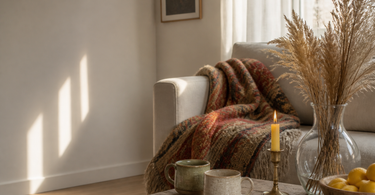
Hygge isn't an aesthetic concept — it's a state of being. It's created by soft lighting, gentle textiles and the right temperature in the room. Candles are the foundation: Denmark is the world's largest consumer of candles per capita, and this reflects a deeply rooted culture of homely atmosphere. Add a rug, a throw and a warm drink in a good cup, and you've got the basics sorted. The rest is nuance.
Hygge is one of the few Danish words to have found its way into the Oxford English Dictionary — and it's still not quite translatable. It's about presence, about dropping your shoulders, about making something out of nothing. The rest of the world has tried to distil the concept into an aesthetic of candles and knitted socks, but Danes know that hygge is a state of being more than a look. The good news is that this state can be cultivated — and interior design plays a real role in how easily you find your way there.
What hygge is really about
Hygge boils down to two things: presence and wellbeing. It's about surroundings that make it natural to slow down — whether alone with a book and a woollen blanket over your knees, or gathered around a dinner table where the conversation flows freely and the candles burn down to stubs.
The concept has roots in the Old Norse hugga, meaning to comfort or soothe. It appears in written Danish from the early 1800s and has since been closely linked to the home as a sanctuary — particularly during the dark Scandinavian winter months, when daylight is in short supply.
It's worth stressing: hygge doesn't require expensive things or a fully designed home. It requires an awareness of what makes you feel at ease. But interior design can lower the threshold — it's easier to relax in a room that's already geared towards it.
Tip: Light from low-placed sources — candles, table lamps, floor lamps — creates a more intimate atmosphere than ceiling lighting. Try switching off the ceiling light completely one evening and see how the room changes character.
Candles and candlesticks
Denmark is the world's largest consumer of candles per capita. That's no coincidence. Live flames do something to a room that no electric source can quite replicate — the soft, flickering glow reduces contrast and creates a warmth that signals "you're safe here".
The quality of light is about placement and variation. Try spreading the light across several levels: short pillar candles on the dining table, tall taper candles in candlesticks on a chest of drawers or shelf, and lower tealights in the windowsill. Three different heights give the room depth.
Choosing a candlestick
The material of the candlestick has a marked effect on the look. Brass gives warmth and develops a beautiful patina over time. Ceramic candlesticks with raw, irregular surfaces add a handcrafted quality. Clear or coloured glass scatters the light and adds an extra layer. Coloured candlesticks in bold shades can also work as a decorative element when the candle isn't lit.
The most important criterion: they need to be used. A candlestick gathering dust is architecture, not hygge.
Candle lifespan and material
Paraffin candles burn brightly and fairly evenly. Beeswax candles burn more slowly — up to 50% longer than paraffin — and have a faint scent of honey. Soy candles burn cool and are popular for indoor use, as they produce less soot. Choose based on preference and use; there's no universal winner.
Rugs and throws
Soft surfaces lower the acoustics in a room and make it physically warmer. A thick rug under the coffee table changes the whole experience of the seating area — it becomes a defined, inviting space rather than an open expanse of floor.
A throw over the arm of the sofa is a passive invitation. Not decorative — functional. The point is that it's there when you need it, without you having to go looking for it.
Materials and their properties
| Material | Properties | Best for |
|---|---|---|
| Wool | Warming, natural weight, breathable | Winter, cold rooms |
| Cotton | Light, washable, soft | Spring/summer, children's rooms |
| Alpaca | Very soft, silky, insulating | Luxury use, bedroom |
| Acrylic/polyester | Price-stable, hard-wearing, easy to maintain | Frequent use, children/pets |
Colourful rugs with characterful patterns — animals, geometry, bold colours — act as the room's focal point and can carry the identity of an entire zone. A neutral room with a striking rug rarely needs much more.
How to set the scene
Cosiness rarely happens on its own — it requires you to consciously set the conditions. The process needn't take long.
Lighting and temperature
Start by dimming the overall lighting and lighting candles. A room temperature of 19-21°C is felt by most people to be comfortable for sedentary activities. Make sure textiles are within reach — it's about removing the barrier to wrapping yourself up.
Table setting and serving
Table setting is an underrated cosiness factor. Setting the table nicely for everyday meals — rather than eating straight from the pot — signals that the meal matters. Dishes and bowls with character, a jug for the water and matching cups elevate the experience without requiring much effort.
The ritual of making a hot drink is cosy in itself. The process itself — boiling water, choosing the tea, the waiting — creates a small pause in everyday life. A good cup makes the ritual more mindful.
Scent and sound
Music in the background — quiet enough that conversation doesn't have to compete with it — supports the mood without dominating it. Scent is underrated: fresh flowers, spices from the kitchen or a fragrant plant activate a sensory layer that purely visual decor can't reach.
Hygge through the seasons
Hygge isn't constant — it changes character with the seasons, and that's part of the charm. Adapting the home to the seasons keeps the feeling alive and gives the home a rhythmic shift.
Winter and autumn
Winter hygge is deep and introverted. Heavy blankets, plenty of candles and warm, hearty food. Autumn hygge is about the transition: the first candles after summer, blankets brought out of storage, the shorter evenings celebrated rather than mourned.
Spring and summer
Spring hygge is lighter. Fresh flowers in a vase on the dining table, open windows and evening light that lasts a little longer. In summer, hygge moves outdoors: lanterns on the terrace, long dinners under the open sky, decorative elements that keep indoor aesthetics and outdoor mood in dialogue.
It doesn't take big changes to mark the shift. A new set of candles in a different colour, a seasonal flower on the windowsill, or simply moving a blanket from the living room to the garden can signal that a new season has begun.
Frequently asked questions
Does it cost a lot to make your home cosy?
No. The most effective hygge elements are usually the cheapest: candles, a good textile and a warm drink in a cup you like. Hygge is about mood, and that's created mainly by light and presence — not by the price tag on your furnishings.
Can you have hygge in a modern, minimalist home?
Yes. Hygge isn't tied to a particular style. A minimalist home with one striking candlestick, a soft textile and dimmed lighting can be just as cosy as a home full of ornaments. It's about the sensory experience, not the number of objects.
What are the most important hygge elements?
Candlelight, soft textiles and presence are the foundation. If you have a candlestick, a blanket or throw and a favourite cup for your warm drink, you've got the basics covered. Everything else is a layer on top.
How many candles should you have lit at once?
It depends on the size of the room and your purpose. A small room needs three to five candles to achieve the effect. A large, open room needs more — ideally spread across zones. The most important thing is variation in placement and height rather than a specific number.
Do hygge principles work in flats without a fireplace?
Yes. The fireplace is symbolic, but not necessary. Candles and a heavy blanket activate the same senses. Focus on dimmed lighting, soft surfaces and warm colours in textiles — the effect is comparable without an open fire.
How do you easily change the look from season to season?
Mainly change the light and textiles — those are the two quickest levers. A new set of candles in a seasonally relevant colour and a blanket in a different material is enough to signal the shift. Add fresh flowers or a seasonal plant as the third layer.
Summary
Hygge is a state that's cultivated — not an aesthetic that's bought. But the setting makes a difference. Candlelight from low-placed candlesticks, soft rugs and textiles within reach, a warm drink in a cup that feels right in your hand — those are the concrete ingredients. Add to that thoughtful table setting with bowls and dishes that have character, and an ability to adjust your home with the seasons. Hygge doesn't require perfection; it requires presence and a home that makes it easy to find your way to that feeling.
Explore our range of candlesticks for every style — from ceramics with raw surfaces to classic brass and coloured glass.