
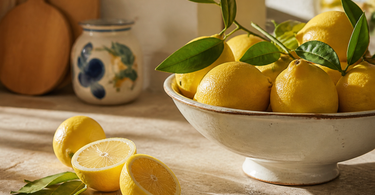
Lemons keep best at 5–10°C in the fridge — for up to 4–6 weeks. At room temperature they dry out and lose juiciness after just 7–10 days. Cut lemons should always be covered and stored in the fridge, where they'll keep for 3–5 days. If you've got lots of lemons at once, freezing the juice is the most effective method for long-term storage.
A lemon bought at the supermarket is typically already 1–2 weeks old by the time it lands in your basket. That means the storage method you use at home effectively determines whether you get 3 days or 6 weeks out of it. Temperature, humidity and whether the peel is intact are the three factors driving the process. This article goes through exactly what happens to a lemon under different conditions — and what you can do to significantly extend its shelf life.
Why temperature determines everything
A lemon's main enemies are dehydration and mould. Both processes speed up at warmer temperatures. The lemon's peel contains essential oils and a natural waxy coating that acts as a barrier against drying out — but this barrier breaks down faster the warmer the surroundings are.
At room temperature (typically 18–22°C), a whole lemon will start losing moisture within a few days. The result is a harder, slightly wrinkled surface and a noticeably reduced amount of juice inside. At 5–10°C, both mould growth and moisture evaporation are significantly slowed down.
Studies show that lemons stored in the fridge at around 7°C retain up to 85% of their juice volume after 4 weeks, while lemons at room temperature can have lost 30–40% of their juice after just 10 days. That's not a marginal difference — it's the difference between a juicy lemon and an almost dry one.
Tip: Place your lemons in a plastic bag with a couple of holes, or use an airtight container in the fridge. This reduces moisture evaporation without creating an environment that encourages mould. A simple zip-lock bag works well.
Storage in the fridge
The fridge is by far the best solution for whole, unopened lemons. The optimal temperature is 5–10°C, which corresponds to a standard setting in most fridges. At this temperature, you can expect the following shelf life:
| Condition | Storage method | Expected shelf life |
|---|---|---|
| Whole lemon | Loose in the fridge | 2–3 weeks |
| Whole lemon | Airtight bag in the fridge | 4–6 weeks |
| Whole lemon | Room temperature | 7–10 days |
| Cut lemon | Covered in the fridge | 3–5 days |
| Lemon juice | Sealed container in the fridge | 3–4 days |
| Lemon juice | Freezer | 4–6 months |
The vegetable drawer is your best friend
Most fridges have a vegetable drawer with slightly raised humidity. This is the ideal spot for lemons, as the extra moisture counteracts drying out of the peel. Avoid placing lemons directly next to apples or pears — these fruits give off ethylene gas, which speeds up ripening and subsequent spoilage of citrus fruits.
If you'd like lemons out on display as part of a table setting or decoration, a lemon bowl or a citrus dish is a practical solution — but remember, they only keep for 7–10 days at room temperature, so plan accordingly.
Storage at room temperature
Lemons at room temperature isn't wrong — it's just a short-term solution. If you're planning to use the lemons within 7–10 days, and your kitchen isn't too warm (over 22°C), you can safely leave them out.
Place them away from direct sunlight and heat sources like the hob or oven. Sunlight speeds up the breakdown of the essential oils in the peel and raises the local temperature, giving mould better conditions to thrive.
A bowl of fresh lemons and citrus fruitson the kitchen counter looks inviting and reminds you to use them — but that only works if you actually get round to using them within that short window.
When is room temperature a problem?
In summer, when the kitchen temperature easily hits 24–26°C, shelf life shortens to 5–7 days. If you've bought a 1 kg bag of lemons from the market or done a big shop, the fridge is by far the safer option.
Cut and squeezed lemons
When you cut a lemon in half, the natural protective barrier is removed. The exposed flesh dries out quickly, easily picks up odours from the fridge, and becomes a breeding ground for bacteria and mould.
How to store half a lemon
The best methods are:
- Cut side down on a plate: Reduce air contact by placing the cut side down on a small plate.
- Cling film directly on the cut surface: Wrap the film tightly, so there are no air pockets.
- Airtight container: Place the half in a small container with a lid.
Whichever method you choose, use a cut lemon within 3–5 days. Always check the cut surface before use — if it looks discoloured or has a slimy surface, it should be thrown away.
If you've got leftover lemon slices from a dinner, you can store them in a lemon jug with cold water in the fridge — they'll stay fresh for 1–2 days and give the water a light flavour at the same time.
Freezing lemons and lemon juice
Freezing is the most effective method if you've bought lots of lemons at once — for example, from an offer or a big harvest. You can freeze lemons in three ways:
1. Freeze whole lemons
Place whole, unopened lemons directly in freezer bags and freeze. They keep for 3–4 months. The texture changes after thawing — the flesh becomes softer — but the amount of juice is almost identical to freshly squeezed. Thawed lemons are best suited for squeezing, not for slices.
2. Freeze lemon juice in portions
Squeeze the juice from all the lemons, pour it into ice cube trays and freeze. Once the cubes are frozen, transfer them to a freezer bag labelled with the date. One ice cube typically equals around 15–20 ml of juice — enough for most recipes, dressings or a cup of tea. The juice keeps for 4–6 months in the freezer.
3. Freeze grated lemon zest
Lemon zest freezes exceptionally well. Grate the peel, spread it out on a sheet of baking paper, freeze until firm, and then store it in a small container. The zest keeps for up to 6 months and can be used straight from the freezer.
Tip: If you're planning to freeze lemon juice, grate the zest from the lemons first — it's easy to forget, and it's much harder to zest a frozen lemon afterwards.
Signs of spoilage — when should you throw the lemon away?
It's not always obvious when a lemon has gone too far. Here are the specific signs to look out for:
Visual signs
- White, blue or green spots: Mould. Throw away the whole lemon — mould produces mycotoxins that can penetrate the flesh, even if you cut away the visible part.
- Brown, soft surface: The flesh underneath has probably broken down.
- Wrinkles and very hard peel: The lemon is dehydrated. It's not dangerous to eat, but the juice content is minimal.
Smell and taste
A fresh lemon has a clear, sharp citrus scent. If it starts to smell fermented, sour (different from its normal tartness) or musty, that's a clear sign it should be thrown away.
If you're serving lemons to guests or using them as decoration, a lemon vase can keep them looking nice and on display — but remember to swap them out regularly, so mould doesn't spread to the other fruit.
Frequently asked questions
How long do lemons keep in the fridge?
Whole lemons stored in an airtight bag or container at 5–10°C typically keep for 4–6 weeks. If you leave them loose in the fridge without packaging, they'll last 2–3 weeks. Temperature and humidity are the key factors.
Can you freeze lemons whole?
Yes. Whole lemons can be frozen directly in freezer bags and keep for 3–4 months. The texture becomes softer after thawing, so they're mainly suited for juicing. Freezing the juice in ice cube trays is, however, the most practical method if you want portions ready to use.
How do you store half a lemon?
Place the cut side down on a small plate, cover it with cling film, or put it in an airtight container. Always keep a cut lemon in the fridge, and use it within 3–5 days. Check for discolouration or sliminess before use.
Why do lemons go wrinkly?
Wrinkles are caused by dehydration — the lemon loses moisture through its peel. This happens fastest at high temperatures and low humidity. A wrinkly lemon isn't necessarily inedible, but it contains noticeably less juice than a fresh one. Storing it in the fridge, ideally in a bag, slows down the process.
Is it dangerous to eat a lemon with mould?
You should discard a lemon with visible mould. Mould produces mycotoxins that can spread into the flesh — even in areas that look fresh. Cutting away the mouldy spots isn't enough, as the toxins may already have penetrated the fruit.
What's the best way to store lots of lemons?
If you buy lots of lemons at once, the best strategy is: keep some in the fridge (in a bag at 5–10°C), juice the rest and freeze it in ice cube portions. Feel free to grate zest from all the lemons before juicing and freeze it separately. This effectively eliminates waste.
Summary
A lemon's shelf life depends mainly on temperature. At 5–10°C in the fridge — ideally in an airtight bag — whole lemons keep for up to 4–6 weeks. At room temperature, the window is 7–10 days. Cut lemons should always be covered and kept in the fridge, where they last 3–5 days. If you have a surplus, freezing the juice in ice cube portions is the most flexible and resourceful solution. Avoid placing lemons near apples and pears, keep them away from direct sunlight, and always discard lemons with visible mould.
Explore our range of lemon dishes and bowls for storing and serving — as well as fresh lemons and citrus fruits for your kitchen.