
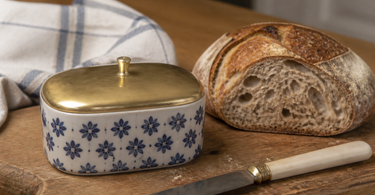
Salted butter can sit at room temperature for up to 1–2 weeks if it's kept in a closed butter dish away from light and heat. Unsalted butter contains no natural preservative and belongs in the fridge. If you want your butter soft and spreadable at the table, a butter dish is the solution — and if you chill the butter afterwards, you extend its shelf life significantly.
Butter is one of those food products surrounded by the most myths — and, in fact, the most bad habits. Many people chuck their butter in the fridge out of pure reflex, even though salted butter can easily sit out for days. Others leave unsalted butter on the worktop, without knowing that the fats break down far more quickly out there. Here we go through exactly what happens chemically and practically, and what you specifically need to do to keep your butter tasting — and lasting — at its best.
Why butter storage matters
Butter is about 80% milk fat, and fat is sensitive to two things: oxygen and light. When butter oxidises, it turns rancid — you know that slightly metallic, bitter taste. The process kicks in as soon as the butter is exposed to air, and it accelerates at high temperatures and in direct sunlight.
Besides oxidising, butter can pick up smells from its surroundings. Leave an open pack of butter next to half an onion in the fridge, and the butter will taste of onion within hours. It's not dangerous, but it ruins the experience.
Good storage really comes down to three factors:
- Air contact: Keep the butter covered or in a sealed container.
- Temperature: Match the storage spot to the type of butter and how you use it.
- Light: Avoid direct sunlight and strong artificial light.
Once you understand these three factors, the rest of the article's advice speaks for itself.
Salted butter vs. unsalted butter — the important differences
It's no coincidence that professional bakers always specify whether a recipe calls for salted or unsalted butter. The two types behave differently — not just in your cooking, but in the kitchen too.
Salted butter
Salted butter typically contains 1.5–2% salt. Salt is a natural preservative that inhibits bacterial growth and slows oxidation. This means salted butter is significantly more robust than its unsalted counterpart. At room temperature (below approximately 22–25°C) and in an airtight container, salted butter keeps for 1–2 weeks without losing flavour or safety.
Unsalted butter
Unsalted butter has no salt buffer. The fats start breaking down faster, and bacteria thrive more easily. Conclusion: unsalted butter belongs in the fridge, full stop. Here it typically keeps for 4–6 weeks unopened. Once opened, it should be used within 2–3 weeks.
Tip: Do you mainly use unsalted butter for baking, but still want soft butter ready at the table? Store a small portion (about 50g) in a clean, sealed container and use it within 2–3 days. Top it up from the fridge as you go.
Room temperature: when it's safe
Many people are wary of leaving butter out, but for salted butter, that worry is largely unfounded. Here are the conditions that determine whether room temperature is a good idea:
Room temperature
The 1–2 week shelf life at room temperature assumes the room isn't warmer than around 22–25°C. In summer, or if your kitchen runs warm, you should reduce the amount you keep out and store the rest in the fridge. Remember: butter melts at around 32–35°C, and although melted butter isn't automatically dangerous, it significantly increases the surface area and speeds up oxidation.
Light and placement
Never place butter in direct sunlight — not on the windowsill, nor close to a hot hob. A shady corner of the table or a cupboard is ideal. A butter dish with a lid solves both problems at once in practice: it keeps the butter covered against air and blocks out light.
Opened vs. unopened
An unopened pack of butter from the supermarket has fairly good protection from its packaging. Opened butter, on the other hand, is exposed to air every time you use it. This is where a tightly sealed container makes the big difference between butter lasting 3 days or 10 days.
The butter dish: how it works, and what you gain
A butter dish — also known as a butter crock or butter bell — is designed for exactly this purpose: keeping butter soft, fresh and ready to use outside the fridge. But there are differences between the models, and it's worth knowing them.
Classic butter dish with lid
The classic model is an oblong, typically enclosed ceramic or porcelain dish with a tightly fitting lid. It keeps the butter protected from air and light and can stay on the table throughout the whole meal. The material — ceramic or stone — has a natural insulating effect that keeps the butter slightly cooler than its surroundings.
French butter dish (water seal)
The French butter dish, also called a "butter bell" or "butter crock," works on a different principle. The butter is packed into the upside-down, dome-shaped inner part, and water in the outer bowl creates an airtight seal. This principle effectively eliminates all contact with air, and the butter typically keeps for 2–4 weeks at room temperature — though you'll need to change the water every 2–3 days.
Whatever the model, there's a butter dish the most practical solution if you want soft butter at the table without having to wait for it to come up to temperature from the fridge. Butter from the fridge is typically 5°C and takes 30–60 minutes to become spreadable at room temperature — with a butter dish it's ready straight away.
What should you put on the table?
For an everyday evening meal: fill the butter dish with exactly the amount you expect to use — typically 50–100 g. This minimises waste and ensures the butter hasn't been left open unnecessarily long. Feel free to pair with a milk jug and matching tableware for a coherent table.
Fridge and freezer — for long-term storage
The fridge is the standard solution for most people — and for good reason. At 4–5°C, oxidation and bacterial growth almost come to a standstill. Here are the general rules of thumb:
| Type | Unopened in the fridge | Opened in the fridge | In the freezer |
|---|---|---|---|
| Salted butter | Up to best-before date | 4–6 weeks | Up to 12 months |
| Unsalted butter | Up to best-before date | 2–3 weeks | Up to 6 months |
| Clarified butter (ghee) | Up to 12 months at room temperature | Same | Up to 24 months |
How to freeze butter properly
Freezing is the best solution if you buy butter in large quantities or want to build up a stock. Wrap the butter tightly in cling film — double-wrapped is best — before putting it in a freezer bag. This prevents the butter from picking up flavours and odours from the freezer (freezer burn). Thaw it in the fridge overnight; quick thawing at room temperature increases the risk of altering the texture.
Placement in the fridge
Avoid the butter compartment on the fridge door — it's the warmest part and the one most prone to temperature fluctuations. A shelf towards the back of the fridge provides more stable cold. Also, store the butter in a tightly sealed container — the original carton packaging isn't enough to block odours from the rest of the fridge.
The most common mistakes when storing butter
Even people who are well versed in cooking make the same mistakes with butter. Here are the most common ones — and what to do instead.
1. Unsalted butter on the kitchen counter
As covered above: unsalted butter lacks the preserving effect of salt. Always keep it in the fridge and only bring to temperature the portion you need right now.
2. Butter in an open dish
A plate without a lid protects against neither air, light nor odours. A butter dish with a lid is an investment you'll notice directly in how long your butter keeps.
3. Too large portions left out
The more butter that's exposed to air, the faster it spoils. Only bring out the amount you need for the next meal or two.
4. Refreezing thawed butter
Thawed butter shouldn't be frozen again. The texture deteriorates, and the water content can separate from the fat. Instead, thaw in suitable portions.
5. Butter near heat sources
A butter dish on the table close to the oven, on a warm windowsill or near a lit candle is exposed to unnecessary heat. Keep it away from heat sources, even during serving.
Frequently asked questions
Can salted butter be left out overnight?
Yes, it can, quite easily — provided it's covered and the room temperature is below about 25°C. Salted butter at room temperature in a closed butter dish typically keeps for 1–2 weeks, so a single night is absolutely no problem.
How do I know if the butter has gone bad?
Rancid butter smells sour, metallic or soapy — that's the oxidation you're picking up on. The taste is bitter and unpleasant. If the butter is discoloured (yellow on the outside, white inside) but smells normal, it's simply oxidised on the surface; cut off that layer, and the rest is fine.
What is a French butter keeper, and is it better?
A French butter keeper ("butter bell") uses water to seal the butter airtight. It extends its shelf life at room temperature to up to 2–4 weeks. It requires you to remember to change the water every 2–3 days. For those who use a lot of butter, it's an advantage; for occasional use, a classic butter dish with a lid is simpler.
Can I store butter and cream/milk next to each other?
This is fine, as long as both are sealed. Open milk and open butter can, however, exchange smells, especially in the fridge. Use tightly sealed containers for both. A milk jug with a lid is a practical solution for the table, while the butter sits in its butter keeper.
What happens if the butter melts and solidifies again?
Melted and re-solidified butter is typically safe to eat, but the texture can become grainy or uneven, as the fat crystals recrystallise differently. It's fine for cooking, but gives a poorer experience on bread. Avoid letting the butter melt if you can.
Does it matter whether I store butter in glass, ceramic or plastic?
Ceramic and glass are the best materials — they're odourless, don't absorb the butter's aroma, and maintain a stable temperature. Plastic can, over time, release faint odours and get scratched, giving bacteria places to hide. For everyday use at the table, a ceramic butter keeper is the clear choice.
Summary
The rules for storing butter are simple once you know them: salted butter can withstand room temperature for up to 1–2 weeks in a tightly sealed container — a butter dish is the obvious solution. Unsalted butter belongs in the fridge and should only be brought to room temperature in the amounts you use straight away. If you want to extend the shelf life significantly, the freezer is your best friend — wrap the butter well and thaw it in the fridge. Avoid light, heat and open storage, and you'll rarely experience rancid butter again. A butter keeper at the table and proper fridge storage for the rest is the combination that works best in practice.
Explore our range of butter keepers — and find matching milk jugs for a coordinated table.