
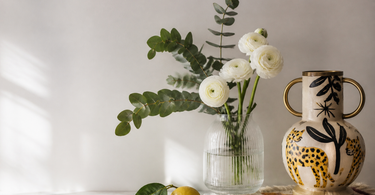
A flower vase is functional: it holds water, has a suitable opening and is made from a watertight material such as glass or glazed ceramic. A decorative vase is a standalone design object — shape, colour and texture take centre stage, and flowers are optional. Once you know the difference, it's far easier to choose correctly. In this article, we go through materials, sizes and use, so you can match the vase to what you actually need.
Many assume that a vase is just a vase. But there are actually two categories, each with its own purpose, its own material requirements and its own logic for where and how it's used. A flower vase needs to solve a practical problem: hold water, support stems and not tip over when the bouquet gets heavy. A decorative vase doesn't need to do any of that — it's a sculptural object meant to be seen. Understand that distinction, and you'll avoid buying a ceramic form with a microscopic opening for fresh roses, or a dull glass cylinder that disappears against the shelf backdrop.
What is a flower vase?
A flower vase is designed with function as the top priority. It needs to hold water, keep stems upright and have a stable base that won't tip over when the bouquet leans to one side. That places concrete demands on the material: the surface — both inside and out — must be watertight. Glass and glazed ceramic both meet that requirement. Unglazed ceramic doesn't; porous material absorbs water and can release mineral deposits that mark the tabletop or furniture surface beneath the vase.
The diameter of the opening matters a lot for which flowers you can use. A tall, slender vase with an opening of 4–6 cm suits long-stemmed roses and tulips, since the vase supports the stems and stops them falling to the sides. A low, wide model with a 10–15 cm opening is better for short wildflowers, anemones and ranunculus, which spread outwards rather than upwards. If the opening is too wide relative to the bouquet's volume, the flowers flop out to the sides and lose their support.
Mouth-blown glass vases from European makers are a classic choice for flowers — the transparency lets the plant material itself, including stems and waterline, become part of the visual effect. Remember to change the water every other day and trim the stems by around 1 cm to extend their life.
Tip: Tulips keep growing after they're placed in a vase — typically 5–10 cm more. Choose a vase that's at least two-thirds of the stem length, so they don't droop over the edge already the next day.
What is a decorative vase?
A decorative vase is an object that doesn't necessarily need contents to work. The shape, colour and surface finish are designed to speak for themselves. It might be an asymmetric ceramic form with an opening under 2 cm, a figure shaped like an animal or a fruit, or a vase with such an uneven surface that it would be a shame to hide it behind flowers.
Hand-painted animal vases in ceramic are a great example of the category: they're shaped as birds, owls and other animals, sit nicely on a shelf and have a richness of detail you discover over time. They can hold a single dried branch or stem, but they're primarily designed to be looked at.
Decorative vases don't have to be ceramic either. Porcelain figures, hand-painted glass objects and cast concrete forms all belong to the category, as long as the focus is on the object rather than its contents. Many are deliberately impossible to fill: the opening is too small, the base too narrow, or the shape too irregular for water to sit inside without spilling.
Can you use a decorative vase for flowers anyway?
Yes, in many cases. But check two things first: Is the inside glazed and watertight? And is the opening big enough for the flower you want to put in? If you have a decorative vase with a 3–4 cm opening, a single Anemone coronaria or a dried eucalyptus branch works fine. If you want to use a vase with a minimal opening for a whole bouquet, you can place a narrow drinking glass inside as an insert — a decorative object on the outside, a functional container within.
Glass vs. ceramic — two different starting points
Glass vases
Glass is the most widespread material for flower vases, and there are practical reasons for that. The transparency gives you a direct view of the water level and the stems, so you can see if the water starts to turn cloudy — a sign of bacterial growth. Clear glass works in most styles, from Nordic minimalism to something more romantic and lavish.
Coloured glass — greenish, amber, blue — noticeably raises the expressive level and can stand alone as a decorative piece, even without flowers. Mouth-blown glass has a slight imperfection in the thickness and air bubbles, which are the hallmarks of craftsmanship. It's this kind of detail that gives an object character over time, rather than making it look like an industrial copy of itself.
Ceramic vases
Ceramic has a tactile weight that glass simply can't copy. A ceramic vase is solid, typically weighing 400–800 grams even in a medium size, and the extra weight provides stability — handy if you've got children or pets around. Ceramic can be shaped in far more directions than glass: round, organic curves, sharp geometric edges, textured surfaces and hand-painted patterns that can't be fully reproduced identically from piece to piece.
Glazed ceramic is waterproof and suitable for fresh flowers. Unglazed ceramic — bisque-fired or raw — is porous and should only be used for dried plants and branches, or with a waterproof insert. Many decorative ceramic vases are in fact unglazed on the inside, as this gives a more handcrafted, raw aesthetic on the outside.
| Property | Glass vase | Ceramic vase |
|---|---|---|
| Waterproof (typically) | Yes | Depends on glazing |
| Weight | Light to medium | Medium to heavy |
| Transparency | Transparent | Opaque |
| Design possibilities | Moderate | Very wide |
| Primary use | Flower vase | Both categories |
| Maintenance | Easy to clean | May require care with unglazed variants |
Size and placement: small, large and on the wall
Small vases
Small vases are effective for creating focal details: a single flower on a desk, two to three stems on a bathroom shelf, a single branch on a windowsill. A height of 8–15 cm is typical for the category. Group three to five small vases in varying heights and colours, and you get a combined look that feels curated without having taken much effort.
Large floor vases
Large vases over 40–50 cm are statement pieces. They're suited to corners by sofas, next to a shelving system or in a hallway. At that size, flowers aren't necessary — pampas grass, dried birch twigs or nothing at all all work. The shape speaks for itself on that scale.
Wall vases
If you've got limited surface space, wall vases are an obvious solution. They're mounted directly on the wall via a hook or an integrated bracket and can hold a single flower, a couple of dried stems or a small sprig of eucalyptus. The surprising element — flowers on the wall, not on the table — gives your décor an unexpected and varied layer. Wall vases work particularly well in hallways and bathrooms, where horizontal space is in short supply.
Lemon vases: shape as a thematic anchor point
Lemon vases are a category of their own. The sculptural lemon shape in yellow ceramic brings a southern European, sun-soaked mood into the room and works primarily as a decorative object. A single sprig of lavender or a short rosemary twig suits the small opening, which is typically 2–3 cm in diameter. Feel free to pair it with other colourful vases in a mix of shapes and colours for an organic grouped look.
Use them together
Flower vases and decorative vases aren't opposites — they complement each other. A well-balanced look on a shelf can easily combine a mouth-blown glass vase with fresh tulips with a hand-painted ceramic figure and a small lemon vase with no contents whatsoever. The variation in material, height and function is what gives a display depth.
When grouping vases, a good rule of thumb is to vary along three parameters: height (low, medium, tall), material (glass and ceramic mix well), and function (flowers in one, dried in another, empty in a third). This creates movement for the eye without looking messy.
If you want to expand beyond vases, ornaments and decorative objects are obvious partners in a display — they add further layers of shape and material without competing for the same visual purpose as the vases.
Frequently asked questions
What's the difference between a flower vase and a decorative vase?
A flower vase is functionally designed to hold water and support fresh flowers. It's made from a waterproof material and has a suitable opening. A decorative vase is a standalone design object — shape and surface are the focus, and flowers aren't a prerequisite for it to work.
Can you put flowers in a decorative vase?
Yes, if it's waterproof on the inside and the opening is big enough. Unglazed ceramic absorbs water and can leave marks on furniture surfaces — use a glass as an insert in that case. A single stem or dried branch works in most decorative vases regardless of the size of the opening.
Which vase suits tulips best?
Tulips keep growing after they're cut — typically 5–10 cm more in the vase. Choose a taller model with a narrower opening, ideally 4–6 cm in diameter, that supports the stems. A transparent glass vase is practical, as you can see the water level without lifting the vase.
Can you mix flower vases and decorative vases in the same display?
Absolutely. The mix is actually what gives a display depth. A glass vase with fresh flowers, a ceramic figure and an empty lemon vase side by side create variation in material, function and shape — and that's exactly the kind of contrast that gives a shelf display life.
Are ceramic vases waterproof?
It depends on whether they're glazed on the inside. Glazed ceramic is waterproof and suited to fresh flowers. Unglazed, fired ceramic is porous — it slowly absorbs water and can release moisture underneath. Use it for dried plants, or place a narrow glass inside as an insert.
What is a wall vase, and how is it used?
A wall vase is mounted directly on the wall via a hook or bracket and typically holds a single flower or a small bouquet. They're especially useful in hallways and bathrooms, where surface space is limited. Dried plants and single stems keep well in them without the use of water.
Summary
The distinction between flower vases and decorative vases is about function versus form — but it's not an either-or choice. A flower vase is watertight, has an opening suited to the type of bouquet and is stable enough not to topple over. A decorative vase is a sculptural object that can stand alone. The material — glass or glazed ceramic versus unglazed ceramic — is one of the most important factors to keep in mind. Size determines placement: small vases for details and table settings, large floor vases as anchor points in the room, wall vases as surprising elements that make use of vertical space. Use them in combination and vary the height, material and function, and you'll get a look with depth rather than a uniform display.
Explore our range of vases in all styles, sizes and materials — from mouth-blown glass to hand-painted ceramics.