
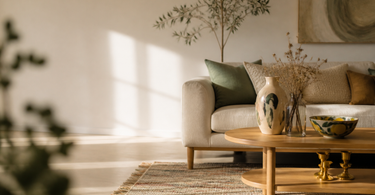
A successful living room design is about layers and balance: a rug big enough to anchor the sofa group (at least 160×230 cm), a coffee table styled with three elements (something living, something decorative, something functional), and vases, candlesticks and wall decor that work together in a shared colour palette. Mix materials like ceramics, brass and textiles to give the room depth and character.
The living room is the room in the home that has to handle the most functions at once: a gathering point for the family, a stage for guests and a haven to relax in. That places demands on the design — not because it has to look like it's from a magazine, but because a well-thought-out combination of rugs, decoration and lighting actually makes a physical difference to how you feel in the room. This guide gives you concrete principles and measurements to work from, whether you're starting from scratch or want to adjust what you already have.
Rugs define the living room's zones
A rug isn't just floor covering — it's the element that ties the furniture together and defines where the sofa zone begins and ends. A rule of thumb: the sofa's front legs should stand on the rug. If they don't, the furniture looks disconnected from each other, and the room loses its cohesion. For most sofa groups, a 160×230 cm rug works well, while larger living rooms typically need 200×300 cm.
Besides the visual effect, the rug has an acoustic function: soft surfaces absorb sound and reduce reverberation, making the room more pleasant to be in — especially in homes with hard floors and high ceilings.
Choosing materials
Wool is hard-wearing, naturally dirt-resistant and regulates moisture. Cotton is softer and easier to wash, but wears down faster. Jute and sisal give a natural, coarser texture and work well as a layer under a runner. If you choose a rug in synthetic fibres, you typically get a lower price and good durability, but the material doesn't "breathe" in the same way.
Figurative rugs as a statement
If you want a rug that does more than dampen sound, figurative designs are an obvious choice. Animal rugs — tigers, dogs, leopards — work as floor art and can give character to a room that's otherwise kept simple and neutral. They're popular in both living rooms and children's rooms, precisely because they carry a room without requiring much other decoration around them.
Tip: Put a thin anti-slip underlay beneath the rug. It keeps the rug in place, extends its lifespan and gives a softer feel underfoot — especially on hard floors.
Coffee table styling: the heart of the living room
The coffee table is the visual centre of the living room and deserves a thoughtful approach. A good rule of thumb is the rule of three: something living (a small vase with a branch or flower), something decorative (a sculpture, an ornament or a bowl) and something functional (candles, a book or a tray). This threefold approach creates balance and depth without the table looking overcrowded.
Gather small things in a bowl
A bowl or dish on the coffee table serves a dual purpose: it looks good and creates order. Matchsticks, a small lighter or decorative balls are gathered in one place instead of floating around. It also makes it easier to clear the table quickly when you suddenly need the space for something else.
Scale and space
Avoid overfilling the table. Two or three well-chosen items at different heights look better than seven identical ones. Let there be space between things — that's what signals order rather than clutter. A single small vase with a flower or a dry branch is often enough to bring the table to life.
Vases and decoration give the living room soul
Vases are among the most flexible decorative items you can work with. A large floor vase in ceramic or stoneware next to the sofa acts as an anchor point in the room — it doesn't even need to have flowers in it to work. For shelves and side tables, groups of vases work best: mix sizes from 8–10 cm to 25–30 cm, vary the shapes from cylindrical to organic, and feel free to play with different surfaces (matte, glazed, ribbed).
Ceramics and figurines
European ceramic makers craft vases in stoneware and glazed clay that stay timeless. If you want more humour in your décor, there are figurative vases shaped like animals — parrots, owls, dogs — that bring personality in without you needing to hang anything on the wall. It's an easy way to give a neutral room a bit of character.
For larger surfaces, consider a large floor vase in ceramic or glass. Place it in a corner or next to the sofa and let it stand alone — it doesn't need competition from other objects at the same height.
| Vase type | Placement | Effect |
|---|---|---|
| Large floor vase (30–60 cm) | Corner, next to sofa | Anchor point, statement piece |
| Medium size (15–25 cm) | Shelf, side table, coffee table | Group styling, variation |
| Small vase (8–12 cm) | Coffee table, windowsill | Detail, life with a single flower |
| Figurine or animal vase | Shelf, side table | Humour and personality |
Candlesticks and mood lighting
In Denmark, candles are closely linked to hygge — and for good reason. The flame from a candle is, biologically speaking, more pleasant to look at than electric light, because the flicker signals calm. In the living room, candlesticks therefore do two things at once: they're decoration during the day and mood-setters in the evening.
Grouping and heights
Never set out just one candlestick. A group of three at varying heights creates a dynamic and warm lighting composition. Crystal candlesticks reflect the flames and cast light around the room, while ceramic candlesticks in neutral or earthy colours give a more subdued and rustic look. You can easily mix the two — the variation in materials is what makes the group interesting.
Light and colour
Combine candlesticks with candles in different thicknesses. Thin taper candles in coloured shades — dusty pink, deep green, terracotta — are popular and give the living room a modern look without requiring any renovation. Thick pillar candles in neutral white or cream give more burn time and suit most styles.
Tip: Use soy wax candles rather than paraffin, if you're home a lot. Soy burns slower, produces less soot and is better for indoor air quality.
Wall decoration in the living room
The walls of your living room are an underrated surface. Most people furnish the floor area thoroughly, but leave the walls empty — or hang up a single picture and call it done. There's actually a lot more to gain here, without it having to become chaotic.
Mirrors for spaciousness
A large mirror on a wall is one of the most effective tricks in a living room: it doubles the light and gives a visual sense of depth. Choose a round or oval shape to break up the many right angles that furniture typically brings into a room. Place the mirror opposite a window to maximise light reflection.
Gallery walls and textiles
Wall hangings give texture and colour in a way that's hard to achieve with paint alone. They also dampen sound, which is a bonus in living rooms with hard surfaces. A gallery wall with a mix of posters, mirrors and ceramic wall pieces creates a personal and composed expression — but requires you to stay within one shared colour palette, otherwise it looks disjointed.
Ceramics on the wall
Ceramic wall pieces are an alternative to pictures that provide tactility and variation in materials. They can be used individually as a small sculptural element or grouped together in a cluster of three to five pieces from the same family.
Colours and materials in the living room
A well-thought-out colour scheme ties the living room together. The starting point is usually neutral: white or light walls, a sofa in grey, beige or a muted colour. From there, you can add colour in layers through decoration — and this is where you have the flexibility to change the look without repainting.
Earthy tones and contrasting angles
Warm, earthy tones like terracotta, cognac, mustard yellow and warm grey give the living room an enveloping and cosy feel. These colours work well in ceramics, textiles and natural materials — for example a terracotta plant pot cover, a wool blanket in warm ochre or a vase in deep, burnt blue. One cool contrast — a dark green or a deep petrol — can provide balance and prevent the palette from becoming too uniform.
Mix materials deliberately
Materials create depth in the same way colours do. A combination of brass (shine), ceramics (matte and earthy) and textiles (soft and absorbent) gives the eye something to move between. Avoid using only one material within a category — for example only wooden candlesticks. A single crystal candlestick in the group breaks up the uniformity and lifts the whole thing.
Small living room: same principles, sharper choices
In a small living room, the principles are the same, but the demands on selection are higher. Choose furniture at the right scale — a glass-topped or lightweight coffee table takes up less visual space than a solid one. Use vertical surfaces (walls and tall shelves) rather than floor space for decoration. Stick to two to three colours and let there be air between things. Fewer, but well-chosen items give a tidier and more spacious impression than many items in all sizes.
Frequently asked questions
How big should a rug be in the living room?
The rug should, at a minimum, be big enough for the sofa's front legs to rest on it. For most sofa groups, 160×230 cm is a good starting point. Larger living rooms typically require 200×300 cm. A rug that's too small makes the furniture seem disconnected from each other and the room seem fragmented.
How do you make a living room look more expensive?
Focus on quality materials over quantity. A couple of handmade ceramic vases, a brass candlestick and a natural fibre rug give a much more considered look than lots of cheap items. Leave breathing space between things — overcrowded shelves and tables signal clutter, not richness.
Should all the furniture in the living room match each other?
No. A room where everything matches exactly can easily end up looking like a furniture showroom. What matters is having a shared colour palette or material feel that ties everything together. A modern sofa next to a vintage side table works perfectly well if they share tone or material.
Which colours make a living room cosy?
Warm, earthy tones such as terracotta, cognac, mustard yellow and warm grey give the living room an embracing feel. Avoid too many cool whites and greys if cosiness is your goal. Candles in ceramic or glass candlesticks add enormously to the atmosphere — especially in autumn and winter.
How do you use vases in the living room?
Mix sizes and shapes to avoid a uniform look. A large floor vase (30–60 cm) anchors a corner spot, while groups of smaller vases on a shelf or side table create cohesion. You don't always need fresh flowers in them — dried branches, pampas grass or even an empty vase on its own can work as decoration.
What's the easiest way to refresh your living room?
Swap out decorative items rather than buying new furniture. A new rug, a couple of candlesticks or a group of vases in a fresh colour palette can transform the look of a room significantly, at a fraction of the cost of a new piece of furniture. Wall decor — a mirror or a wall hanging — is also a quick and effective trick.
Summary
Decorating the living room is about layers and principles rather than trends. Start with the foundation: a rug in the right size that anchors the sofa group. Build on this with a well-styled coffee table combining something alive, something decorative and something functional. Add vases in varied sizes and shapes, candlesticks that work in groups, and let walls and corners contribute texture and personality. Tie it all together with a colour palette of two to three tones and a deliberate mix of materials — ceramic, brass, textile — that gives the room depth and character.
Explore our range of living room decor and find the pieces that give your room personality.