
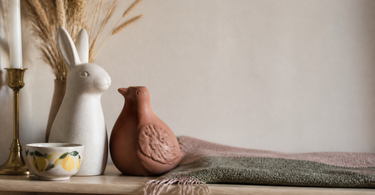
Animal-shaped vases in ceramic or stoneware are decorations that work with and without flowers. They fit in anywhere — on shelves, windowsills, dining tables and in the hallway. Group 2-3 vases in different sizes together for a cohesive look. Choose related colours for calm, or use contrasts for effect. Many variants are hand-painted, so each piece looks slightly different.
A vase doesn't just need to fill space. Animal-shaped vases are one of the quickest ways to give a shelf, a table or a windowsill character — without you having to redo the whole room. The shape works for you, whether there are flowers in it or not. Here's a practical guide to how you choose, place and style them.
What makes animal-shaped vases different?
A cylinder vase is neutral. It holds flowers, fades into the background and lets the bouquet do the talking. That's fine — but an animal-shaped vase does something different. It's a decorative element in its own right, with a shape that draws attention and starts conversations. You don't need to fill it for it to make sense in the room.
The difference is about sculptural presence. A vase shaped like a parrot, an owl or a fish has a focal point, a direction, a personality. It draws the eye and creates life, even on an otherwise empty shelf. That's exactly why many choose to display them alone — the shape is argument enough.
Ceramic and stoneware are the most common materials in this category. Both have a natural weight and a matte or satin-glossy surface that holds colours well. Hand-painted pieces — like those found from producers in Southern Europe and England — also have small variations from piece to piece, giving them a crafted feel you won't find in mass production.
See animal-shaped vases in ceramic and stoneware for an overview of the available designs and sizes.
Placement in the home
Animal-shaped vases aren't tied to one room. Here are the places they usually work best:
Shelves and windowsills
A small vase of 10-15 cm with a single stem — or none at all — brings a corner to life without dominating it. The windowsill is a classic spot, because light from behind highlights the silhouette. On a bookshelf, an animal vase acts as a natural stopping point between books and other objects.
The dining table
Use a colourful animal vase as a centrepiece instead of a classic glass vase with a bouquet. A vase in a slightly unexpected shape sparks more conversation at the table and doesn't need flowers to work. Choose a size that doesn't block eye contact across the table — typically under 25 cm in height.
The hallway
The hallway is the first room guests see, and it's the place where a single strong object gives the most return. A larger animal vase on a chest of drawers or a side table sets the tone for the rest of the home. Pair it with hallway hooks in ceramic for a cohesive look from floor to wall.
The children's room
Animal-shaped vases in bright colours fit naturally in a children's room, where they can hold dried flowers, pencils or simply stand as decoration. Figures from Italian ceramic producers typically have a solid construction that can withstand a bit more than the average ceramic item.
Tip:Place animal vases in odd numbers — 1, 3 or 5. This creates a more dynamic composition than two vases that simply mirror each other. Vary the height with at least 5-8 cm between each piece to avoid the group looking flat.
With or without flowers
It's a legitimate question: should there actually be flowers in an animal vase? The answer is that it depends on the design and your intention.
Vases with a wide opening — for example a fish with an open mouth or a bird with a hollowed-out body — invite use with flowers. Here, a single stem or a small dried flower bouquet adds an extra layer. Dried flowers have the advantage of not requiring water, so there's no need for the vase to be watertight inside.
Vases with a narrow opening or highly detailed shapes work best on their own. Here, the sculpture itself is the point. A single stem can seem out of place, as it competes with the shape rather than complementing it.
A practical rule of thumb: if in doubt, try it without flowers first. Move the vase around the room and see if it holds its own. If it does, that's a sign the shape is strong enough.
Materials and maintenance
Most animal vases are made from either ceramic, stoneware or porcelain. There are real differences between the three materials, which affect both look and use:
| Material | Surface | Strength | Typical use |
|---|---|---|---|
| Ceramic | Matte to semi-gloss glaze | Solid, but porous if unglazed | Decoration and flower vase |
| Stoneware | Matte, coarse-grained | Very robust | Decoration and everyday use |
| Porcelain | Smooth, glossy | Lighter, more fragile | Decoration, fine details |
Ceramic vases are the most common and are easily cleaned with a damp cloth. If you use water for fresh flowers, you should check that the vase is glazed on the inside — otherwise, water can penetrate the material and damage the surface over time.
Hand-painted vases should not be machine washed, as the dyes can fade. Rinse them by hand with lukewarm water and let them air dry. Avoid prolonged exposure to direct sunlight, which over time can bleach the top layers of colour on highly detailed pieces.
Combine several vases
A single animal vase makes an impact. Two or three together — in different sizes and designs — create a shelf or table setting with a completely different weight.
The principle is simple: vary the height, keep a common colour thread. If you choose three vases with different animal designs, you can tie them together by sticking to a colour palette — for example earth tones, bold primary colours or pastels. Alternatively, you can go for contrasts in shape but similar proportions.
Another approach is to combine animal vases with more neutral vases. A single bird or fish vase in a group of classic cylinder vases works as an accent and draws attention without overpowering. It's an easy way to introduce characterful shapes gradually if you're unsure how much you can take on.
If you want to work with the animal motif across categories, animal-motif rugs or decorative ornaments can complement the vases and create a more cohesive themed look without it becoming too uniform.
Frequently asked questions
Can you use an animal-shaped vase for fresh flowers?
Yes, if the vase is glazed on the inside and has an opening that suits the stems. Always check that the glaze is intact and free of cracks. Fresh flowers need regular water changes — dried flowers are easier and don't require watertightness.
What size animal vase works best on a bookshelf?
Vases 12-20 cm in height work well on shelf units, as they don't dominate. Smaller vases under 10 cm can visually disappear unless placed at the front. Large vases over 25 cm are best on the floor or wide chests of drawers.
How do I clean a hand-painted ceramic vase?
Rinse with lukewarm water and a soft cloth. Avoid the dishwasher and harsh cleaning products, as they can break down the colours in the top layer. Dry the vase off with a dry cloth afterwards and let it air dry upright, so water doesn't collect at the bottom.
Which animal motifs are the most popular?
Birds — including parrots and owls — are the most sought-after, followed by fish and cats. Bird figures typically have a natural opening at the top, which makes them functional as vases. Fish motifs are often found in more sculptural versions intended purely for decoration.
Can you mix animal motifs from different manufacturers?
Absolutely. The most important thing is to have a common visual thread — either in colour palette, material or size ratio. Two vases in very different styles can work side by side if they share one parameter: for example, both in earthy tones, or both in porcelain.
Do animal-shaped vases suit a minimalist interior?
Yes. A single animal vase amidst neutral-coloured surroundings can be just the one point that breaks the monotony. Choose a vase in a muted colour and a clean motif — avoid overly detailed pieces if the overall look is simple and streamlined.
Summary
Animal-shaped vases do double duty: they work as flower vases and as standalone decorative objects. Most are made of ceramic or stoneware and are easy to keep clean if they're glazed on the inside. Placement depends on the size — small vases thrive on shelves and windowsills, large vases need space on the floor or wide surfaces. Try grouping them in 2-3, in odd numbers, and use the colour palette as the common thread. With or without flowers — both work, as long as the shape is strong enough to stand alone.
Explore our range of animal-shaped vases in ceramic and stoneware.