
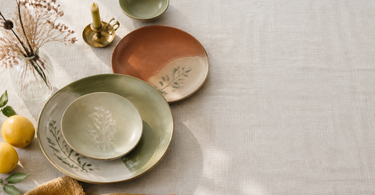
Ceramic plates come in four main types: dinner plates (26-28 cm), deep plates, lunch plates (20-22 cm) and small tapas plates. Hand-painted versions carry glaze variations and motifs that give each piece its own character. The mix and match style — combining different patterns within the same colour palette — is today the most common approach to table setting. Glazed ceramic plates are typically dishwasher-safe, but hand-painted pieces last best when washed by hand.
A ceramic plate isn't just a tool for holding food. It sets the tone for the meal — and decides whether your lunch break feels like a considered affair or just a necessity. Ceramics have the quality of carrying the marks of craftsmanship: small variations in glaze, colour and shape that mass production, by definition, cannot deliver. It's these details that make the difference between rye bread on a factory-made plate and the same food served on stoneware with character. Explore our range of ceramic plates and find the style that suits your table.
What types of ceramic plates are there?
The world of plates is bigger than most people expect, and it's worth knowing the difference between the types before you start building a set.
Dinner plates
The flat plate with a diameter of typically 26-28 cm is the cornerstone of any plate set. It's used for main courses and is the format you probably think of when you think "plate". In ceramic, they come in everything from plain white stoneware to hand-painted versions with floral or fruit motifs.
Deep plates
The soup plate has a higher rim and a roomy bowl shape that makes it well suited to soups, pasta and salads with a dressing that would otherwise run over the edge. In ceramic, the deep plate is popular precisely because the material retains heat longer than thin porcelain.
Lunch and dessert plates
With a diameter of approx. 20-22 cm, the lunch plate is a format that covers many situations: morning snacks, cake, cheese or as a saucer under bowls. The 6-8 cm difference compared to a dinner plate sounds small, but is clearly noticeable in portion size and table appearance.
Tapas and tasting plates
The small formats — from 10 to 16 cm — are used for appetisers, the cheese board, sushi or for gathering sauces and dips. They're often available in stoneware with unique glazes and are ideal to combine with small dishes and bowls for an expanded lunch spread.
Tip: If you're unsure about size, measure a plate you already own and are happy with. Manufacturers' size specifications sometimes cover the whole plate including the rim — the usable surface is typically 4-5 cm smaller than the stated diameter.
Hand-painted plates with personality
Mass-produced plates from big chains are identical, because they're made to be that way. Hand-painted ceramic plates are the opposite: each piece carries traces of the hand that painted it. The thickness of the glaze varies, the colours can shift slightly from plate to plate, and it's exactly that variation that gives them life.
European ceramic manufacturers — particularly from Spain, Portugal and Holland — have a long tradition of painting motifs directly onto glazed surfaces with lead-free pigment, which is fired permanently in the kiln. The result is colours that don't wear off with daily use, but which can lose intensity over time with harsh machine washing. The process requires up to two firings: one for the ceramic itself at 1000-1200°C and one for the glaze.
From the Spanish manufacturer Caja Company come some of the most recognisable hand-painted plates on the Danish market — with clear, graphic motifs and a surface that clearly bears the marks of the handmade process. Bloomingville works with a different aesthetic: organic shapes and muted, earthy glazes that suit a more minimalist table setting.
If you want variation in material, it's worth distinguishing between stoneware and porcelain. Stoneware is fired at lower temperatures and has a slightly porous, matte surface — it feels heavy and warm in the hand. Porcelain is fired at a higher temperature, is thinner and translucent, and has a smoother, more formal finish.
| Property | Stoneware | Porcelain |
|---|---|---|
| Firing temperature | 1100-1200°C | 1200-1400°C |
| Surface | Matte, slightly rough | Smooth, translucent |
| Expression | Rustic, everyday | Formal, refined |
| Thickness | Thicker | Thin |
| Heat retention | Good | Medium |
| Dishwasher | Typically yes | Typically yes (with care) |
Citrus motifs: More than a trend
The citrus motif on ceramics isn't new. In Southern Europe, lemons and oranges have adorned ceramics since the Renaissance — they were a symbol of prosperity and southern abundance. The current popularity in Danish interiors is an extension of that tradition, now in a fresher and more graphic version.
The inspiration comes from Italian trattorias, French country kitchens and Portuguese faience traditions. The yellow lemons against cream-white ceramics create an immediate, light-filled effect that works regardless of the season — though it's perhaps at its strongest in summer, when the table moves outdoors.
Our lemon plates from Caja Company are hand-painted with fresh citrus motifs and come in both dinner and lunch sizes. They combine naturally with orange plates for a full citrus table, or work as a graphic wildcard among plain white stoneware.
The citrus motif goes beyond plates: it appears on cups, jugs and platters, giving you the chance to build a cohesive look on the table without it becoming monotonous.
Lunch plate vs. dinner plate: what's the difference?
A lunch plate typically measures 20-22 cm in diameter, while a dinner plate is 26-28 cm. The 6-8 cm difference sounds modest, but it's noticeable in practice: a lunch plate automatically keeps portion sizes down and gives table settings a lighter feel. Use the dinner plate for evening meals, the lunch plate for brunch and cake — and let the two sizes work together in a layered table setting.
Mix and match: How to set your table
The days when a complete matching service from the same manufacturer was the norm are long gone. Mix and match is today's most popular approach to table setting — and it's easier to master than it looks.
- Stick to a colour palette: Feel free to mix different patterns and materials, but stick to 2-3 colours to avoid chaos. Earth tones, blue-and-white or a citrus palette all work well as a focal point.
- Vary sizes deliberately: A large dinner plate as a base, a smaller lunch plate on top and a small bowl for dip creates a layered, professional look without requiring a matching set.
- Mix stoneware and porcelain: Stoneware's rustic surface combined with porcelain's smooth finish creates contrast and depth — the two materials complement rather than compete with each other.
- Add a graphic joker: A single plate with a fish motif or a bold citrus print among plain ceramics gives the table a personal touch without overdoing it.
Complete the table with platters and bowls for sharing dishes, and tie it all together with cutlery in a finish that complements the ceramics' colours.
Tip: When you mix plates from different manufacturers, use a tablecloth or table runner in a neutral colour as a unifying element. Unbleached or dusty blue-green linen works well under both earth-toned ceramics and graphic motifs.
Plates as wall decoration
In many cultures — from Portugal to China — decorative plates have adorned walls for centuries. It's not just a modern trend, but an old tradition of displaying craftsmanship too beautiful to hide away in a cupboard.
A wall composition with plates of varying sizes and patterns works best when you go for an asymmetric arrangement. Use metal plate hangers (available at most hardware stores for 20-40 DKK each) and distribute the plates in an organic group rather than a symmetrical line. A mix of 3, 5 or 7 plates — always an odd number — creates a composition that's easier on the eye.
Hand-painted ceramic plates with lemon or floral motifs are perfect for the kitchen wall. If you want a more cohesive look, you can add wall decorations in the same colour palette and hang the plates as part of a larger composition.
Avoid using your best everyday plates on the wall — not because it's wrong, but because the hanger's metal clips leave marks on the glaze over time. Dedicated decorative plates or duplicates are a better choice for permanent display.
Care and durability
Ceramic is a durable material — stoneware and porcelain from reputable manufacturers can easily last for decades with proper use. But there are a few basic rules that significantly extend their lifespan.
Washing
Most glazed ceramic plates are dishwasher-safe. Hand-painted plates, however, are recommended to be hand-washed in lukewarm water with mild washing-up liquid — not because the colour runs, but because the intensity is better preserved over time when you avoid the harsh enzymes in dishwasher detergent.
Stacking and storage
Glazed surfaces can get scratched when plates are stacked directly on top of each other. Place a sheet of kitchen roll, a silicone plate protector or a piece of felt between the plates. It's a small habit that makes a noticeable difference over 2-3 years.
Heat and cold
Glazed stoneware and porcelain are generally microwave-safe — with the exception of plates with metal decorations, which spark. Avoid thermal shock: don't take a cold plate straight from the fridge into a hot oven. Let it come to room temperature for 10-15 minutes first to prevent cracks in the glaze.
Frequently asked questions
What's the difference between stoneware and porcelain?
Stoneware is fired at 1100-1200°C and has a more rustic, slightly porous surface. Porcelain is fired at 1200-1400°C, is thinner and has a smooth, white finish. Both are durable materials, but porcelain gives a more formal look, while stoneware feels everyday and warm in the hand.
Can hand-painted ceramic plates go in the dishwasher?
Many can — but it's generally recommended to hand wash hand-painted plates to preserve the intensity of the glaze over time. Dishwashing with aggressive enzymes wears down the pigment. Always check the manufacturer's instructions, as the tolerance varies between glaze types.
How many plates should you have?
A practical rule of thumb is 6-8 flat dinner plates and a similar number of deep plates for a household, plus 6-8 lunch plates. If you regularly have lots of guests, 10-12 of each format is more comfortable. See the full plate range for inspiration to build your set.
What size is a lunch plate?
A lunch plate typically measures 20-22 cm in diameter. A dinner plate is 26-28 cm. The difference is 6-8 cm, but it's clearly noticeable in practice — both in portion size and in the overall look of the table setting.
Can plates be used as wall decoration?
Yes. Use metal plate hangers and arrange them in an asymmetrical group with an odd number — 3, 5 or 7 plates. Hand-painted ceramic plates with motifs work well, but it's best to use dedicated decorative pieces, as the hanger's clips leave marks in the glaze with permanent use.
What is the mix and match style in table setting?
Mix and match means combining plates from different sets, materials and patterns rather than using a complete service. The key is to stick to a shared colour palette of 2-3 colours, so the overall look is cohesive despite the individual differences.
Summary
Ceramic plates are one of the places where everyday materiality and craftsmanship meet on the table. The four primary formats — dinner plate (26-28 cm), deep plate, lunch plate (20-22 cm) and tapas format — cover pretty much all needs. Hand-painted variants in stoneware or porcelain carry glaze variations that mass production can't reproduce, and it's precisely that imperfect character that gives them personality. The mix and match style gives you the freedom to combine motifs, materials and sizes within a shared colour palette. Care for them simply: hand wash for hand-painted pieces, and avoid thermal shock. That way they last.
Explore our range of ceramic plates and find the ones that suit your table — from lemon plates to hand-painted Klevering plates.