
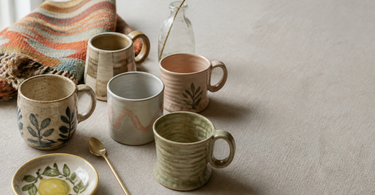
The cup you drink your morning coffee from sets the tone for the whole day. A heavy, handmade ceramic cup with a beautiful glaze feels different in your hand than a thin, white standard cup from the supermarket. It’s the tactile feel, the visual appeal, and that little touch of luxury in everyday life that make ceramic cups so popular.
In this guide, we’ll take a closer look at what makes a good ceramic cup, which Danish and international brands create the most beautiful designs, and how to build a cup collection that suits your personal style. We’ll also cover practical topics like sizes, care, and the popular mix-and-match look.
What makes a good ceramic cup?
A ceramic cup must strike a balance between aesthetics and functionality. Here are the most important factors:
Material
Ceramics is a broad term that covers stoneware, earthenware, and porcelain. Stoneware is fired at high temperatures and is dense, heavy, and durable—it withstands daily use and the dishwasher. Earthenware is lighter and more porous, with a softer feel. Porcelain is the finest material, with a thin, elegant wall and a smooth surface. For everyday use, stoneware is the best choice, while porcelain is ideal for tea and special occasions.
Shape and Handle
The shape of the cup affects how the coffee tastes and feels. A wide, shallow cup lets the coffee cool quickly—good for those who can’t wait. A tall, narrow cup retains heat longer. The handle is important: it should be large enough so you can easily hold the cup without your knuckles hitting the side. Some ceramic cups are intentionally handle-less—they’re inspired by Japanese tea bowls and are meant to be held with both hands.
Size
Standard cups vary more in size than people think. An espresso cup typically holds 60–90 ml. A regular coffee cup holds 200–250 ml. A large coffee mug—the type many people use for their morning coffee—holds 300–400 ml. And a teacup typically holds 200–300 ml. Think about what you drink most often when choosing a size.
Glaze and decoration
The glaze is what gives the ceramic cup its color and surface. A matte glaze provides a subdued, modern look. A glossy glaze reflects light and gives a more classic feel. Reactive glaze—where the colors blend together during firing—creates unique, painterly effects on each cup. Hand-painted decorations such as flowers, fruits, or abstract patterns give the cup character and personality.
Hand-painted cups: Caja Company, Bloomingville, and Rice

Caja Company’s lemon cups have become one of the most popular cup designs in Danish homes. The hand-painted lemon decoration on white ceramic creates a fresh, Mediterranean vibe. The cups are part of a larger series with the same motif, so you can pair them with plates and bowls for a cohesive table setting.
Bloomingville is a Danish brand that makes cups in both stoneware and porcelain. Their style is typically Scandinavian, featuring muted colors, organic shapes, and a laid-back aesthetic. Bloomingville cups are great for everyday use—they’re dishwasher-safe, feel comfortable in the hand, and have an unpretentious, cozy look.
Rice takes the opposite approach with colorful, cheerful designs in melamine and ceramic. Their cups often feature stripes, dots, and floral patterns in bold colors. Rice is the obvious choice if you want a kitchen that radiates energy and Good mood.
How big should a coffee cup be?
It’s a question that’s on the minds of many coffee enthusiasts. Here’s an overview:
- Espresso: 60–90 ml. A small, thick cup that retains heat.
- Lungo / double espresso: 120–150 ml.
- Cappuccino: 150–200 ml. Must have room for milk foam.
- Filter coffee: 200–250 ml. The classic coffee cup.
- Large coffee mug: 300–400 ml. For those who want to take their time with their morning coffee.
- Tea: 200–300 ml. Tea cups are often slightly wider than coffee cups to allow the tea to cool.
Most ceramic cups in our collection range from 250–350 ml, covering the needs for both coffee and tea. If you’re unsure, 300 ml is a good all-around size.
Mix-and-match: The art of mixing cups
It’s been a long time since all the cups in a home had to match. The mix-and-match trend—where you deliberately combine cups in different colors, patterns, and shapes—has become the new standard. It gives the table a more relaxed, personal vibe and is practical because you can buy one cup at a time instead of a whole set.
The key to a successful mix-and-match look is having one common thread. It could be the color family (all cups in shades of blue and green), the material (all in raw ceramic), the size (all the same volume), or the brand (all from Anna Nina but in different designs). Then the rest can vary freely.
Ceramic Cups as Gifts
A beautiful ceramic cup is one of the most appreciated gifts you can give. It’s personal, functional, and reminds the recipient of the giver every time it’s used. For a birthday, housewarming, hostess gift, or Christmas, a handmade cup with a slightly playful or beautiful glaze is almost always a hit. Wrap it up with a bag of good coffee or tea for a complete gift set.
Care and maintenance of ceramic cups
Most stoneware cups are dishwasher-safe, but hand-painted cups and cups with gilded details should be washed by hand to preserve the decoration. Coffee and tea stains can be removed with a paste of baking soda and water—let it sit for 15 minutes and rinse off. Avoid sudden temperature changes: don’t pour boiling water into an ice-cold cup, as this can cause hairline cracks in the glaze.
Unglazed ceramic (the raw surface on the bottom of many cups) can leave marks on white tables. Place a felt or cork coaster underneath if you’re worried about your surfaces.
Frequently asked questions about ceramic cups
Are ceramic cups healthier than plastic cups?
Yes, generally. Ceramic is an inert material that doesn’t leach chemicals into your drink—even at high temperatures. Plastic can leach microparticles, especially with hot drinks. Stoneware and porcelain are the safest choices.
How do you prevent the cup from leaving rings on the table?
Many ceramic cups have an unglazed bottom that can leave marks. Use a coaster, a table mat, or a felt sticker under the bottom. Alternatively, you can choose cups with a full glaze that covers the entire bottom.
How long does a ceramic cup last?
With proper care, a stoneware cup will last for many years—often a lifetime. This is one of the advantages of ceramic over glass or porcelain, which are more fragile. Stoneware can withstand knocks and daily use without losing its shape or color.
Find your next favorite cup in our selection of ceramic cups —from hand-painted lemon cups to Scandinavian everyday cups and colorful designs that make coffee a better experience.
